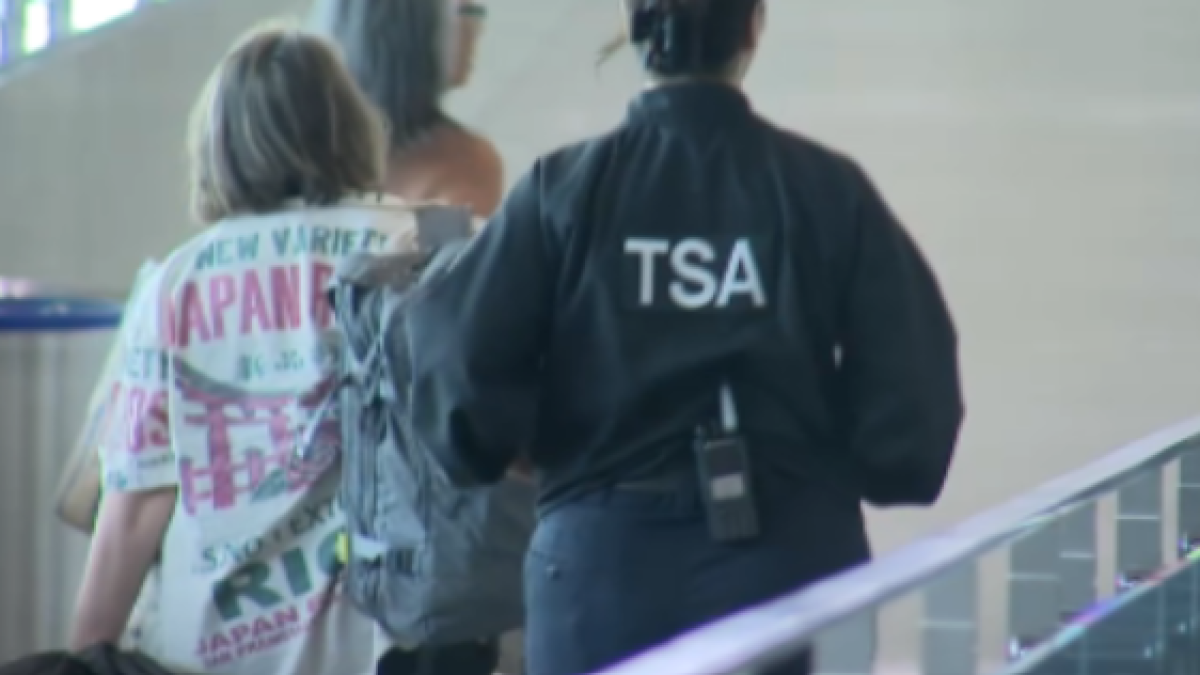
More than 30 days into a partial government shutdown, over 400 TSA employees have quit and absenteeism has spiked, producing hour-long airport security lines and operational strain at San Diego International Airport. Thousands of TSA staff are working without pay, causing acute financial hardship and the risk of further attrition; the political stalemate over DHS funding and proposals to deploy ICE to airports add operational and reputational risk for airports and the travel sector, likely causing localized short-term disruption but limited market-wide impact.
Operational disruption at airport checkpoints cascades into quantifiable revenue and cost hits for network carriers: even a 1% persistent decline in passenger throughput can translate into ~$20–50M/month in forgone revenue for a top-5 US carrier (missed connections, rebookings, bag fees) plus incremental ground-handling and accommodation costs. That magnifies because connectivity losses disproportionately hit premium itineraries and business travel, compressing near-term yields more than simple passenger counts suggest.
The most actionable structural response is acceleration of technology and outsourcing spend: procurement cycles for automated screening, biometric kiosks, and vendor-managed staffing are lumpy but politically expedited procurement (emergency bridge contracts) can shift multi-year spend toward defense/govtech contractors. Companies positioned to supply integrated screening hardware/software and managed services can see order-book inflection within 3–12 months as agencies hedge labor volatility.
There’s also an immediate modal and consumer-behavior effect: a portion of near-term demand will reallocate to driving + short-haul rail/rental cars and to hotels near origin/destination rather than same-day air travel, creating a 2–6 week revenue tailwind for car-rental operators and certain regional travel providers. Conversely, airport concessionaires and carriers with high-connection exposure will suffer a more persistent hit to ancillary revenue until throughput reliability is demonstrably restored.
Key reversal catalysts are binary and time-sensitive: emergency funding or a targeted TSA-only appropriation would restore operational norms within days and reverse market dislocations; sustained political impasse, union escalation, or legal deployment of alternate agents would push structural procurement and outsourcing decisions, creating a 3–12 month reallocation of capex and contracts. Monitor congressional calendar, union statements, and fast-tracked RFPs as primary signals for trade exit or scale-up.
AI-powered research, real-time alerts, and portfolio analytics for institutional investors.
Request DemoOverall Sentiment
moderately negative
Sentiment Score
-0.45
