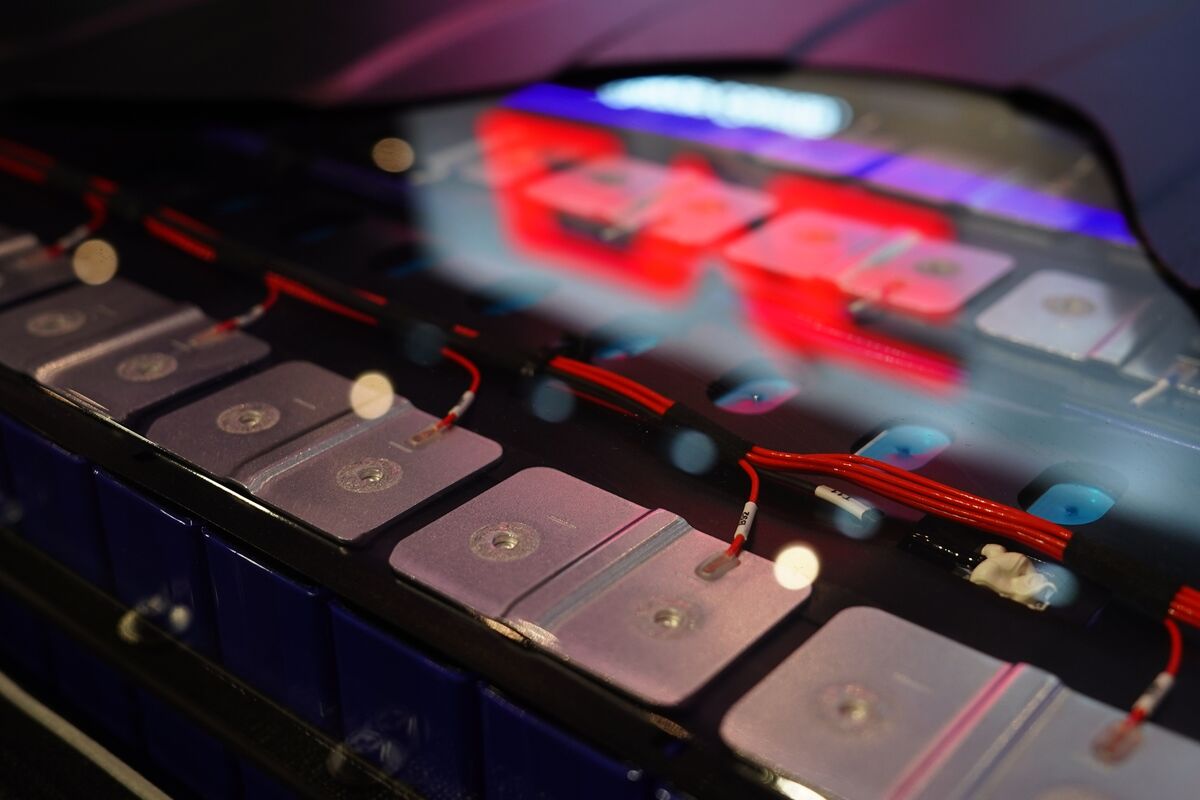
EVE Energy plans an 11 billion yuan (~$1.6B) investment to add 110 GWh of annual battery capacity via two plants. The expansion includes a 6 billion-yuan JV with Fujian Longking for 60 GWh in southern China and a separate 5 billion-yuan, 50 GWh plant in eastern China to produce stationary and EV batteries. This sizable capacity buildout signals material upstream supply expansion for EV and energy storage markets and should support EVE's growth trajectory.
This capacity push is a deliberate push into the trough of battery unit economics: faster scale will compress cell ASPs and shift bargaining leverage toward large OEMs and system integrators within 6–18 months. Expect a 10–20% downward pressure on commodity cell prices in that window unless OEM offtake commitments absorb incremental output; that dynamic favors vertically integrated EV OEMs and builders of stationary storage systems over pure-play merchant cell sellers.
Second-order winners are equipment and automation vendors who can shorten build-to-output timelines — delivery times for critical tooling will determine who actually ships versus who announces. Conversely, high-Ni cathode and specialty metal suppliers are at risk as buyers accelerate the move to lower-nickel chemistries for cost and thermal stability, reducing marginal nickel demand growth over the next 12–36 months.
Execution and policy are the two main risk vectors. Near-term, local permitting, grid connection slots and skilled labor availability can delay revenue realization (3–9 month cadence), while macro shocks (EV sales slump, subsidy cuts, or trade restrictions) can reprice utilization and force idled lines within 12–24 months.
A commonly missed point: stationary storage is not fungible with EV demand profiles — if projects scale faster than expected, utilization can be higher than modeled because stationary buyers accept lower-energy-density but cheaper chemistries. That asymmetry means the market could understate upside for LFP-centric players even as headline cell oversupply narratives dominate sentiment.
AI-powered research, real-time alerts, and portfolio analytics for institutional investors.
Overall Sentiment
moderately positive
Sentiment Score
0.40
