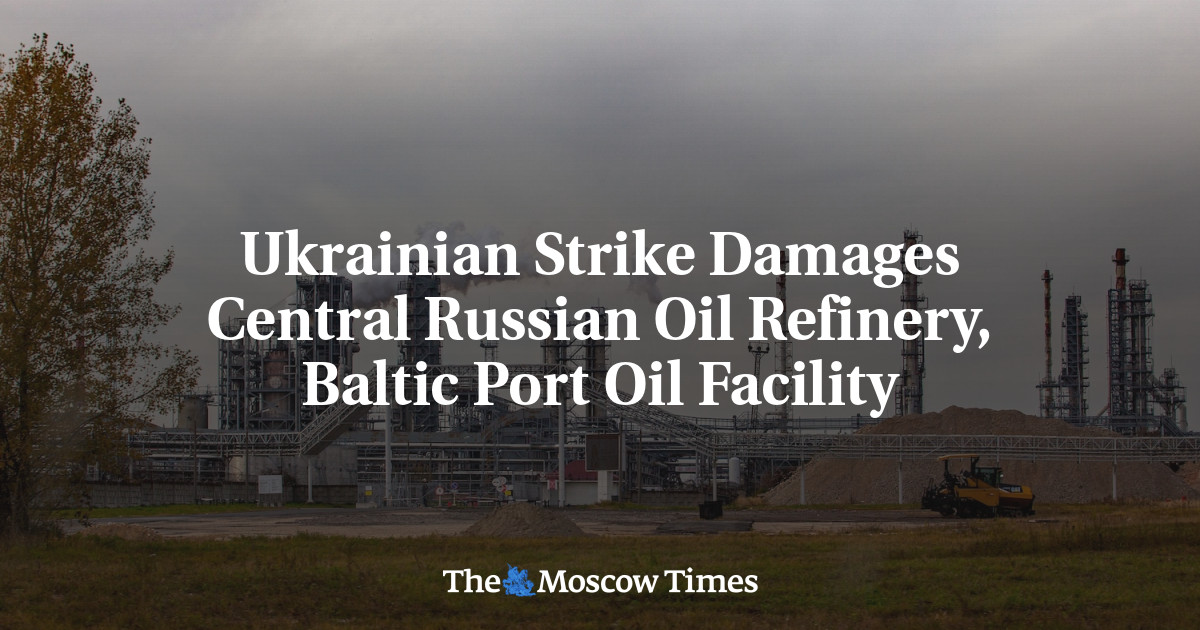
87 Ukrainian drones were shot down overnight, including 19 over the Leningrad region near the Port of Primorsk (which can export >1.0m bpd). Attacks damaged oil-transport infrastructure near Primorsk (pipeline/tank fire) and caused debris to set ablaze two facilities at Lukoil's Kstovo refinery in Nizhny Novgorod, plus damage to residential buildings and a thermal power plant with power outages across two towns; authorities reported no confirmed casualties. The incidents present a near-term supply risk to Russian crude export capacity and regional energy infrastructure, creating potential upward pressure on oil market risk premia until operational impacts are clarified.
Markets should price a discrete northern export-route premium that is distinct from OPEC supply dynamics: a localized 0.3–0.8 mb/d effective export disruption could translate into a near-term Brent shock of roughly $3–8/bbl over 2–6 weeks, driven by rapid rerouting and inventory draws in northwest European hubs. That premium is nonlinear — even a temporary outage spikes tanker demand and prompt cargo scarcity, creating outsized moves in front-month contracts and product cracks before medium-term supply responses kick in.
Second-order winners are those that capture transport scarcity and insurance upside: owners of crude tankers and charter rates for short-haul Aframax/Suezmax lifts are poised to see dayrates reprice materially higher for 1–3 months, while war-risk/ terrorism premiums to marine insurers will reaccelerate underwriting income on the next renewal cycle. Conversely, downstream nodes with limited fuel switching flexibility and refineries that are power-constrained will suffer margin compression and cyclical outages, amplifying refined-product tightness in the region.
Time horizons matter: expect volatility and arbitrage opportunities in the first 2–12 weeks; durable structural shifts (rail rerouting, alternate terminals) take 3–12 months and favor logistics owners with flexible assets. Catalysts that would reverse the trade include rapid repair and restart of key export infrastructure, a diplomatic de-escalation yielding rapid insurance normalization, or strategic releases from major SPRs — any of which would knock 40–70% off the realized short-term premium.
AI-powered research, real-time alerts, and portfolio analytics for institutional investors.
Request DemoOverall Sentiment
moderately negative
Sentiment Score
-0.45
