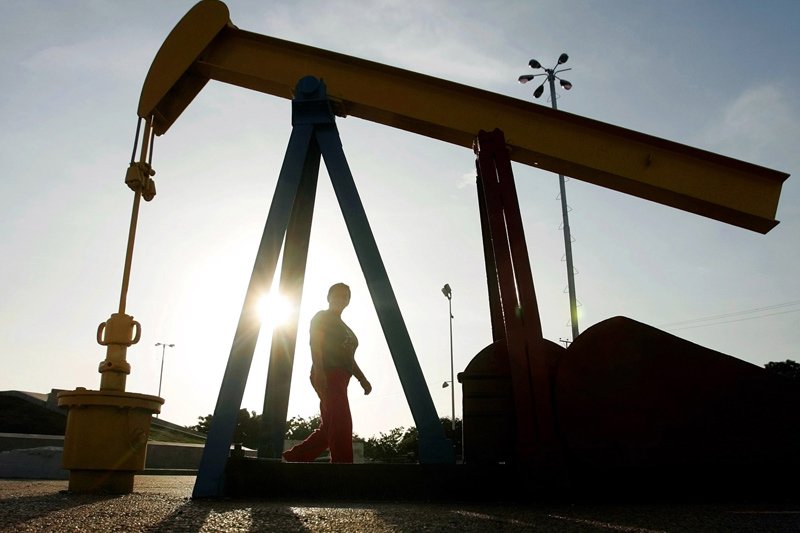
The Bank of France said uncertainty tied to the Middle East conflict is high enough that it could not provide a standard quarterly growth estimate. Activity still grew in April, but at a slower pace, while higher oil prices lifted raw material and transport costs and squeezed margins in energy-intensive industries and logistics. Industrial output remained the main support, but construction slowed and services stagnated.
The market is treating this as a single-event AI headline, but the more durable issue is input-cost inflation colliding with a supply chain that was already running hot. If energy stays elevated, the first-order hit is not just to French industrial margins; it is to the entire European electronics and transportation stack via higher freight, tighter working capital, and slower order conversion. That creates a subtle but important relative loser/winner map: hardware names with long, energy-intensive manufacturing chains and weak pricing power should underperform faster than asset-light software or domestic-services exposure.
For Nvidia specifically, the risk is less about near-term demand destruction from France and more about sentiment contagion into the AI capex trade. When the market sees a tax/regulatory or macro-cost scare, it tends to compress multiple on the entire semiconductor basket before fundamentals change, which can persist for weeks even if order books remain intact. That makes NVDA vulnerable to “good company, bad tape” de-rating, especially versus semis with lower expectations or cleaner regional exposure.
The contrarian view is that this may be an overreaction if energy spikes prove transitory. Historically, equity drawdowns tied to geopolitical uncertainty fade quickly unless crude keeps trending for 4-8 weeks; if oil mean-reverts, the margin pressure on transport, industrials, and electronics should unwind faster than consensus expects. In that case, the best expression is not a bearish semiconductor macro bet, but a relative-value trade focused on the most sentiment-sensitive AI winners versus the broader industrial/import-cost losers.
AI-powered research, real-time alerts, and portfolio analytics for institutional investors.
Overall Sentiment
mildly negative
Sentiment Score
-0.25
Ticker Sentiment
