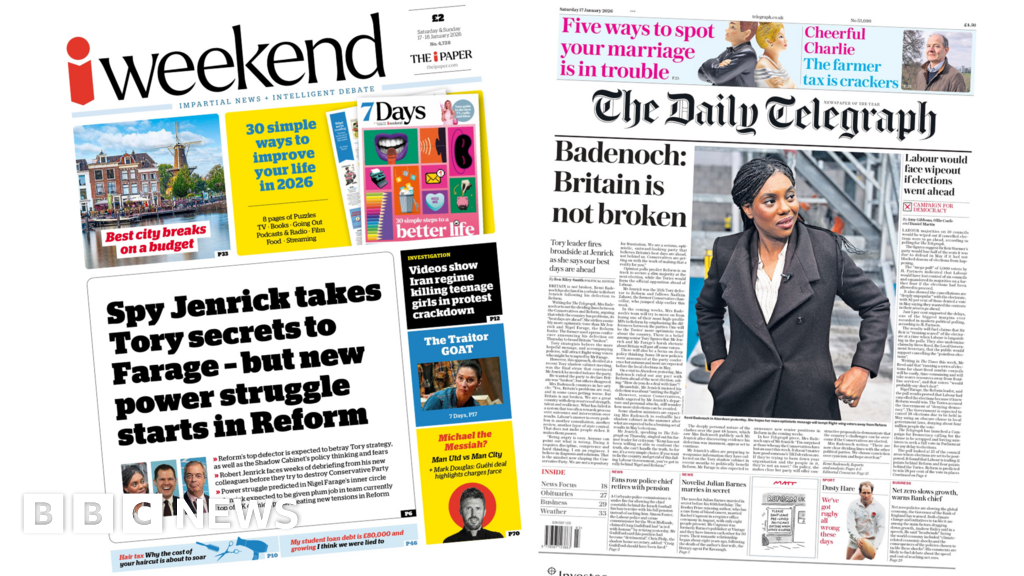
Robert Jenrick's defection from the Conservative Party to Reform UK has prompted sharp criticism from Tory leader Kemi Badenoch and reports of local voters and supporters in his Newark constituency feeling betrayed, with media speculation he may receive a senior role at Reform that could create internal tensions. Downstream political fallout includes pressure on the prime minister to remove Health Secretary Wes Streeting amid accusations of self‑interest, and controversy over the immediate retirement of West Midlands chief constable Craig Guildford — who faces criticism and potential legal action after policing decisions related to an Israeli football fixture. The events heighten short‑term political uncertainty in the UK but are unlikely to materially move markets absent broader escalation or policy shifts.
Market structure: The Jenrick defection and visible intra‑party tensions raise the odds of UK political fragmentation and a higher near‑term political risk premium. Direct winners are nationalistic/populist media and Reform UK (greater attention, fundraising and recruitment); losers are domestically‑exposed consumer, housing and regional services names that rely on UK consumer confidence. Expect rotation toward FTSE‑100 global earners (SHEL.L, BP.L, AZN.L) for FX‑translation tailwinds if GBP weakens 1–3% over 1–3 months.
Risk assessment: Tail risks include a snap general election or hardening populist fiscal promises (low probability but high impact) that could widen 10y UK gilt yields by 20–50bps and depress equities by 5–15% within 1–3 months. Hidden dependencies: immigration/law‑and‑order policy shifts can alter labour supply for construction/healthcare, amplifying sectoral idiosyncratic risk. Key catalysts are opinion poll moves >5% in 30 days, cabinet reshuffle headlines, and by‑election losses.
Trade implications: Implement asymmetric risk: modest long positions in multinational FTSE‑100 names while hedging sterling and domestic cyclicals. Use short‑dated FX puts and short gilt futures to express a 10–30bp yield repricing risk. Pair trades: long SHEL.L/BP.L vs short Persimmon (PSN.L)/Ocado (OCDO.L) to capture export vs domestic exposure arbitrage over 1–3 months.
Contrarian angle: Consensus treats this as minor noise; markets underprice the cumulative effect of parliamentary attrition — a 2–3% GBP move would materially re‑rate domestically‑focused small caps. Reaction is likely underdone for short‑dated FX and gilt volatility; if Reform fails to scale over 6–12 months, those tactical shorts reverse rapidly, so size and convexity management matters.
AI-powered research, real-time alerts, and portfolio analytics for institutional investors.
Request DemoOverall Sentiment
mildly negative
Sentiment Score
-0.25
