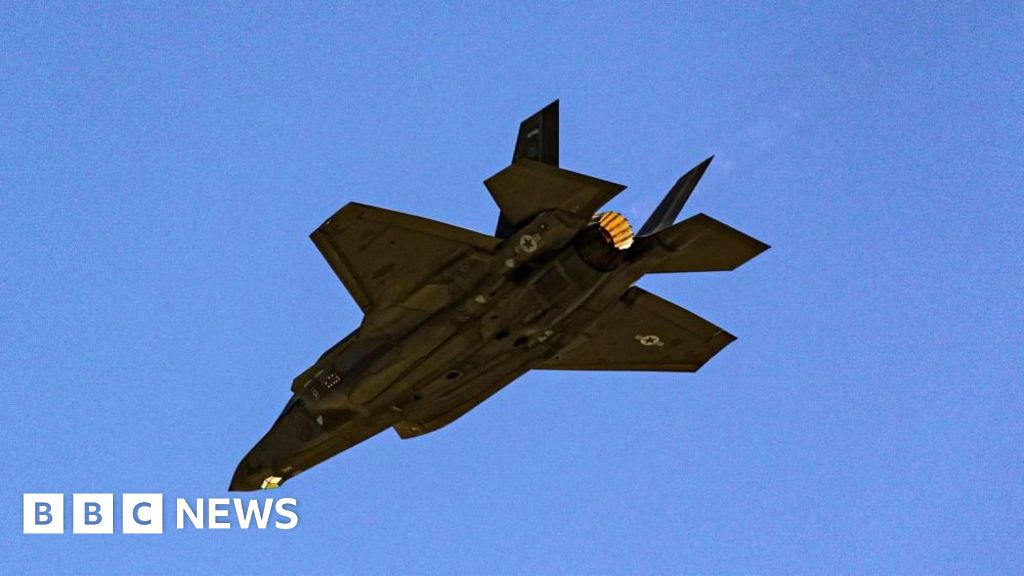
US forces conducted "Operation Hawkeye Strike," a large-scale retaliatory campaign of fighter jets, attack helicopters and artillery (with Jordanian aircraft involved) against Islamic State targets in central Syria after an ambush in Palmyra killed two US soldiers and a US civilian interpreter. CENTCOM and US Defense Secretary Pete Hegseth said the strikes targeted IS fighters, infrastructure and weapons sites, while the Syrian Observatory for Human Rights reported a prominent IS leader and multiple fighters killed; the UN estimates IS still fields 5,000–7,000 fighters across Syria and Iraq. The action elevates regional geopolitical risk and is likely to prompt short-term risk-off positioning and higher risk premia for Middle East assets, though it does not yet constitute a broad market-moving fundamental shock.
Market structure: Defense primes (LMT, NOC, RTX, GD) are near-term beneficiaries as procurement/tactical spending probabilities rise; expect a 3–6% relative outperformance vs. S&P over 1–3 months if the flare stays localized. Energy producers (XOM, CVX) could see a short-lived oil tailwind—oil +3–7% would lift upstream EBITDA by mid-single digits for 1–2 quarters, while travel/leisure (JETS, AAL, UAL) are immediate losers on demand-risk and rerouting costs. Cross-asset: safe-haven flows should depress 10y yields 5–20bp and lift gold (GLD) 2–6% in days; equity IV should jump 15–40% intraday in targeted sectors (airlines, travel), creating option opportunities.
Risk assessment: Low-probability/high-impact tail is regional escalation (5–15% chance over 3 months) that could push Brent +10–20% and S&P -8–12%; prepare for sanctions, supply-chain frictions, or retaliatory strikes. Time horizons matter: immediate (days) = volatility spikes and flight-to-quality; short-term (weeks) = earnings and travel-season weakness; long-term (quarters) = potential re-rating of defense contractors and incremental U.S. posture/budget increases. Hidden dependencies include U.S. domestic politics and partner-state involvement that can rapidly amplify risk; catalysts to watch: casualty counts, oil moves >+3% in 48h, allied military responses.
Trade implications: Direct plays: establish modest 1–3% long positions in LMT and NOC for 3–6 months, add 0.5% exposure to 6-month 10% OTM calls on LMT to lever upside. Pair trades: long LMT (2%) vs short JETS ETF (2%) over 3 months to capture relative defense/travel divergence. Options: buy a 1–3 month SPY 5% OTM put spread sized 0.5–1% portfolio if VIX spikes >20; buy GLD 0.5–1% as liquidity hedge. Fixed income: conditional 2–3% tactical allocation to TLT if 10y yield falls >10bp within 48h.
Contrarian angles: Consensus may overshoot defense rerating; historical strikes (2017–2020) produced transient spikes but limited multi-quarter alpha unless sustained budget changes occur, so avoid full-priced longs without fiscal confirmations. Reaction to buy-flight in gold and Treasuries could be overdone and reverse if oil stays flat; consider short-dated dispersion trades (long airline puts, short defense calls) to profit from mean reversion. Unintended consequences: stronger USD from safe-haven flows will pressure EM assets and commodity exporters—identify EM sovereigns with >15% FX vs. USD exposure for tactical shorts if USD index rises >1.5%.
AI-powered research, real-time alerts, and portfolio analytics for institutional investors.
Request DemoOverall Sentiment
moderately negative
Sentiment Score
-0.30
