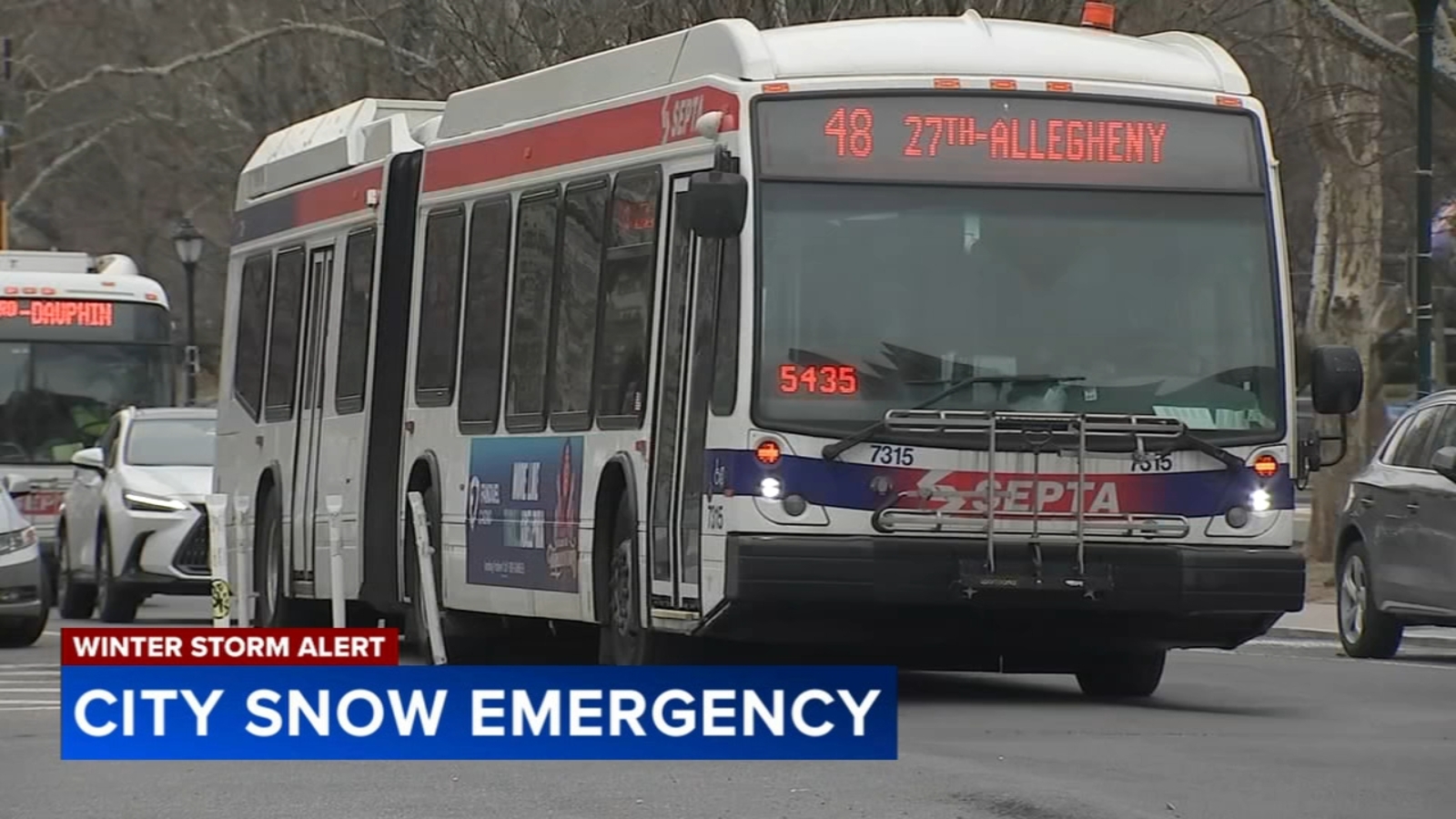
SEPTA announced the suspension of all bus and Regional Rail service at 2:00 p.m. Sunday due to a major winter storm, with Metro Route G1 also suspended and T1 currently out of service while other T lines operate on reduced schedules. Services will remain suspended through the end of the service day until safe conditions are confirmed; the Market-Frankford (L) and Broad Street (B) lines continue to run and are the recommended options, signaling localized commuter and operational disruption but minimal broader market implications.
Market structure: A one-day SEPTA suspension is a localized shock that benefits last‑mile services (UBER, LYFT) and short‑term heating fuel sellers while hurting fare‑dependent operators and regional airlines through cancellations and crew repositions. Expect >48‑hour volatility in regional travel receipts (PHL airport) and modest temporary pricing power for short‑term ride‑hail and energy suppliers; consumer footfall for downtown retail could fall 5–15% on affected days.
Risk assessment: Tail risks include multi‑day transit paralysis or infrastructure damage that forces extended service curtailment, pressuring municipal budgets and insurers; probability low (<5%) but impact material for local contractors and muni paper. Immediate window is hours–days for travel disruption, weeks for revenue/cost noise, and quarters for capex/repair cycles; key catalyst thresholds: >24‑48h outage or >500 flight cancellations at PHL triggers larger regional effects.
Trade implications: Tactical plays favor short exposure to regional airline/air‑travel beta (JETS, AAL) over the next 2–4 weeks and long exposure to regulated utilities (EXC) and winter fuel/NG convexity for 2–6 weeks. Options can cap risk: buy short‑dated NG call spreads to capture heating demand spikes; consider pair trades long EXC vs short JETS to harvest relative resilience.
Contrarian angles: The market likely underprices repeated Northeast storms this winter—being long infrastructure repair contractors (MasTec MTZ/Quanta PWR) and selective muni REITs could outperform if outages recur. The knee‑jerk focus on transit disruption misses downstream incremental service contracts and utility margin tailwinds that materialize over quarters, not just days.
AI-powered research, real-time alerts, and portfolio analytics for institutional investors.
Request DemoOverall Sentiment
neutral
Sentiment Score
-0.10
