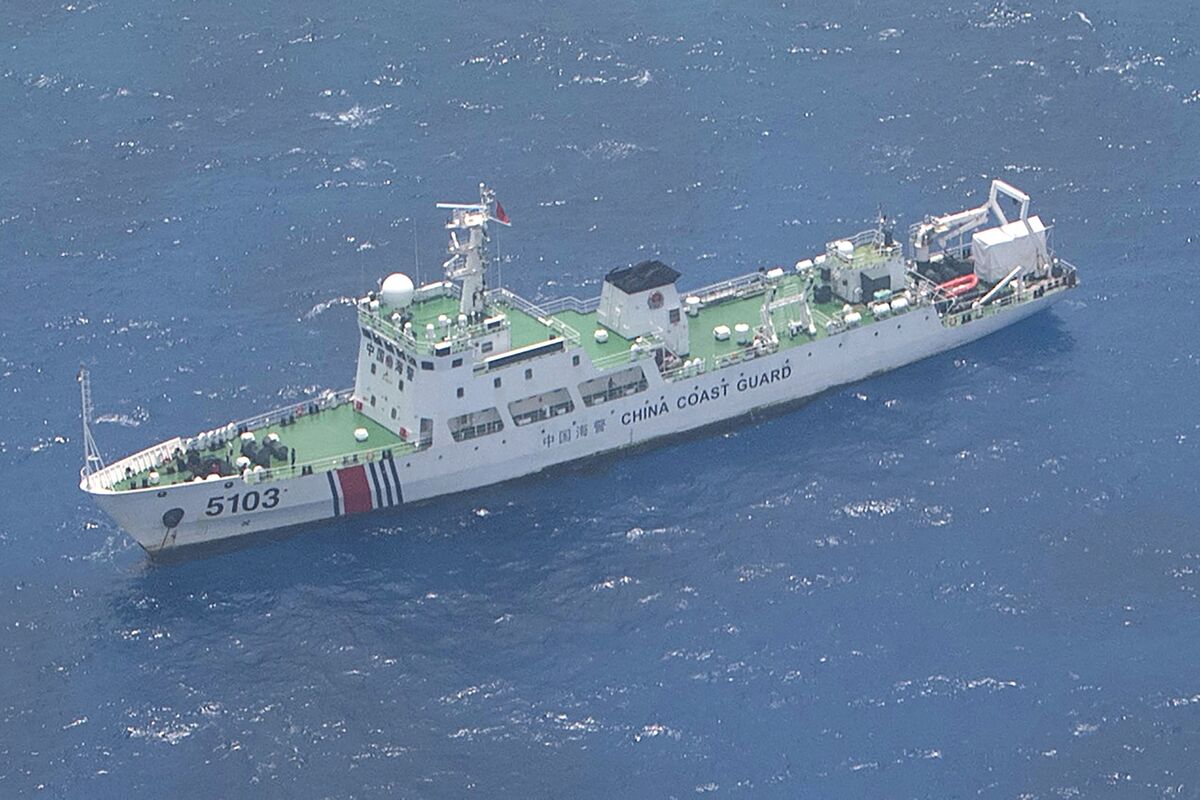
Four armed Chinese Coast Guard vessels briefly entered disputed waters controlled by Japan near the Senkaku Islands on Sunday, amidst heightened diplomatic tensions following Japanese Prime Minister Sanae Takaichi’s remarks on Taiwan. China characterized the action as a lawful "rights enforcement patrol." This incident underscores escalating geopolitical risks in the East China Sea, a critical factor for regional market stability and investor risk assessments.
Chinese Coast Guard vessels recently entered disputed Japanese waters near the Senkaku Islands, a move China termed a "rights enforcement patrol," amidst heightened diplomatic tensions stemming from Japanese Prime Minister Sanae Takaichi's comments on Taiwan. This incident, involving four armed vessels, highlights the ongoing territorial disputes and sovereignty claims in the East China Sea.
The event carries a "moderately negative" sentiment and an "uncertain" tone, reflecting the inherent instability of such geopolitical confrontations. This escalation underscores significant geopolitical risks in a strategically vital region for global trade and maritime security.
While no specific corporate tickers are directly implicated, the assessed "moderate market impact" score of 0.45 suggests potential broader implications for regional asset classes. Investors should consider the potential for increased volatility and shifts in risk premiums across markets sensitive to East Asian political dynamics.
AI-powered research, real-time alerts, and portfolio analytics for institutional investors.
Request DemoOverall Sentiment
moderately negative
Sentiment Score
-0.45
