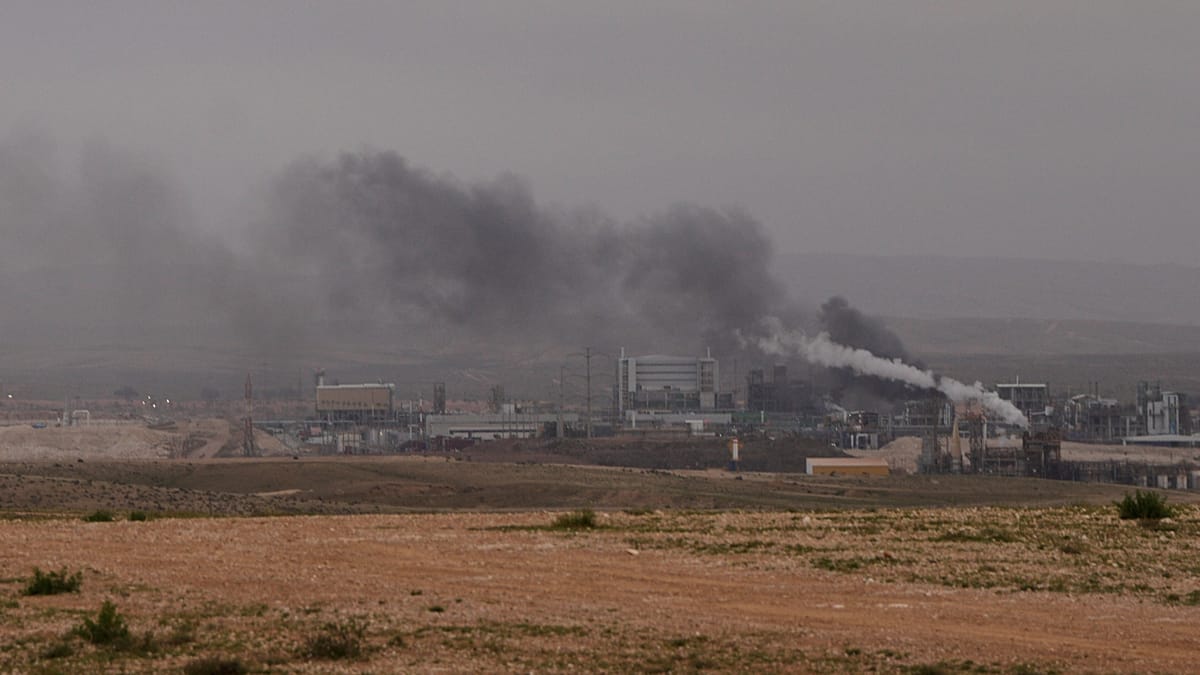
Iran launched strikes on Kuwait and Saudi Arabia after attacks on Iranian electrical facilities cut power to parts of Tehran and Alborz; Saudi forces intercepted five ballistic missiles and a strike in Kuwait killed one worker. Reported casualties include 1,238 killed in Lebanon since 2 March, HRANA reporting at least 3,461 killed in Iran (including ~1,551 civilians), CENTCOM confirming seven US service members killed, and the USS Tripoli carrying ~3,500 Marines arriving — a major regional escalation with significant risk-off implications for markets and energy security.
The immediate winners are exposed to higher risk premia — military suppliers, maritime insurers/brokers, and commodity exporters with spare capacity — because market participants will pay for optionality and security services before commodity flows re-route. Expect incremental insurance and war-risk premium revenue to show up in quarterly results within 4-8 weeks and to support outsized earnings revisions for brokers/reinsurers even if commodity prices normalise later.
A credible tail risk is a temporary chokepoint closure or significant escalation that forces physical rerouting of crude/LNG tankers; model a 10-25% spike in seaborne freight and a $10-20/bbl unimplied shock to Brent in the first month if that occurs. Conversely, the highest-probability short-term reversal is a negotiated de-escalation or ceasefire within 6-8 weeks — that path collapses insurance spreads and compresses tactical premia rapidly.
From a market-structure view, volatility will bifurcate liquid large-cap cyclicals (energy, defense) from illiquid EM sovereign and regional corporate credit; expect bid-ask widening and reduced primary issuance in affected GCC/EM credits for 1-3 months, increasing relative value for U.S. IG and municipals. Capital-light service providers (brokers, cyber/satellite comms firms) can re-price faster than heavy-capex players (shipowners, pipeline operators), creating pair-trade opportunities.
Consensus is likely to over-rotate into outright oil longs and generic defense longs; the smarter play is concentrated tactical exposure to insurance/broking and selective, time-limited commodity convexity while carrying a disciplined tail-hedge. Position sizing should assume a 15-35% realized-volatility regime for the next 60-90 days and be skewed toward option structures that cap downside if diplomacy arrives sooner than priced.
AI-powered research, real-time alerts, and portfolio analytics for institutional investors.
Request DemoOverall Sentiment
extremely negative
Sentiment Score
-0.90
