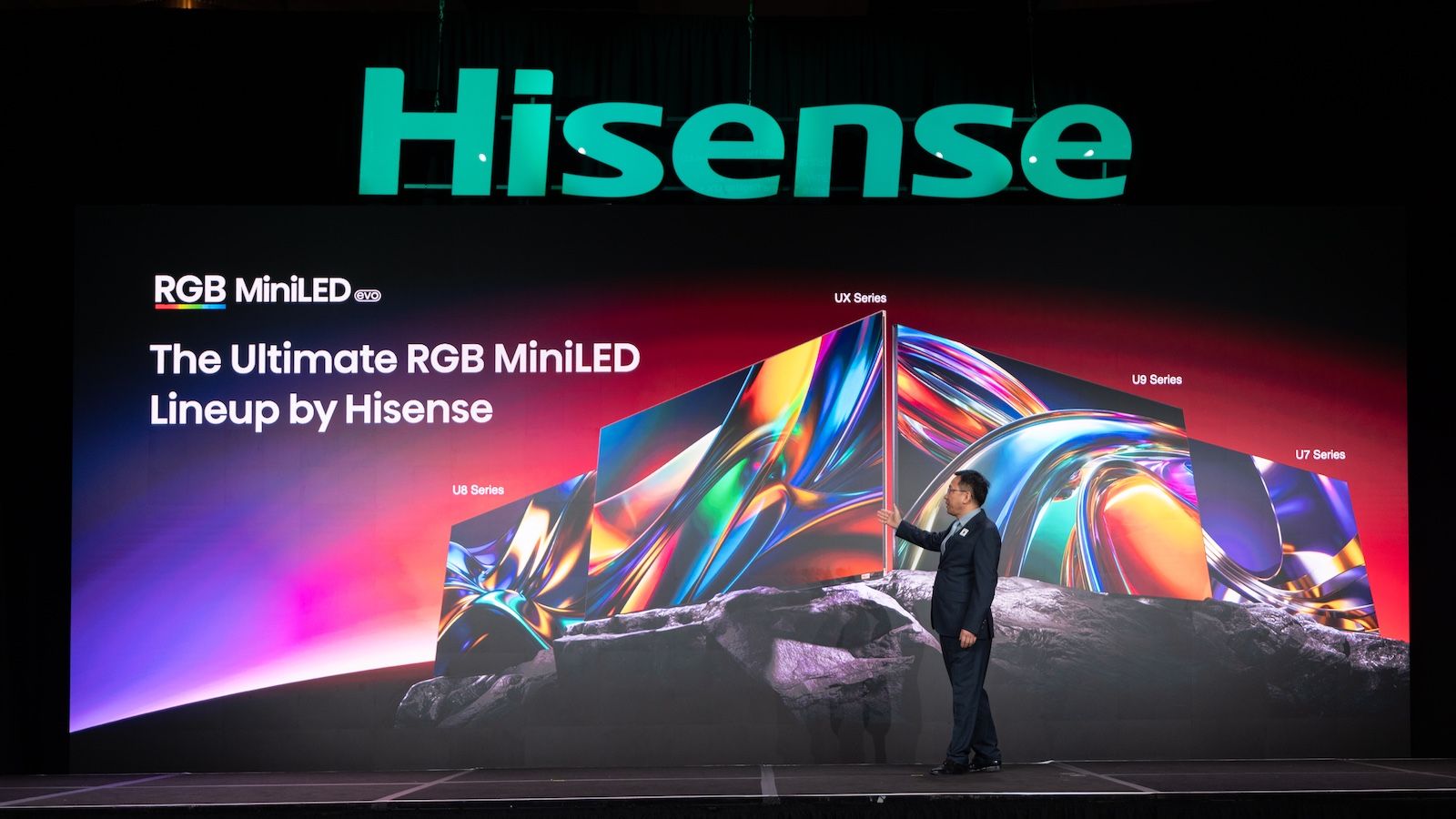
Hisense unveiled two color-focused TV technologies at CES 2026: an RGB Mini LED Evo backlit LCD in a 116-inch 116UXS that adds cyan to push coverage to about 110% of BT.2020 and includes “tens of thousands” of color dimming zones plus an upgraded Hi-View AI Engine and Dolby Vision 2, and a true RGBY Micro LED self‑emissive 163-inch 163MX that adds yellow at the sub-pixel level for improved gamut. The 116UXS follows a 2025 116UX that was priced at $25,000, while last year’s 136-inch MicroLED carried a $100,000 price tag; the new 163-inch MicroLED is positioned for the ultra-high-end with pricing not yet disclosed. These launches signal Hisense’s push upmarket through differentiated color tech, but commercial impact and broader market adoption remain uncertain until hands-on reviews and pricing are confirmed.
Market structure: Hisense’s RGB/RGBY push benefits premium display OEMs and upstream LED/MEMS/driver suppliers while compressing mid‑tier margins. Expect winners: Sony (SONY), Samsung (005930.KS) and high‑end display suppliers (ams/OSRAM complex) that can monetize color engines and calibration IP; losers: low‑cost TV OEMs (TCL 1070.HK) and commodity panel makers who can’t justify >20–50% price premiums for experiential sets. Pricing power will be concentrated in <5% of unit volumes (large format, >$25k), keeping meaningful ASP upside but limited demand elasticity in near term (6–12 months).
Risk assessment: Key tail risks are yield/colour‑uniformity failures and patent/legal battles that could force redesigns or royalty payments (>5% gross margin shock). Near term (days–weeks) CES sentiment swings matter; short term (3–9 months) reviews, initial shipments and warranty rates will determine adoption; long term (1–3 years) supply constraints for MicroLED epitaxy could keep prices elevated or delay scale. Hidden dependencies include LED die supply, transfer/assembly capacity, and AI video processors — if any single supplier fails, rollouts stall.
Trade implications: Tactical trade is long premium OEMs and component suppliers vs short low‑end OEMs. Consider long SONY (SONY) 1–2% portfolio weight with a 6–12 month horizon and paired short TCL (1070.HK) equal notional to capture relative ASP/margin divergence. Buy selective supplier exposure: AMS (AMS.SW) or OSR.DE 0.5–1% for upstream LED bets; use 9–12 month call spreads on SONY (25–35% OTM) to limit spend. Rotate 1–3% from broad consumer retail (XRT) into SMH over 3 months to favor hardware supply chain.
Contrarian angles: Market may underprice that color/IP and AI video processing—not just panels—drive value: software/calibration vendors could command recurring revenue; consider small exposure to niche calibration/IP plays. Alternatively, adoption could be slower than hype: if MicroLED stays >$50k, volume adoption stalls and suppliers face demand cliffs — avoid levered small-cap panel suppliers without diversified end markets. Watch for warranty/return rates >3% in early shipments as a sell signal.
AI-powered research, real-time alerts, and portfolio analytics for institutional investors.
Request DemoOverall Sentiment
mildly positive
Sentiment Score
0.28
