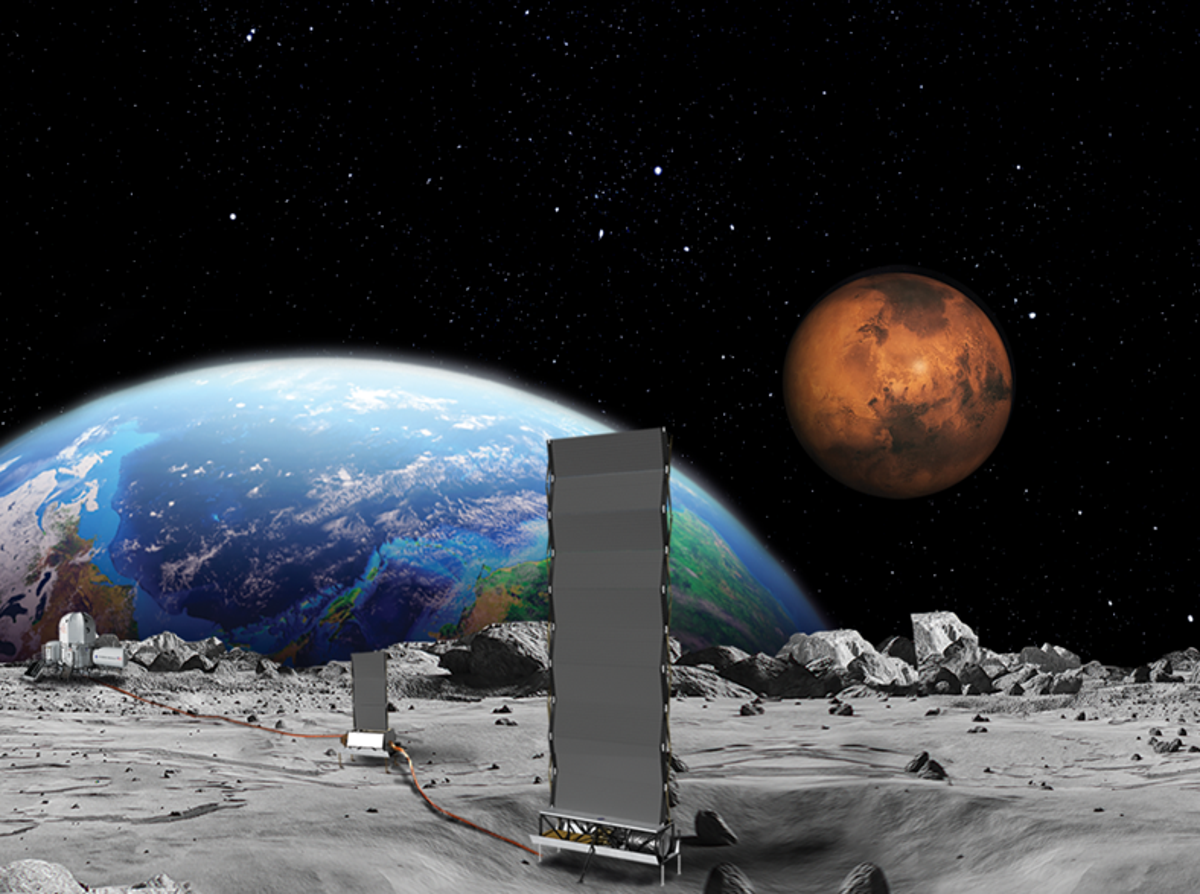
NASA and the U.S. Department of Energy have committed to build a fission reactor to operate on the lunar surface, designed to run for years without refueling and to provide power for the Artemis program and long-term human presence on the Moon (and eventual Mars), following a presidential directive. The announcement advances U.S. space infrastructure and could create future procurement opportunities for defense and aerospace contractors, but significant engineering and technical hurdles remain and the news is unlikely to produce immediate broad market moves.
Market structure: A DOE–NASA lunar fission program is a targeted, multi-year government capex stream that favors large aerospace primes (LMT, NOC) and specialized nuclear suppliers (BWXT) over commodity solar/consumer-tech plays. Expect concentrated RFP-driven wins: 1–3 contractors per subsystem (reactor core, shielding, thermal management, launch integration) will capture >70% of contract value, improving pricing power for winners but leaving many small players sidelined.
Risk assessment: Tail risks include a launch/operational nuclear incident, Congressional budget cuts, or international regulatory pushback; any of these could wipe out contract valuations (low-probability, high-impact). Timeframes: market reaction is muted in days; expect procurement awards in 6–24 months and revenue recognition in 2–5 years. Hidden dependency: program economics hinge on launch-cost trajectory (SpaceX reusable pricing) and DOE fuel technology choices (HEU vs LEU) which affect incumbent supplier advantage.
Trade implications: Direct plays are large primes (LMT, NOC) and BWXT for nuclear hardware, plus MAXR for lunar infrastructure; uranium miners/ETF (CCJ, URA) are a multi-year thematic hedge if government scales reactors. Use 12–24 month call spreads to cap premium; prefer RFP/cost-plus contract winners over speculative small-caps. Rebalance toward ITA (aerospace ETF) + overweight BWXT by 1–3% of equity risk budgets.
Contrarian angles: Consensus will overpay small-cap “space mining” names; underappreciated is the program’s deflationary pressure on commercial launch margins if NASA leverages bulk contracts. Historical parallel: Cold War space spending concentrated durable oligopolies (1960s); winners here will be those with existing DOE certification and supply-chain depth, not flashy tech demos.
AI-powered research, real-time alerts, and portfolio analytics for institutional investors.
Request DemoOverall Sentiment
neutral
Sentiment Score
0.10
