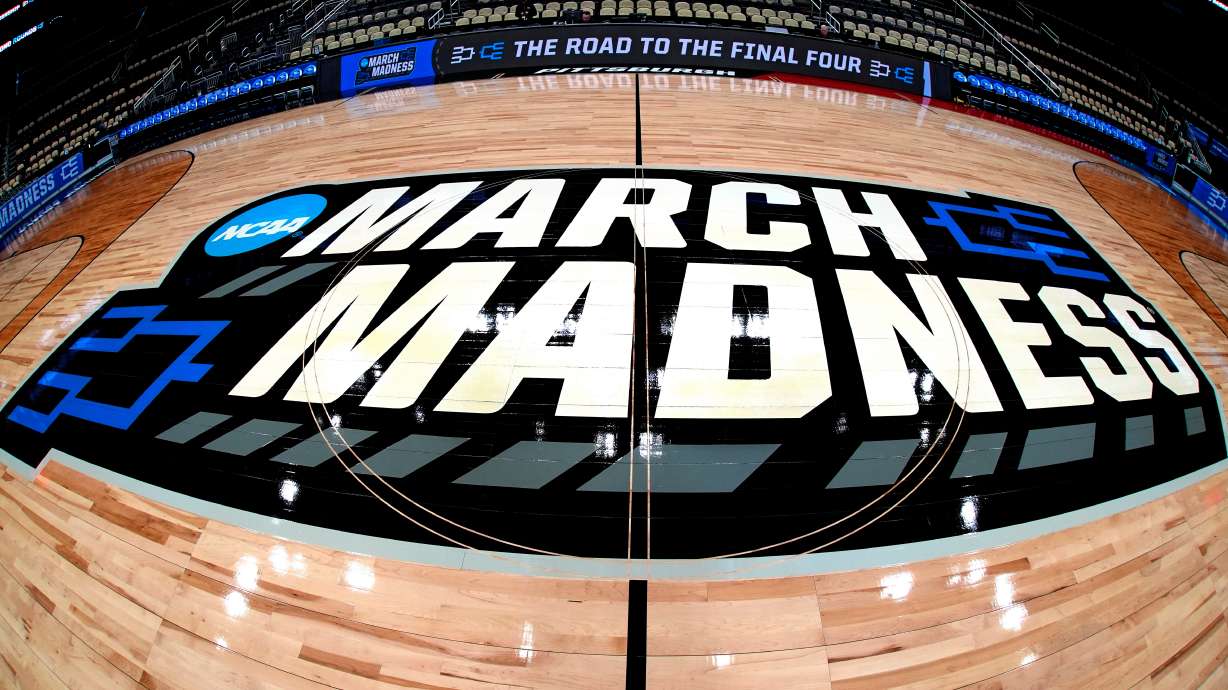
The NCAA will expand both the men’s and women’s basketball tournaments to 76 teams each starting next season, adding eight games and increasing total tournament play to 120 games across the two events. The expansion is being funded by roughly $300 million in new sponsorship revenue tied to beer, wine, spirits and hard seltzer, with more than $131 million expected to be distributed to schools. The change is largely structural and sponsorship-driven, with limited direct market impact beyond media advertising and college sports economics.
The economically relevant takeaway is not the bracket size change; it is that the NCAA has effectively monetized a previously constrained ad category to preserve the monopoly value of the tournament through 2032. That shifts the incremental economics toward the rights holders and media partners, but the real second-order benefit accrues to large CPG and alcohol advertisers seeking mass-market reach in a low-friction, high-engagement environment. Expect the sponsor mix to skew toward premium beer, spirits, and hard seltzer brands that can convert national exposure into retail velocity without needing a deep performance-marketing funnel.
From a competitive-dynamics perspective, this is mildly pro-power-conference and mildly anti-mid-major, but the bigger issue is talent concentration. Expanding at-large slots reduces the probability that a borderline top-40 team gets shut out, which should further compress the gap between the top of mid-majors and the bottom of power leagues because transfer-market incentives already favor the latter. Over a multi-year horizon, that raises the floor for TV quality in early rounds while making Cinderella outcomes rarer, which is likely to benefit ratings consistency but reduce the variance that creates some of the event’s strongest viral moments.
The more interesting risk is political, not sporting: once the NCAA normalizes alcohol monetization, the next negotiation with media partners and campuses could extend into other formerly restricted categories. That creates a path dependency where the tournament becomes less about college branding and more about a fully optimized consumer platform, which may alienate purists but is unlikely to matter unless ratings soften materially. The main reversal trigger is a campus-level backlash or regulatory scrutiny around alcohol advertising, but that would likely play out over years rather than quarters.
Contrarian angle: the market may be underestimating how much of the new revenue is already pre-committed to institutional stakeholders, limiting the net surprise to schools and thus the incentive for further structural change. If the bracket expansion does not materially lift viewership beyond the opening rounds, the sponsorship mix may prove more cyclical than structural, making the economics look better on day one than over the full rights cycle. In that scenario, the winners are the media networks and a narrow set of national beer and spirits brands, not the broader college sports ecosystem.
AI-powered research, real-time alerts, and portfolio analytics for institutional investors.
Request DemoOverall Sentiment
neutral
Sentiment Score
0.10
