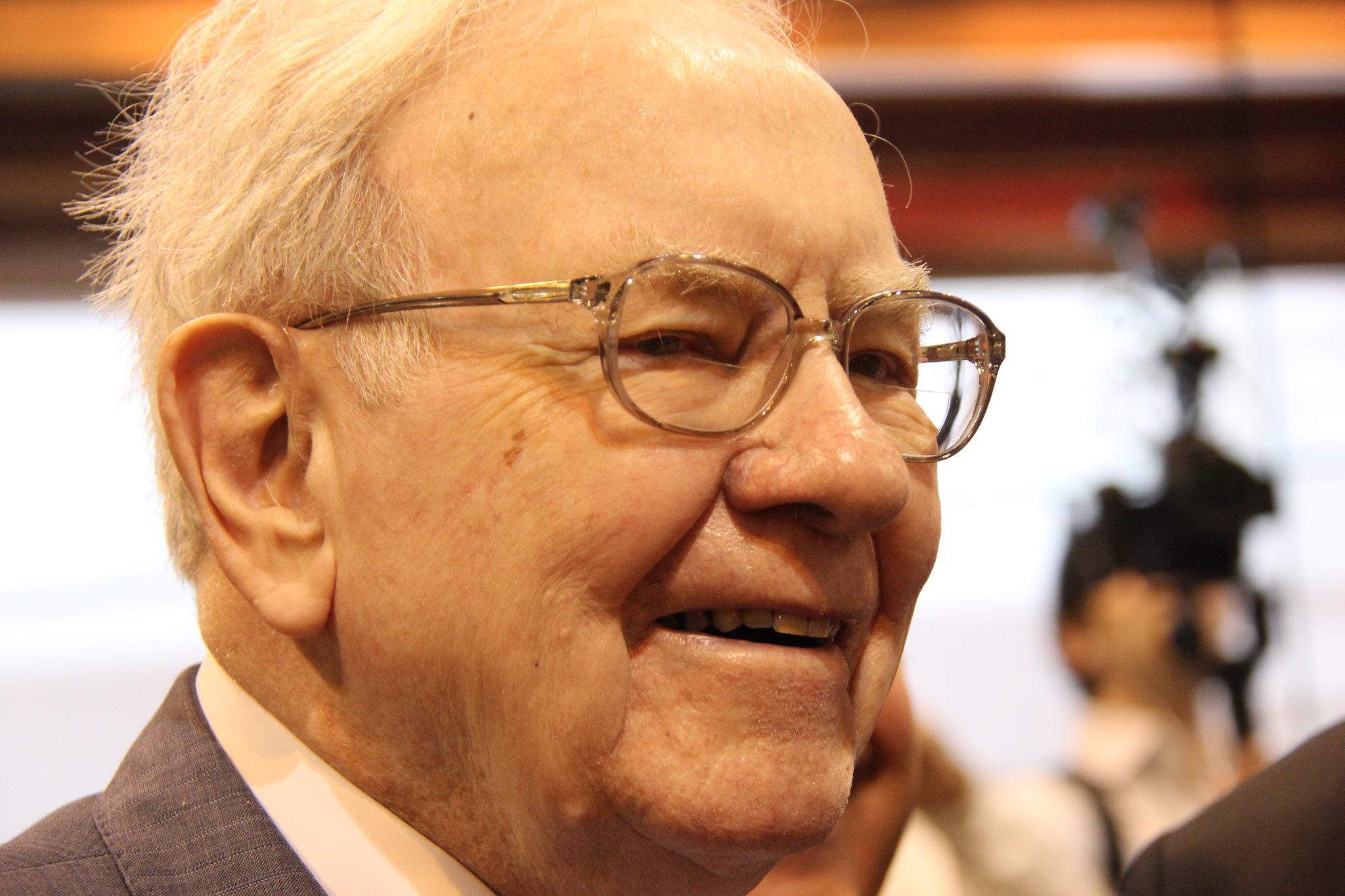
Warren Buffett, Chairman of Berkshire Hathaway, has consistently advocated for the Vanguard S&P 500 ETF (VOO) as an ideal investment for non-professional investors, emphasizing its low 0.03% expense ratio and its ability to provide diversified exposure to top U.S. companies. Buffett's recommendation stems from his belief in the long-term strength of American businesses, with the S&P 500 historically delivering an average annual gain of 10%, suggesting that consistent investment, such as $300 monthly, could accumulate substantial wealth over decades.
Billionaire investor Warren Buffett is known for his engaging stories about investing, and he's quick to throw in a quip here and there that will get a chuckle out of the crowd. But investors take his investing advice very seriously. That's because this investing giant, as chairman of Berkshire Hathaway, has delivered market-beating returns for nearly six decades. Throughout his investing career, Buffett has pointed out and invested in great companies -- from Apple to Coca-Cola -- but he's also spoken of another complementary investment that is an ideal addition to just about any portfolio. Buffett has even held shares in it, and in one of his shareholder letters several years ago, recommended it to all investors. This is the Vanguard S&P 500 ETF (VOO 0.01%). This exchange-traded fund tracks the performance of the S&P 500, and over the long run, the benchmark has scored major wins for investors. In fact, considering that performance, a $300 monthly investment in the Vanguard fund could reach $1 million over time. Let's find out more about this Buffett-approved ETF and how an investment in it could reach into the millions. Instant diversification First, a quick note about ETFs. These funds group together many stocks according to a particular theme, allowing you to instantly diversify and gain exposure to a lot of companies with just one purchase. The theme could be an index, such as the S&P 500, or it might be an industry such as pharma or energy. You can purchase an ETF as you would a stock as they trade daily on the market, so it's quick and easy to get in on these assets. One thing to note is that ETFs charge fees, and you can see them reflected in the expense ratio; go for ones with ratios of less than 1% in order to optimize your overall gains. The Vanguard S&P 500 fits the bill as its expense ratio is only 0.03%. So, why did Buffett recommend this fund to investors? Because Buffett believes in the strength of American companies over time, and investing in this S&P 500 index tracker is the ideal way of benefiting from this. NYSEMKT: VOO Key Data Points Owning a cross-section of businesses In his 2013 letters to shareholders, Buffett wrote that the goal of non-professional investors should be "to own a cross-section of businesses that in aggregate are bound to do well. A low-cost S&P 500 index fund will achieve this goal." The S&P 500 index always includes the top U.S. companies across industries that are powering the day's economy, and it keeps current by reviewing members on a quarterly basis to cut certain ones and replace them with others that may be more relevant. This strategy has helped the index reflect the economy of the times, and it's been a winner for investors, too, as the S&P 500 has delivered an average annual gain of 10% since its launch as a 500-member index back in the late 1950s. That's an average, so note there are years when it's up and years when it's down. In his 2013 letter, Buffett gave the nod to "a very low-cost S&P 500 index fund. (I suggest Vanguard's.)" The Vanguard S&P 500 ETF, tracking the index's performance, allows you to bet on it, and one strategy in particular may turn a regular monthly investment into a fortune if you have enough time. This is thanks to the power of compounding. Turning $300 into $1 million Here's an example: While there are no guarantees, for this thought exercise I'll consider that the S&P 500 will continue to deliver an average annual gain of 10%. If you make an initial investment of $1,000 in the Vanguard S&P 500 fund, then add $300 per month to that for 35 years, the value of your investment may climb to $1 million. So, here, you're combining Warren Buffett's valuable investment advice with a strategy that relies on compounding, and the results look pretty impressive. Of course, the index's gains over the next 35 years may vary -- they could shift higher or lower -- so the resulting value of your investment is impossible to predict. But the S&P 500 has proven its growth capabilities over time, thanks to the strength of American businesses, as Buffett says, so it's reasonable to be optimistic about a long-term investment in this index. All of this means now is a great time to follow Buffett's advice and get in on this Vanguard S&P 500 fund and invest regularly to supercharge your winnings over time. The article reiterates Warren Buffett's well-documented endorsement of low-cost, passive index investing, specifically highlighting the Vanguard S&P 500 ETF (VOO). The core thesis, drawn from Buffett's 2013 shareholder letter, is that non-professional investors can achieve superior long-term results by owning a broad cross-section of U.S. businesses. The analysis emphasizes VOO's key attributes: its extremely low expense ratio of 0.03%, which is crucial for maximizing compounded returns, and its inherent diversification. The article quantifies the potential of this strategy by referencing the S&P 500's historical average annual return of 10% and using a hypothetical model where a $300 monthly investment over 35 years could reach $1 million. While the sentiment surrounding VOO is strongly positive (0.9), the low overall market impact score (0.3) correctly frames this information not as a new market catalyst, but as a reinforcement of a time-tested, strategic investment principle for long-term capital appreciation.
AI-powered research, real-time alerts, and portfolio analytics for institutional investors.
Request DemoOverall Sentiment
strongly positive
Sentiment Score
0.85
Ticker Sentiment
