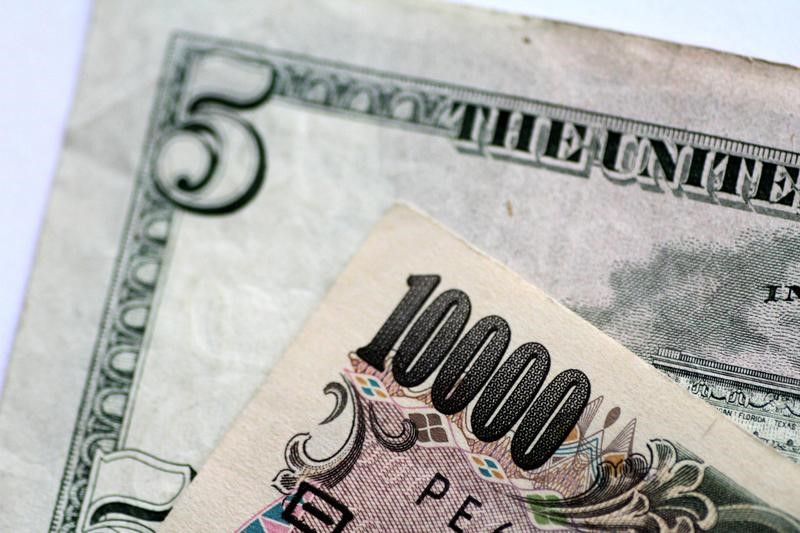
Asian currencies weakened against a firming dollar amid risk aversion related to the Israel-Iran conflict and ahead of major central bank meetings. The Japanese yen declined despite its safe-haven status, as investors await the Bank of Japan's (BOJ) rate decision, expected to remain unchanged, with focus on potential tapering of bond purchases and Governor Ueda's commentary on inflation. The Chinese yuan saw slight weakness following mixed economic data, with industrial production below expectations but retail sales exceeding forecasts, while the People's Bank of China is expected to hold its loan prime rate steady.
Asian currencies predominantly experienced downward pressure against a strengthening U.S. dollar, a trend driven by heightened risk aversion linked to the Israel-Iran conflict and anticipation surrounding a series of key central bank meetings. The Japanese yen (USDJPY rose 0.3%) notably weakened, diverging from its typical safe-haven behavior, as investors exercised caution ahead of the Bank of Japan's (BOJ) Tuesday meeting, where interest rates are expected to remain unchanged. Market focus is on the BOJ's potential adjustments to its bond purchasing program and Governor Kazuo Ueda's anticipated hawkish commentary regarding persistent inflation, although near-term policy shifts are considered unlikely due to economic growth uncertainties. The Chinese yuan (USDCNY rose slightly) also softened following mixed economic data; while May's industrial production growth undershot expectations, partly due to U.S. trade tariffs, retail sales significantly surpassed forecasts, bolstered by public holidays and e-commerce activity, offering some reassurance about consumer spending. The People's Bank of China is expected to maintain its loan prime rate. Broader Asian currency weakness was evident, with the dollar index and its futures gaining 0.1% amid expectations that the U.S. Federal Reserve will hold rates steady, though Chair Jerome Powell's forward guidance on rate cuts will be critical. Specific movements included the Australian dollar (AUDUSD) falling 0.1% and the Singapore dollar (USDSGD) rising 0.1% against the USD. The Indian rupee (USDINR) stabilized after earlier losses in June, which followed a larger-than-expected rate cut by the Reserve Bank of India. In contrast, the South Korean won (USDKRW pair fell 0.3%) strengthened, an outlier performance attributed to the liberal party's presidential victory, potentially signaling an end to recent political instability.
AI-powered research, real-time alerts, and portfolio analytics for institutional investors.
Request DemoOverall Sentiment
moderately negative
Sentiment Score
-0.40
Ticker Sentiment
