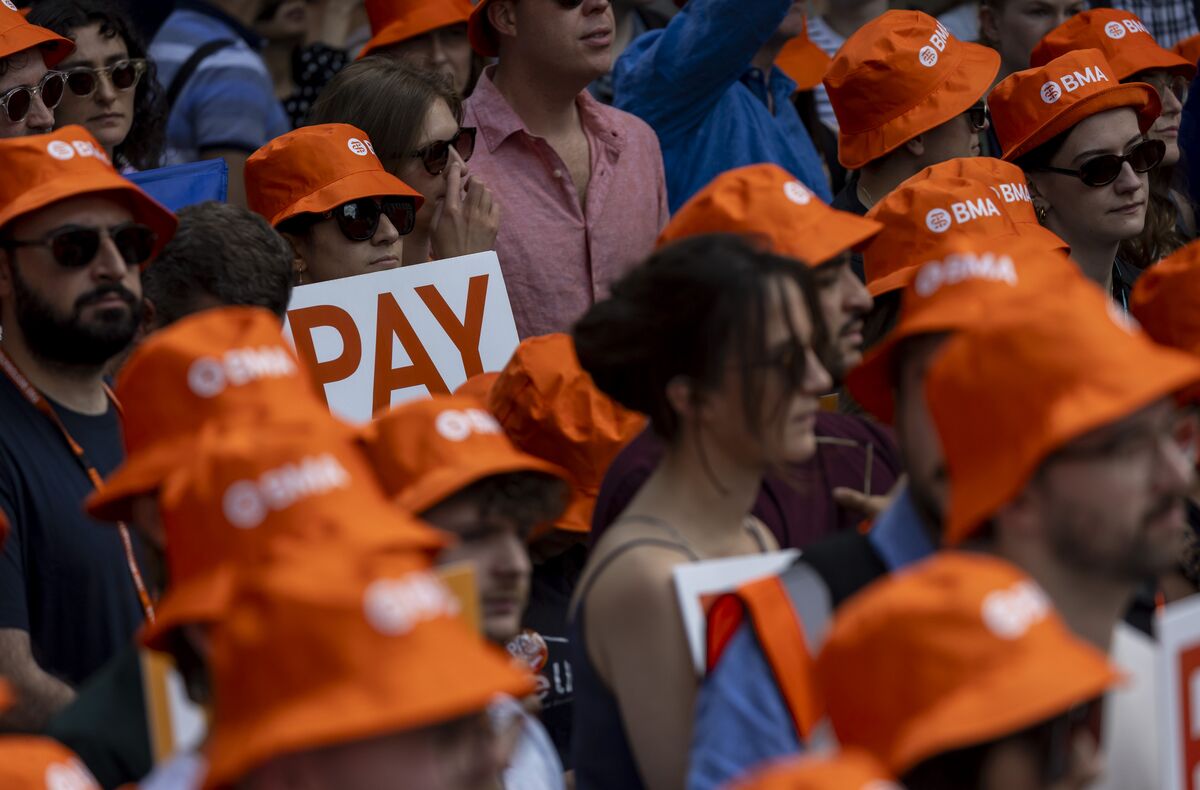
UK resident doctors have overwhelmingly voted (90% on 55% turnout) for new strikes over pay, representing a significant setback for Prime Minister Keir Starmer and his Labour government. This renewed industrial action, announced by the British Medical Association, occurs less than a year after a substantial wage increase was awarded to end previous disputes, highlighting persistent challenges in resolving public sector pay grievances and signaling potential ongoing disruption to healthcare services.
The overwhelming vote by UK resident doctors in favor of new strikes, with 90% approval on a 55% turnout, represents a significant political and fiscal challenge for Prime Minister Keir Starmer's Labour government. This development is particularly concerning as it comes less than a year after a substantial wage increase was awarded to end previous industrial action, indicating that underlying pay disputes remain deeply unresolved. The renewal of strikes signals persistent pressure on the UK's public finances and raises questions about the government's ability to manage wage inflation within the public sector. The situation introduces a notable element of uncertainty, reflected in the moderately negative sentiment, and points to further disruption within the National Health Service, which could have broader economic consequences through reduced productivity and strained public services.
AI-powered research, real-time alerts, and portfolio analytics for institutional investors.
Request DemoOverall Sentiment
moderately negative
Sentiment Score
-0.60
