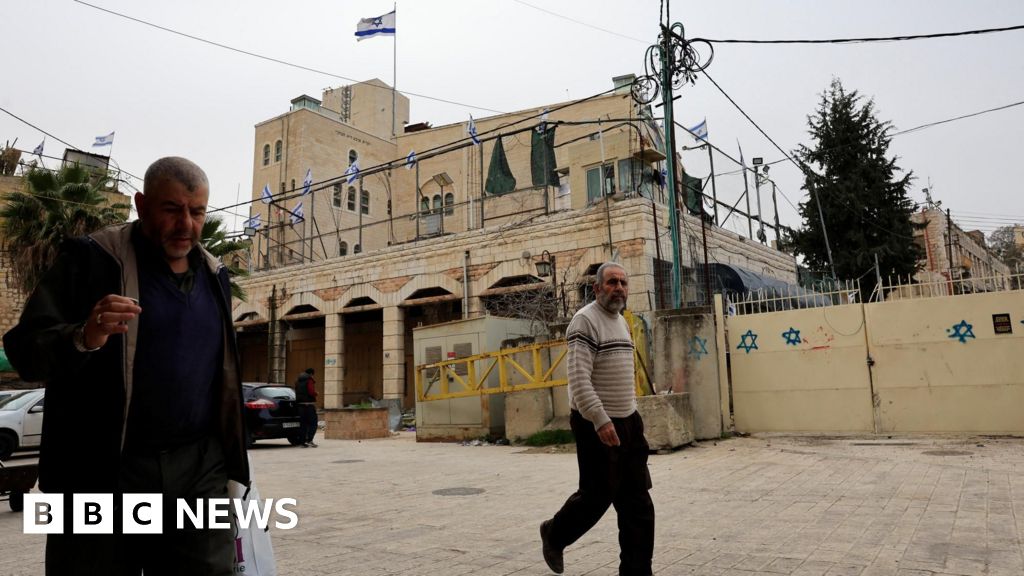
Israel's security cabinet approved a package of measures to ease Jewish settler purchase and control of West Bank land — including lifting a decades-old ban on direct land sales to Jews, declassifying land registry records, repealing transaction permit requirements, transferring licensing authority in sensitive Hebron sites, and reviving a committee to enable proactive land purchases. The moves, driven by far-right ministers and timed ahead of high-level diplomacy, have provoked regional and international condemnation and raise the risk of increased instability, displacement and legal challenges, with potential implications for regional security risk premia and investor sentiment ahead of domestic elections.
Market structure: The cabinet measures increase legal clarity for settler land purchases and effectively tilt future real-estate supply toward Israeli actors, boosting demand for construction/security services and Israeli defense/security contractors (Elbit/ESLT, LMT, RTX, NOC) over the next 3–12 months. Losers are Palestinian property owners, local PA-dependent firms, West Bank service sectors and any regional tourism/retail chains exposed to Area C—expect localized property seizures and reduced economic activity that can compress regional consumer demand by low double-digits in hotspots. FX and sovereign: bilateral risk pushes short-term pressure on the Israeli shekel (ILS) and a modest widening of 5–25bp on 10y Israeli spreads if violence escalates.
Risk assessment: Tail risks include broader military escalation involving Lebanon/Gaza (low probability, high impact) that could lift Brent +5–15% and gold +5–10% in 1–4 weeks and spike VIX >30. Immediate (days) risk is volatility around the Netanyahu–Trump meeting; short-term (weeks–months) is regulatory/legal pushback (UN/US diplomatic steps) and PA collapse; long-term (quarters–years) is structural annexation increasing chronic political risk and higher sovereign premia. Hidden dependencies: US political posture, Arab states’ economic/diplomatic reprisals, and Israeli domestic election dynamics are primary swing factors; proximate catalysts include settler construction starts, Hebron licensing actions, and Security Council resolutions.
Trade implications: Direct defensive longs: defense primes and cybersecurity (ESLT, LMT, CHKP) and macro hedges (GLD, TLT) for 1–3% AUM allocations; short/avoid concentrated Israeli real-estate exposure and PA-linked contractors. Use options to cost-effectively hedge: buy 3-month EIS (iShares MSCI Israel) 8–12% OTM puts (0.5–1% AUM) and 3-month Brent call spreads sized to 0.5–1% AUM. Sector rotation: shift 2–4% from EM/MENA discretionary into global defense/cyber and liquid sovereign-duration. Timing: tranche into positions ahead of the Netanyahu–Trump meeting and scale on any confirmed construction starts or >1% ILS depreciation.
Contrarian angle: Consensus treats this as purely political; markets often overshoot near-term risk—historical comparators (2014–2015 Gaza shocks) show equity drawdowns largely mean-reverted inside 3–6 months. Mispricings: selectively bought Israeli exporters with hard-currency revenues (TEVA, large-cap tech/security) could be undervalued if local risk is priced too steeply; unintended consequence—greater US security support could accelerate defense contract awards, creating a 6–12 month revenue lift for primes. Watch for an overreaction in Israeli sovereign CDS; a spike >40–50bp from baseline is likely transient and a tactical buy-the-dip for select high-quality names.
AI-powered research, real-time alerts, and portfolio analytics for institutional investors.
Request DemoOverall Sentiment
strongly negative
Sentiment Score
-0.55
