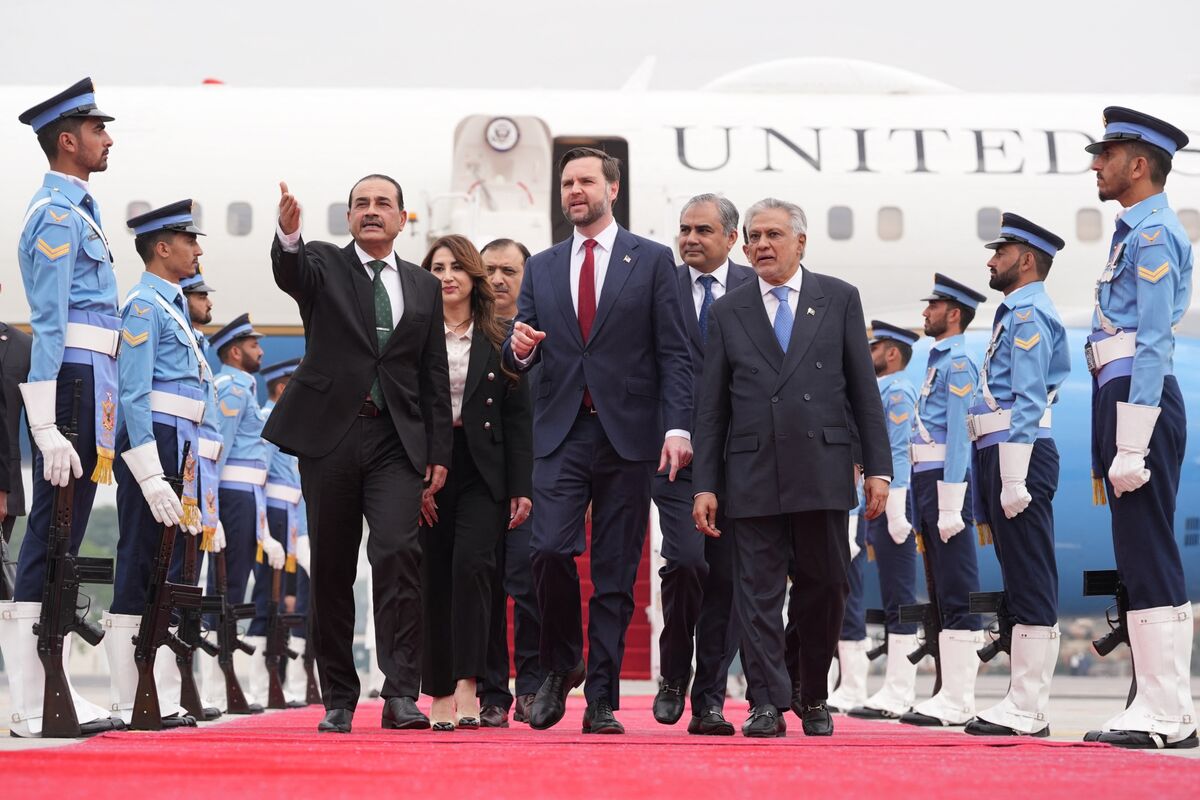
US and Iran began talks aimed at ending a six-week conflict in the Middle East, with Vice President JD Vance, envoy Steve Witkoff, and Jared Kushner meeting in Islamabad after a fragile ceasefire. It was still unclear six hours after Vance arrived whether direct US-Iran negotiations had started. The development is geopolitically significant and could affect broader risk sentiment, oil, and defense-related markets.
The market should think about this less as a clean de-escalation trade and more as a volatility-compression event with asymmetric reversal risk. Even if talks hold, the first-order economic effect is likely to be in energy, shipping, and regional risk premia; the second-order effect is that a credible diplomatic channel reduces the probability of repeated infrastructure shocks that had been supporting defense orders, emergency logistics, and select EM risk premiums. That makes the biggest loser not any single asset class, but the tail-risk premium embedded across oil-linked FX, insurers, and Middle East sovereign spreads.
The underappreciated winner is the logistics complex outside the immediate theater: lower perceived disruption should steepen the path to normalizing Red Sea/Suez routing, which improves effective vessel supply and pressure on freight rates with a lag of weeks to months. That is bearish for container and tanker owners if the ceasefire lasts, but the move may be overstated near term because charter markets usually wait for physical confirmation, not headlines. If the talks merely freeze conflict without a sanctions framework, crude can drift lower for a few sessions and then stabilize as traders realize supply removal is not yet coming back.
The contrarian view is that diplomacy can actually increase medium-term geopolitical optionality for Iran rather than eliminate it: partial normalization, if it emerges, would support gradual export recovery and FX stabilization, but the political path is fragile and reversible on any verification dispute. That means the best expression is not a naked macro bet on peace, but a pair trade that monetizes reduced tail risk while keeping optionality for renewed escalation. The time horizon is days for crude and defense sentiment, weeks for freight and EM credit, and months only if a sanctions-relief mechanism becomes credible.
AI-powered research, real-time alerts, and portfolio analytics for institutional investors.
Request DemoOverall Sentiment
neutral
Sentiment Score
0.00
