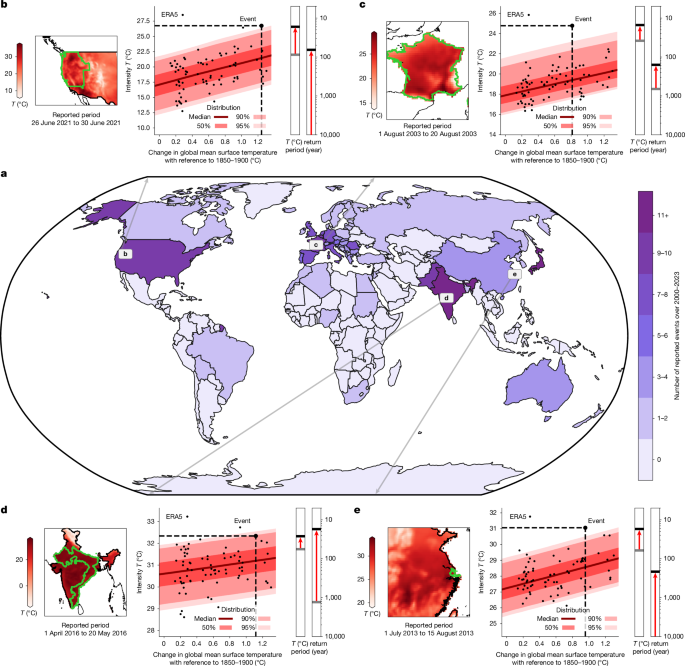
A new study systematically attributes 213 historical heatwaves (2000-2023) to climate change, finding they became significantly more likely and intense, with one-quarter virtually impossible without anthropogenic influence. Crucially, the research quantifies the contribution of 180 "carbon majors" (fossil fuel and cement producers), revealing their emissions account for half of the observed increase in heatwave intensity since pre-industrial times, a contribution that is rising. Depending on the carbon major, their individual emissions enabled between 16 and 53 heatwaves that would have been virtually impossible in a preindustrial climate. This rigorous attribution provides critical scientific evidence for climate litigation and corporate accountability, directly linking specific emitters to extreme weather events and strengthening the basis for assessing legal and financial liabilities.
A new study in Nature establishes a direct, quantifiable link between the emissions of 180 major fossil fuel and cement producers, termed 'carbon majors,' and the increased severity and frequency of historical heatwaves. The research systematically attributes 213 heatwaves from 2000-2023 to climate change, finding that emissions from these carbon majors contributed to half the increase in heatwave intensity since pre-industrial times. These entities, which include publicly traded firms like ExxonMobil, Shell, and BP, are collectively responsible for 57% of total cumulative anthropogenic CO2 emissions. The analysis highlights that while the top 14 carbon majors have an impact equal to the other 166 combined, even the smallest emitter's emissions were sufficient to enable the occurrence of 16 heatwaves that would have been virtually impossible in a preindustrial climate. The primary significance of this research, as stated by its authors, is its potential to fill an 'evidentiary gap' in climate litigation by providing a causal chain from specific corporate emitters to damages from extreme weather events, thereby elevating the legal and financial liability risk for these companies.
AI-powered research, real-time alerts, and portfolio analytics for institutional investors.
Overall Sentiment
strongly negative
Sentiment Score
-0.75
Ticker Sentiment
