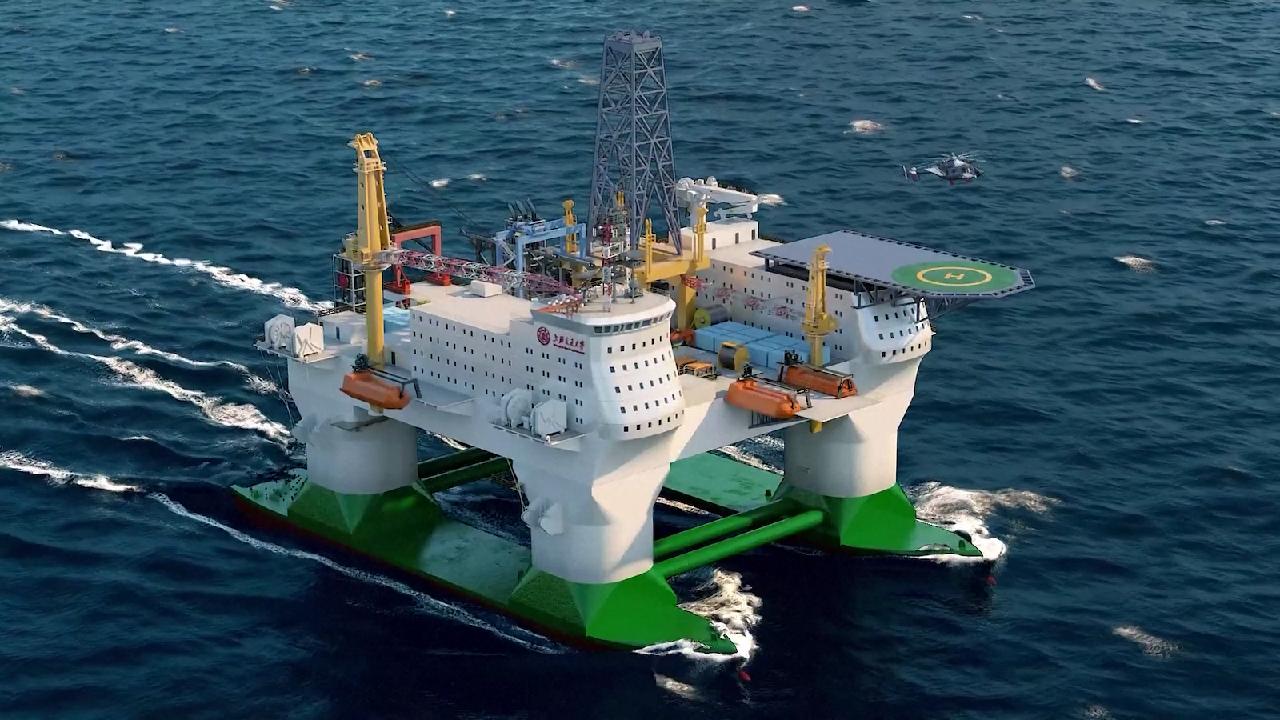
Construction began on a deep-sea floating research facility in Shanghai, built by Shanghai Jiao Tong University and scheduled for completion by 2030. The semi-submersible twin-hull platform and shipborne labs can test large-scale equipment up to ~100 tonnes and operate at depths up to 10,000m, with shore-based support for cross-seasonal scientific observation. It will provide a real-sea testing platform for deep-sea mining and offshore oil & gas equipment and is expected to improve typhoon forecasting and marine ecosystem research. Near-term market impact is limited, though it could benefit marine engineering, resource exploration and environmental monitoring sectors over the medium to long term.
This facility is a structural accelerator for the marine systems ecosystem rather than a near-term commodity shock. By centralizing repetitive, high-cost sea trials into a mobilizable platform, expect validation cycles for subsea robotics, survey systems and metocean sensors to compress from multi-year program cadences to quarter-to-year cadences — that amplifies revenue visibility for specialist engineering vendors and testing services over the next 12–36 months.
Second-order winners are the outsourced survey/geotechnical contractors, high-end sensor and imaging vendors, and systems integrators who monetize recurring campaign work; losers are early-stage miners and speculative juniors whose valuations assume rapid commercial extraction. Regulatory and ESG friction remains the most significant control on realization: environmental litigation, international moratoria, or export-control tech blocks could push commercialization timelines into the 5–15 year band, preserving upside for suppliers but crushing permit-dependent miners.
Near-term catalysts to watch are: (1) announced service contracts and backlog bookings from coastal universities/operators in the next 12 months, (2) demonstrable increases in in situ test campaigns (quarterly press releases and tender awards), and (3) any regulatory signals (domestic or international) on seabed mining policy over the next 24 months. Tail risks include a high-profile equipment failure or an environmental incident during trials that could reset permitting and investor sentiment within weeks, reversing momentum across the supplier chain.
AI-powered research, real-time alerts, and portfolio analytics for institutional investors.
Request DemoOverall Sentiment
mildly positive
Sentiment Score
0.20
