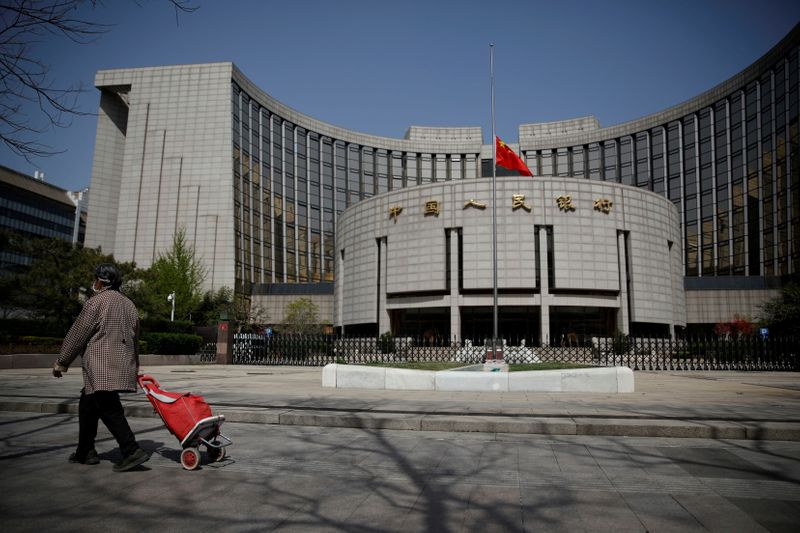
China kept its one-year loan prime rate unchanged at 3.00% and its five-year LPR at 3.50% for an eleventh straight month, matching expectations. The hold signals policy stability as first-quarter growth improved to around 5%, reducing the need for broad rate cuts. Analysts expect the PBoC to use targeted liquidity tools or reserve requirement adjustments instead of headline easing, with inflation firming and external risks still present.
China’s decision to keep policy settings steady is less important than what it implies for cross-asset duration: the market is being told that authorities see enough growth stabilization to avoid a broad easing cycle, but not enough confidence to engineer an aggressive reflation trade. That combination typically suppresses volatility in Chinese rates while shifting stimulus expectations toward plumbing tools, which tends to favor banks and high-quality credit over cyclical beta. For global risk assets, the key second-order effect is that liquidity support becomes more selective, so the market should stop pricing a clean “China impulse” for commodities and industrials. For the U.S. AI hardware complex, the implication is slightly negative at the margin because a steadier China reduces the odds of a rapid policy-driven capex rebound from Chinese cloud and industrial buyers. That does not break the secular story for SMCI or APP, but it lowers the probability of multiple expansion from macro rather than fundamentals over the next 1-3 months. In practice, these names still trade on earnings revisions and positioning, so any disappointment in enterprise spend or ad budgets will matter more when macro tailwinds are absent. The contrarian read is that the absence of headline rate cuts is not bearish if it prevents currency pressure and preserves policy firepower. If Chinese growth remains near trend and inflation firms, the better trade may be to favor domestically supported lenders and liquidity-sensitive sectors over long-duration growth proxies. The risk to this view is a sudden downturn in PMIs or property activity over the next quarter, which would force the PBOC back into easing and reprice the entire basket. For timing, the market likely needs 4-8 weeks of data confirmation before discounting the no-cut stance as durable. If that happens, the biggest winners are probably not the obvious stimulus beneficiaries, but the names that benefit from lower policy uncertainty and less aggressive currency/debt stress.
AI-powered research, real-time alerts, and portfolio analytics for institutional investors.
Overall Sentiment
neutral
Sentiment Score
0.05
Ticker Sentiment
