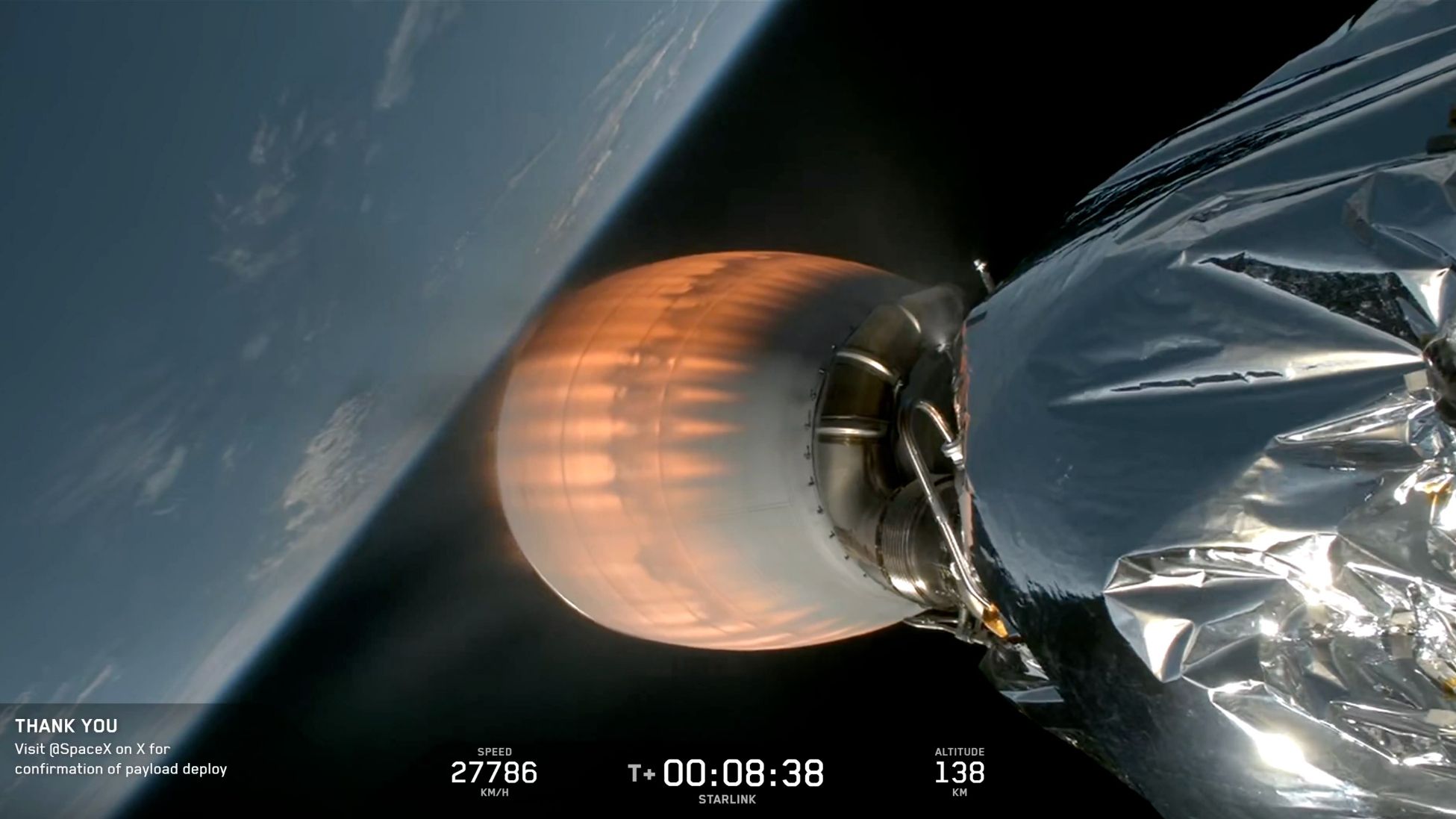
SpaceX has temporarily grounded its Falcon 9 fleet after a Feb. 2 upper-stage anomaly in which the stage failed to perform a planned deorbit burn following deployment of 25 Starlink satellites; the stage was passivated and lowered to a 68.4-mile (110-km) perigee and is expected to reenter quickly. SpaceX and the FAA are investigating root cause and corrective actions, with NASA embedded in the probe because a high-profile Crew-12 launch to the ISS is scheduled for Feb. 11 to restore the station's seven-person crew. The pause is operationally notable given Falcon 9's heavy launch cadence (a record 165 launches in 2025) but, to date, represents a contained anomaly rather than a systemic failure.
Market structure: A short Falcon 9 grounding is a tactical win for alternative launchers and capacity-constrained small-sat integrators — Rocket Lab (RKLB) and regional providers can pick up 10–25% of near-term manifests if the pause lasts >2–4 weeks. Large defense primes (LMT, NOC, RTX) see neutral-to-positive ordering tailwinds from increased government demand and potential premium on assured access to space, while pure-play commercial space names (SPCE, small-cap launch integrators) are most exposed to revenue timing risk.
Risk assessment: Immediate (days) risk is schedule slippage for Crew‑12 and manifest backlog; short-term (weeks) risk is an FAA-ordered fleet inspection that could extend downtime and reprice insurance premiums +10–30%; long-term (quarters) risk is reputational/regulatory tightening that could raise O&M costs across the industry. Tail scenarios: a fleet-wide grounding >6 weeks (low probability) would materially shift market share to competitors and force re-contracting — monitor FAA bulletins and SpaceX return-to-flight rationale within 7–14 days.
Trade implications: Tactical trades should express asymmetric, option-defined upside to launch-availability winners and defensive rotation into primes. Favor limited-risk call spreads on RKLB (3-month) and increase cash exposure to LMT/RTX by small percentages as volatility hedges; trim high-volatility pure-play space equities by ~20% if your holding period <6 months. Cross-asset: expect modest widening (5–20bps) in aerospace credit spreads and a 1–2pt bump in implied vols for satellite/space equities overnight if grounding persists beyond a week.
Contrarian angle: Consensus assumes protracted pain for SpaceX; history shows many groundings resolve within 1–3 weeks — if FAA/SpaceX publish a corrective-action plan within 7 days, expect a snapback (15–30%) in beaten-down small-cap space names. Mispricing risk: buying outright equities is riskier than buying short-dated call spreads or pair trades that capture reallocation of manifests without taking large downside exposure.
AI-powered research, real-time alerts, and portfolio analytics for institutional investors.
Request DemoOverall Sentiment
mildly negative
Sentiment Score
-0.25
