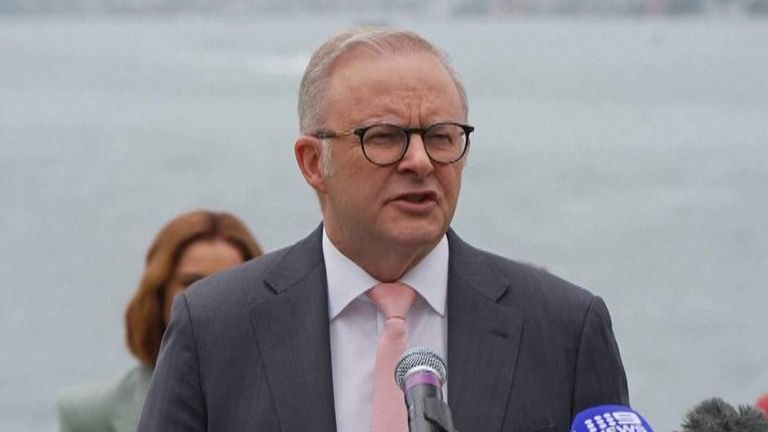
Australia has enacted a controversial ban banning under-16s from major social media platforms, exposing noncompliant firms to fines up to A$75m (reported as $49.5m) and prompting the deactivation of more than 200,000 TikTok accounts as officials begin enforcement; Prime Minister Anthony Albanese warned implementation “won't be perfect.” The move has immediate commercial implications—children with monetized followings and parent-run businesses say they'll suffer lost income, two teens have launched legal challenges, and firms face ongoing compliance burdens as some minors try to evade age checks. The law is being watched globally amid Ofcom data showing UK children spend nearly three hours a day online and 70% of 11–17 year‑olds encountered harmful content in a four‑week period, underscoring regulatory risk and potential operational and reputational costs for platforms and creator economies.
Australia implemented a nationwide ban on social media accounts for children under 16 effective Wednesday, exposing noncompliant platforms to fines of up to $49.5m (£25m) and prompting the deactivation of more than 200,000 TikTok accounts; Prime Minister Anthony Albanese acknowledged implementation "won't be perfect" and has lost over 6,000 followers on TikTok and Instagram since the policy rollout. Enforcement faces immediate operational challenges as teenagers reportedly subvert age-estimation technology by using drawn facial hair or adults' accounts, and two teenagers have launched legal action contesting the law.
The policy has direct commercial consequences for creator-led income: parents and young influencers — exemplified by the Clements twins — report lost revenue, and platforms face elevated compliance costs, content-moderation burdens and potential user attrition in a defined demographic. Communications minister Anika Wells signalled ongoing sweeps and said the government will report by Christmas on effectiveness, indicating near-term volatility in account counts and enforcement metrics.
The move is being watched globally amid Ofcom data showing UK 8–14-year-olds average nearly three hours online daily and 70% of 11–17-year-olds encountering harmful content in four weeks, highlighting regulatory risk to ad targeting, in-app purchases and the creator economy. Investors should treat this as a precedent that raises legal, reputational and revenue risks for platforms with concentrated youth audiences until compliance outcomes and judicial challenges are resolved.
AI-powered research, real-time alerts, and portfolio analytics for institutional investors.
Request DemoOverall Sentiment
mildly negative
Sentiment Score
-0.25
