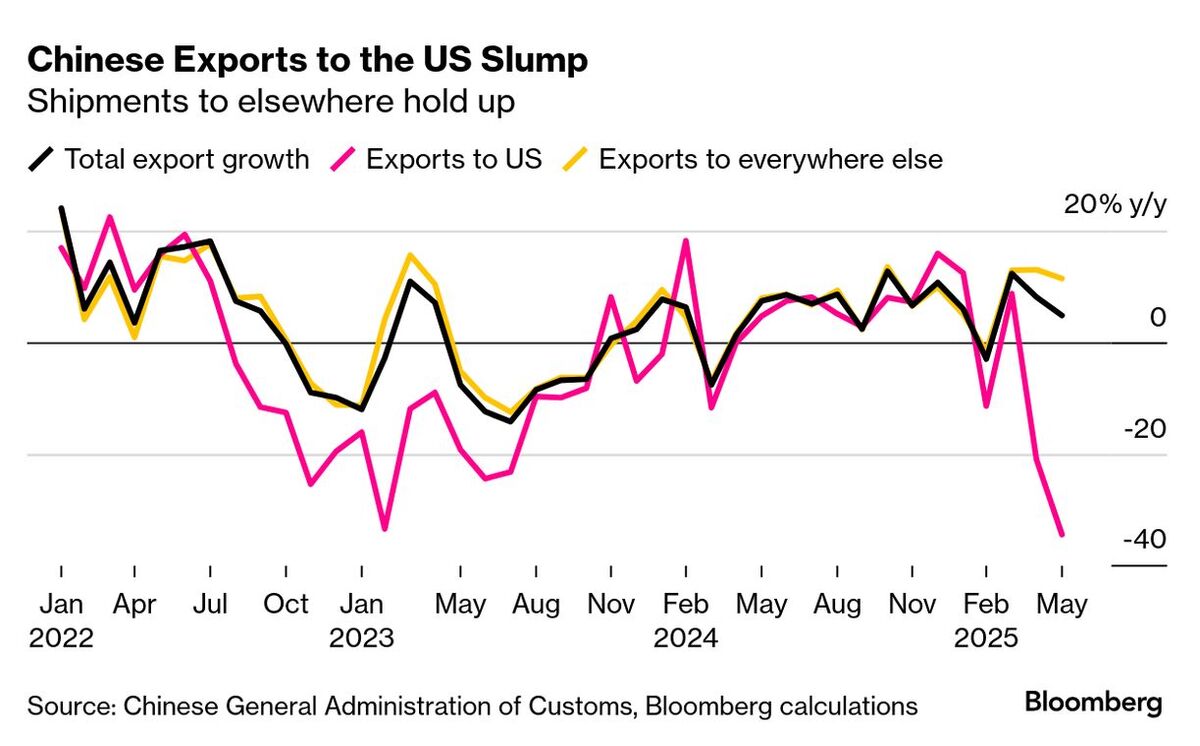
As U.S. and Chinese negotiators meet in London, questions arise regarding the strength of President Trump's leverage in trade talks. The article suggests that the U.S. bargaining position is not improving, implying that the tariffs imposed by the Trump administration may not be providing the intended advantage in negotiations.
Current US-China trade negotiations in London are proceeding under a cloud of skepticism regarding the efficacy of President Trump's tariff-based leverage, with the article suggesting this leverage may be a diminishing rather than appreciating asset. This challenges the premise that US tariffs are strengthening its bargaining position, introducing significant uncertainty into the outlook for these trade discussions, a sentiment underscored by a moderately negative score of -0.55 and an uncertain tone. The situation highlights the potential for shifts in geopolitical dynamics to impact trade policy outcomes, with broader implications for market sentiment tied to international trade relations, particularly concerning themes of tax, tariffs, and trade policy.
AI-powered research, real-time alerts, and portfolio analytics for institutional investors.
Request DemoOverall Sentiment
moderately negative
Sentiment Score
-0.55
