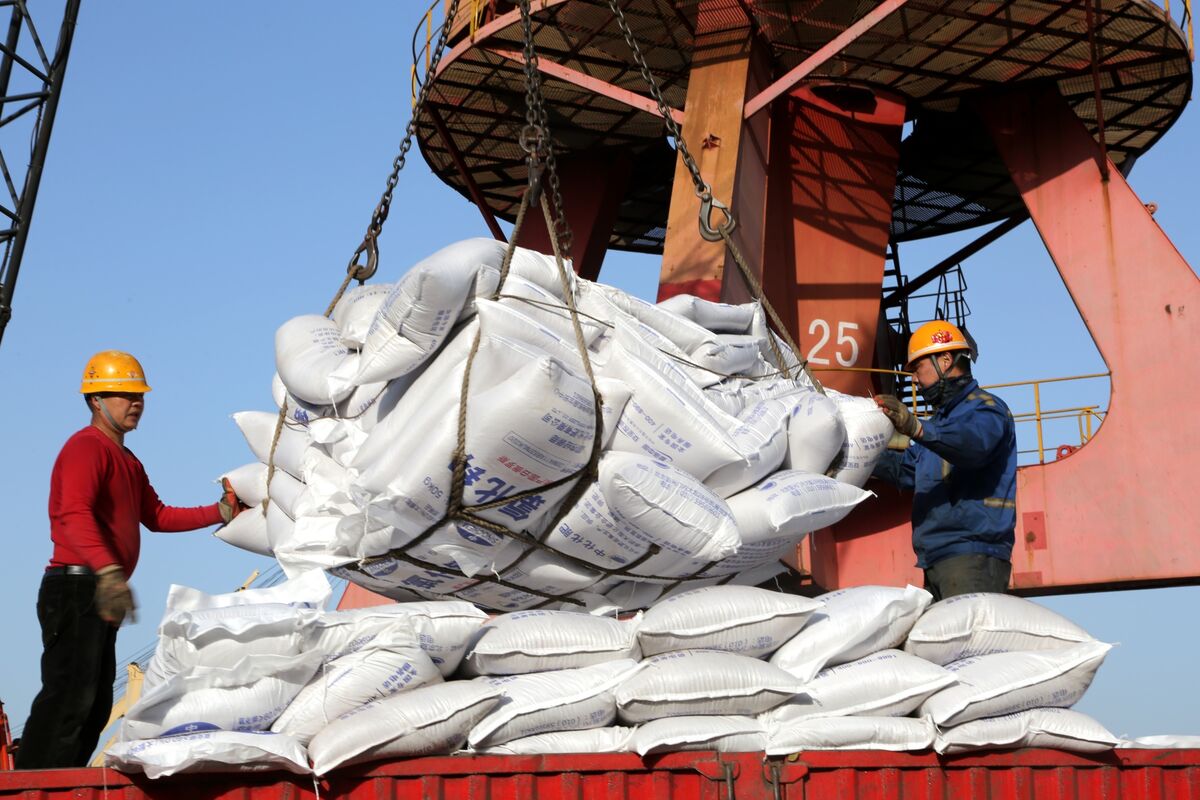
Stockpiles of fertilizer in the Philippines are sufficient to last through May. The government is negotiating with major producers including China and Russia to safeguard supply amid concerns exporters may not deliver as the Middle East war keeps prices elevated; China’s ambassador assured Manila Beijing will not freeze exports.
The Philippines’ attempt to diversify fertilizer suppliers is a near-term signal of tightening regional availability that will crystallize most clearly around the June–July planting window. Inventory coverage into May compresses the optionality of buyers: any shipping, insurance or payment disruptions through May will force accelerated purchases in a narrow post-May window, increasing spot volatility and creating a 30–60 day price squeeze on DAP/urea where small (%-level) supply misses can translate into 20–40% spot moves. Sourcing from China/Russia is a double-edged supply fix: it reduces acute shortage risk but raises medium-term counterparty and sanctions exposure, and it can rewire trade flows away from Western producers, lowering their regional pricing power over 6–24 months. Operationally, the bottle-necks to watch are freight capacity, payment channel workarounds, and chimney‑timelines for fertilizer shipments (typically 3–8 weeks from port load to inland delivery in SE Asia) — any disruption in these links magnifies price impulse. Macro second-order: elevated fertilizer prices feed directly into planting costs and thus food inflation, which pressures EM FX and local real rates in import-dependent countries — expect tighter local policy rhetoric and potential FX intervention if food CPI accelerates by >100–150bps over a quarter. Reversal catalysts: credible, large-scale alternative supply (Russian/Chinese volumes cleared and insured on open-market terms) or a rapid drop in global energy costs that restores margins to high-cost producers, both of which can unwind price premia within 1–3 months of execution.
AI-powered research, real-time alerts, and portfolio analytics for institutional investors.
Overall Sentiment
neutral
Sentiment Score
0.00
