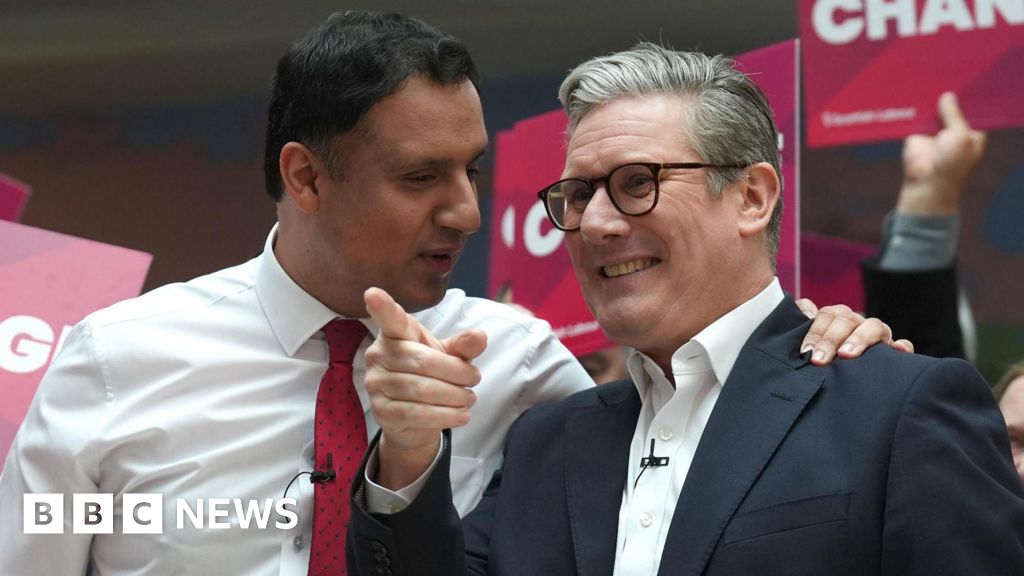
Scottish Labour leader Anas Sarwar publicly called for UK prime minister Keir Starmer to resign over the appointment of Lord Mandelson, signalling a major intra-party break that risks fracturing Labour's Holyrood campaign. The move heightens political uncertainty ahead of a crucial Scottish election and an upcoming Gorton and Denton by-election, raising the prospect of wider leadership pressure at Westminster and a potential distraction from policy debates that could reverberate through UK political narratives, though near-term market impact is likely minimal.
Market structure: Short-term winners are large, internationally earners on the FTSE 100 (exporters, energy, defence) while domestic mid/small caps (FTSE 250, housebuilders, retail) are the most exposed. Expect a 1–3% directional move in GBP and a relative 3–7% underperformance of FTSE 250 vs FTSE 100 over weeks if political fractures deepen; gilts could cheapen (10–30bp move in 10y) on heightened fiscal/policy uncertainty.
Risk assessment: Tail risks include a surprise PM resignation triggering a snap general election or a hardening of Scottish independence rhetoric — both would amplify GBP/gilt stress and domestic equity weakness (low-probability, high-impact). Time horizons: immediate (days) = volatility spikes in GBP/gilts and FTSE 250; short-term (weeks–months) = Holyrood/by-election results drive real-money flows; long-term (quarters) = leadership change could reset fiscal stance and reverse sector leadership.
Trade implications: Favor relative exposure to blue‑chip exporters vs domestic cyclicals; hedge FX/gilt exposure with short-dated options/futures. Use 4–12 week horizons for directional plays and keep size modest (1–3% risk budget) because outcomes hinge on electoral/by-election catalysts and leadership timelines.
Contrarian angle: Consensus assumes prolonged UK risk‑off; history (post‑PM shocks in 2022–23) shows most moves are front‑loaded and mean‑revert within 2–3 months once succession is clear. If Starmer is replaced quickly, domestic cyclicals can rally sharply — set clear leadership‑clarity triggers to reverse shorts rather than hold through a regime shift.
AI-powered research, real-time alerts, and portfolio analytics for institutional investors.
Request DemoOverall Sentiment
mildly negative
Sentiment Score
-0.25
