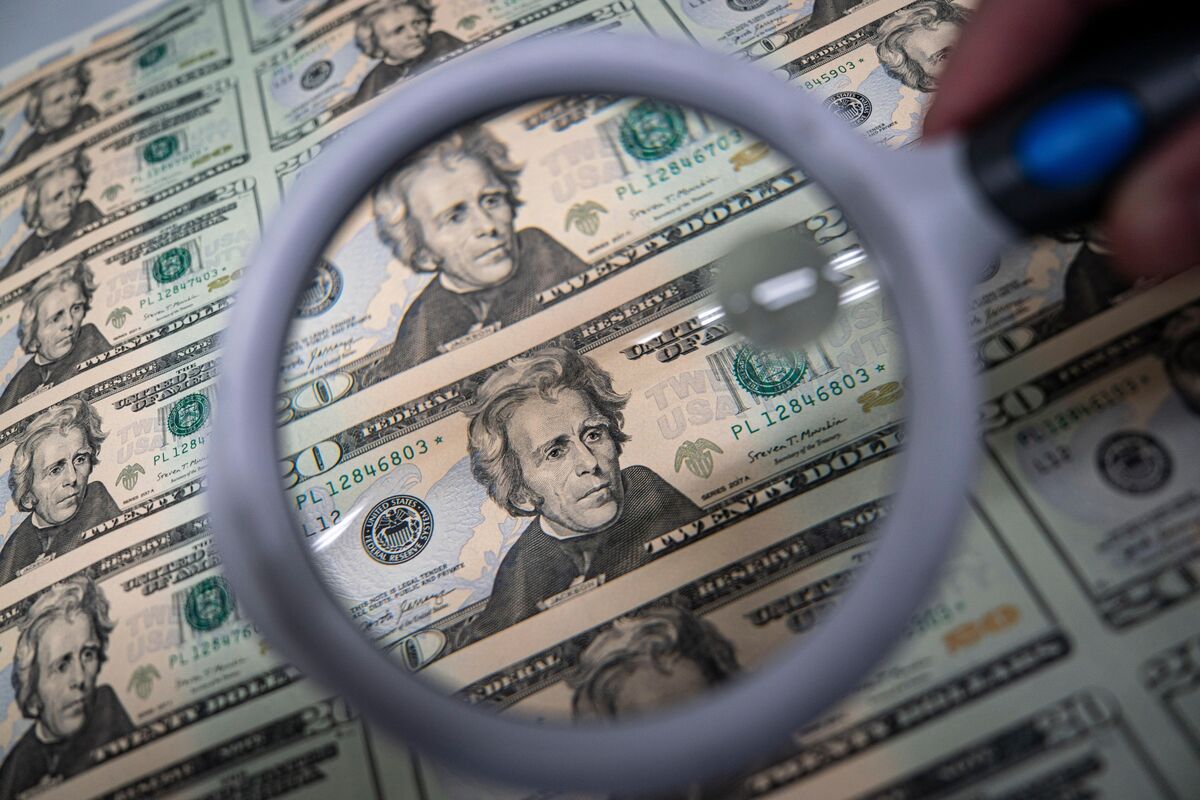
The U.S. dollar recorded its largest intraday gain in two weeks, advancing 0.4% against major peers, as investors re-evaluated the Federal Reserve's policy outlook as less dovish than previously anticipated. This shift prompted a reduction in market bets on future interest-rate cuts, leading to declines in currencies such as the New Zealand dollar and South Korean won.
The U.S. dollar posted its most substantial intraday gain in two weeks, with the Bloomberg dollar gauge advancing by as much as 0.4% against all major currency peers. This appreciation stems from a market re-evaluation of the Federal Reserve's policy outlook, which is now perceived as less dovish than previously priced in following the latest policy decision. Consequently, investors have scaled back their expectations for future interest-rate cuts. The dollar's broad-based strength exerted pressure on other currencies, with the New Zealand dollar and South Korean won leading the declines, indicating a recalibration of positions in response to a potentially more hawkish Fed stance.
AI-powered research, real-time alerts, and portfolio analytics for institutional investors.
Request DemoOverall Sentiment
moderately positive
Sentiment Score
0.50
