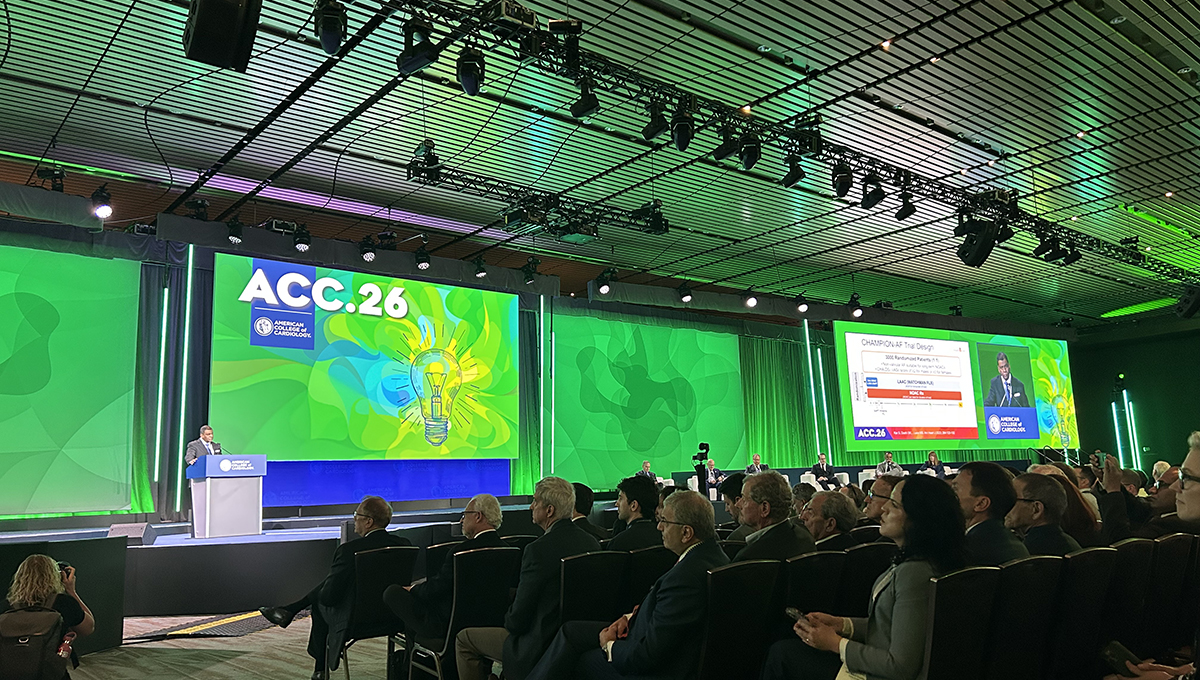
CHAMPION-AF met noninferiority at 3 years: primary endpoint (CV death, stroke, systemic embolism) 5.7% with Watchman FLX LAAO vs 4.8% with DOACs (absolute difference 0.9%, 95% CI -0.8% to 2.6%; NI margin 4.8%). Non-procedure-related bleeding was lower with LAAO (10.9% vs 19.0%), but combined procedure + non-procedure ISTH major bleeding was similar (5.9% vs 6.4%). Caveats include a numerically higher ischemic stroke rate with LAAO (3.2% vs 2.2%), device-related thrombus in 4.8% imaged (1.8% clinically relevant), low event rates versus assumptions, and industry funding (Boston Scientific) prompting continued skepticism about broad substitution for DOACs.
Market reaction will likely over-index to the binary policy question — is device therapy an acceptable substitute for chronic anticoagulation — while underweighting the practical frictions that determine real incremental volume. Adoption in the next 12–24 months will be driven more by payer coverage memos, local hospital credentialing, and operator economics than by the headline trial alone; I model a plausible scenario where differentiated coverage in 20–30% of tertiary centers produces mid-single-digit device revenue upside for the manufacturer, but national expansion requires 12–36 months and additional positive evidence.
The largest tail risks are nonlinearly asymmetric: an adverse safety signal (persistent ischemic-stroke excess, higher DRT, or procedural complications aggregated in real-world registries) could prompt restrictive labeling, delayed reimbursement, or litigation, erasing the commercial premium within a single quarter. Conversely, consistent 5‑year outcome parity or a positive rival-device readout would open low-double-digit annual growth but only after multi-year evidence accumulation and guideline updating.
Second-order effects matter to capital equipment and consumables. If operators shift to combined procedures (occlusion + ablation) it raises peripheral disposable demand and OR/cath-lab utilization; that benefits companies with high-margin catheter/console recurring revenue while compressing pricing power for pure capital-equipment vendors. Expect localized increases in demand for imaging/TEE probes and P2Y12 agents, creating modest upstream supplier leverage but also potential bottlenecks in high-volume EP hubs that could slow rollouts.
For investors, the sensible stance is selective exposure to the device maker with option structures that monetize a favorable but conditional adoption outcome, paired with small tactical downside protection against a rapid payor/regulatory reversal. Watch three near-term catalysts: payer coverage decisions (6–12 months), competitor trial readouts (12–36 months), and real-world registry safety signals (rolling).
AI-powered research, real-time alerts, and portfolio analytics for institutional investors.
Request DemoOverall Sentiment
mixed
Sentiment Score
0.05
Ticker Sentiment
