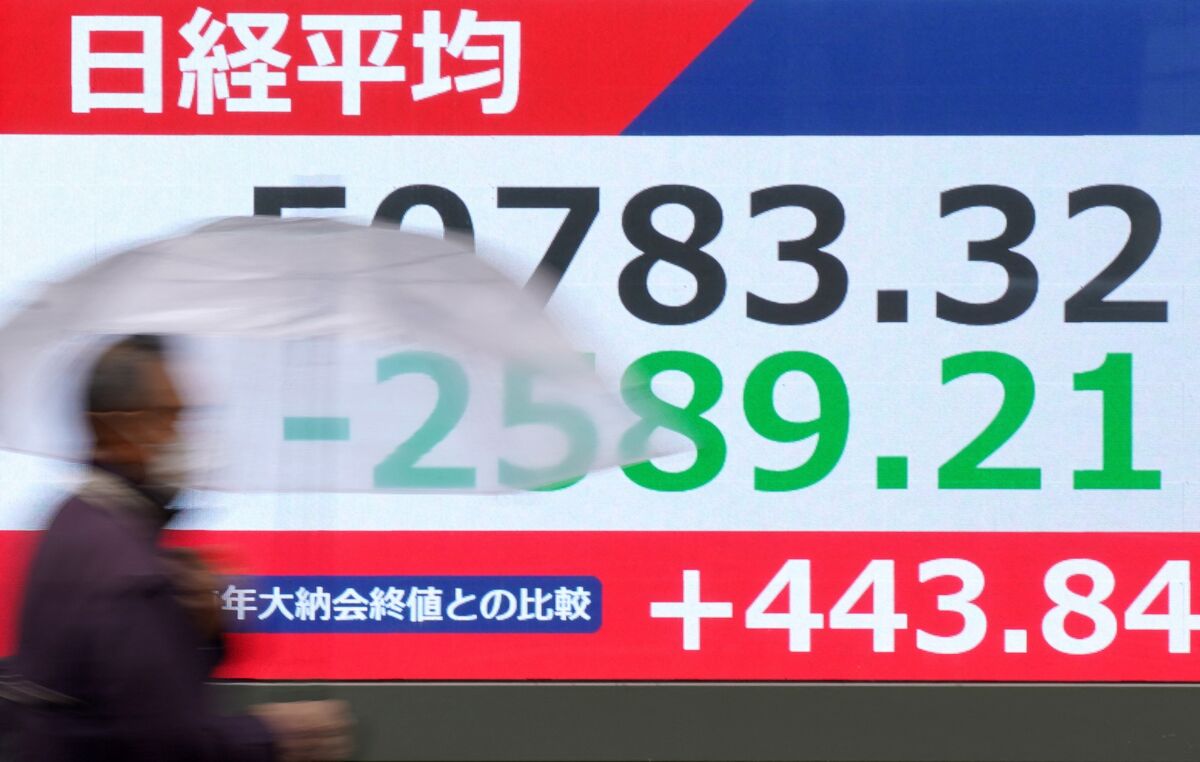
Topix has fallen more than 7% since the US-Israeli attack on Iran, prompting investors in Japanese equities to hedge against further downside as the Middle East war persists. The market remains volatile and defensive — stocks rallied 2.6% on Wednesday after signs the US was seeking to de-escalate, but overall positioning is tilted toward hedges and downside protection.
The dominant market microstructure effect is hedging-driven convexity: corporate treasuries, pensions and retail structured-product issuers have been buying near-term downside protection and using futures to delta-hedge, which amplifies intraday moves via dealer gamma. That creates a regime where short-term implied vols and put/call skew are elevated, producing outsized weekend jump risk but also a high probability of sharp mean-reverting rallies when headlines cool and dealers buy back hedges.
Winners/losers separate along currency and supply-chain exposures rather than pure industry buckets. Firms that invoice in dollars or have large overseas manufacturing will see margin relief if the yen weakens into risk-off episodes, while domestically focused discretionary names (travel, retail, regional banks reliant on fee income from equities) take outsized mark-to-market hits and may tighten lending in months thereafter. Insurance and pension balance sheets face two second-order stresses: realized volatility increases liability hedging costs, and higher commodity/shipping insurance premiums raise operating costs for trade-heavy sectors.
Catalysts that will flip the regime are binary: a credible de-escalation (days–weeks) should drain near-term vol and trigger a squeeze as gamma unwinds; conversely, an escalation that materially lifts oil >$10 from current levels (weeks–months) will keep vols high and force structural re-hedging across corporates. Watch USD/JPY moves and JGB yields as leading indicators — a >3% move in USD/JPY or a 10–15bp move in 10yr JGBs typically precedes directional rotations in exporters vs domestics.
The consensus risk-off position is partially mechanical and therefore transient. If you can stomach headline noise, buying selective quality exporters after hedging-cost normalization and harvesting elevated option premia via calendar structures offers asymmetric payoff: protects against short-term shock while retaining exposure to a multi-quarter earnings recovery driven by global demand.
AI-powered research, real-time alerts, and portfolio analytics for institutional investors.
Request DemoOverall Sentiment
mildly negative
Sentiment Score
-0.30
