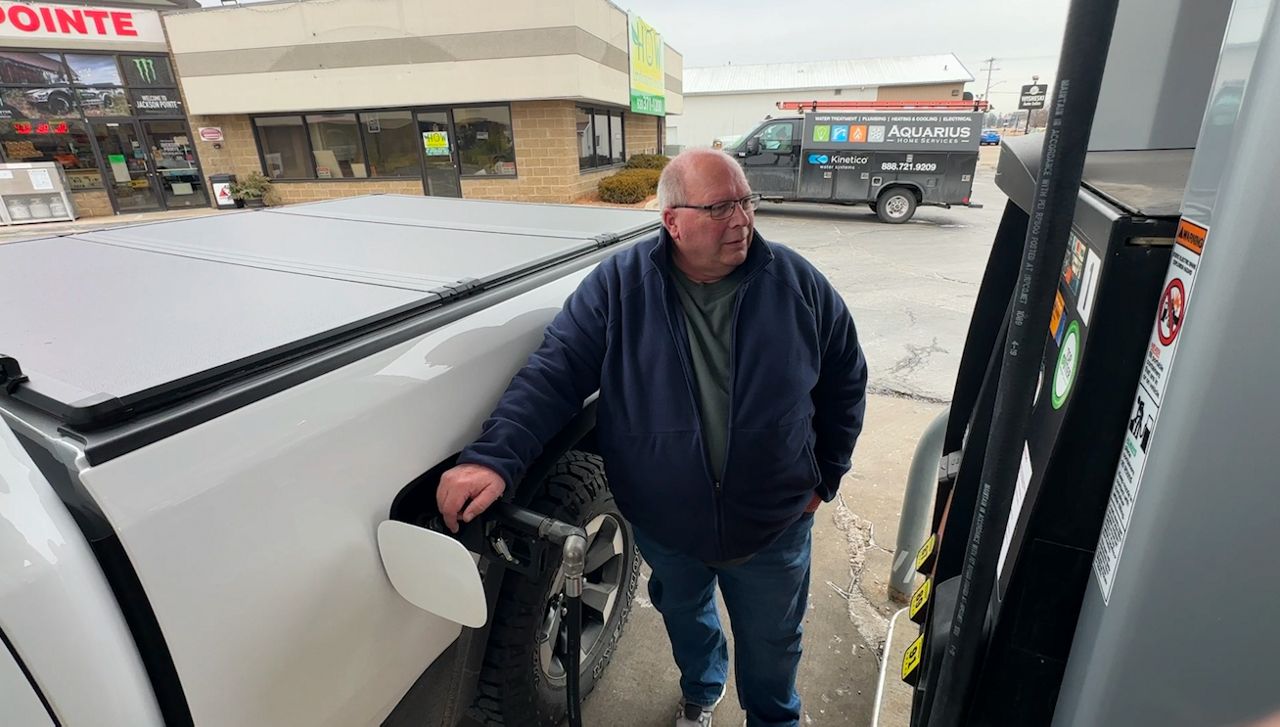
Fifteen New York state senators asked Gov. Kathy Hochul to suspend state and local gas and diesel taxes (a proposed tax holiday) in response to fuel-price spikes tied to the war in Iran; the 2022 tax holiday cut roughly $0.16/gal in state excise and sales taxes. Lawmakers cite current prices of ~$3.94/gal for regular and $5.77/gal for diesel and note the state tax is ~ $0.33/gal plus 7–8% local sales taxes; Gov. Hochul pushed back, saying prior holidays didn’t lower consumer prices and urging federal relief instead.
A state-level gas tax pause is primarily a policy-amplified price-signal event: the immediate “relief” can be sterilized by local retail pricing behavior within days, creating a two-way bet between mandated tax mechanics and merchant pass-through. If retailers widen pump margins instead of passing through, regional refiners and wholesale distributors with downstream marketing arms see transitory uplift in retail margin capture, while independent stations and low-margin operators see compressed throughput and solvency stress.
County-by-county variability creates frictional arbitrage: consumers and freight planners will re-route across borders to exploit lower effective pump prices, altering short-haul fuel demand patterns and local retail volumes for weeks; persistent differential will shift inventory and staffing needs for truckstops and urban delivery networks. Fiscal second-order effects play out over quarters — reduced state/local gasoline tax receipts force either budget reallocation, short-term borrowing, or cuts to capital maintenance, increasing credit risk for transportation-backed munis and contractors exposed to public spending timing.
Key catalysts to watch are threefold and on different horizons: legislative votes and county opt-ins (days–weeks) determine local exposure; oil-market shocks or diplomatic moves around the Strait of Hormuz (days–months) can swamp any policy relief; and treasury/municipal responses to revenue shortfalls (months) will determine lasting credit impacts. Tail risk is a coordinated federal intervention (tax relief or SPR release) which would mute state-level policy value and quickly reprice energy, whereas retailer anti-competitive behavior or weak enforcement would transfer the relief from consumers to merchant margins almost immediately.
AI-powered research, real-time alerts, and portfolio analytics for institutional investors.
Request DemoOverall Sentiment
neutral
Sentiment Score
0.00
