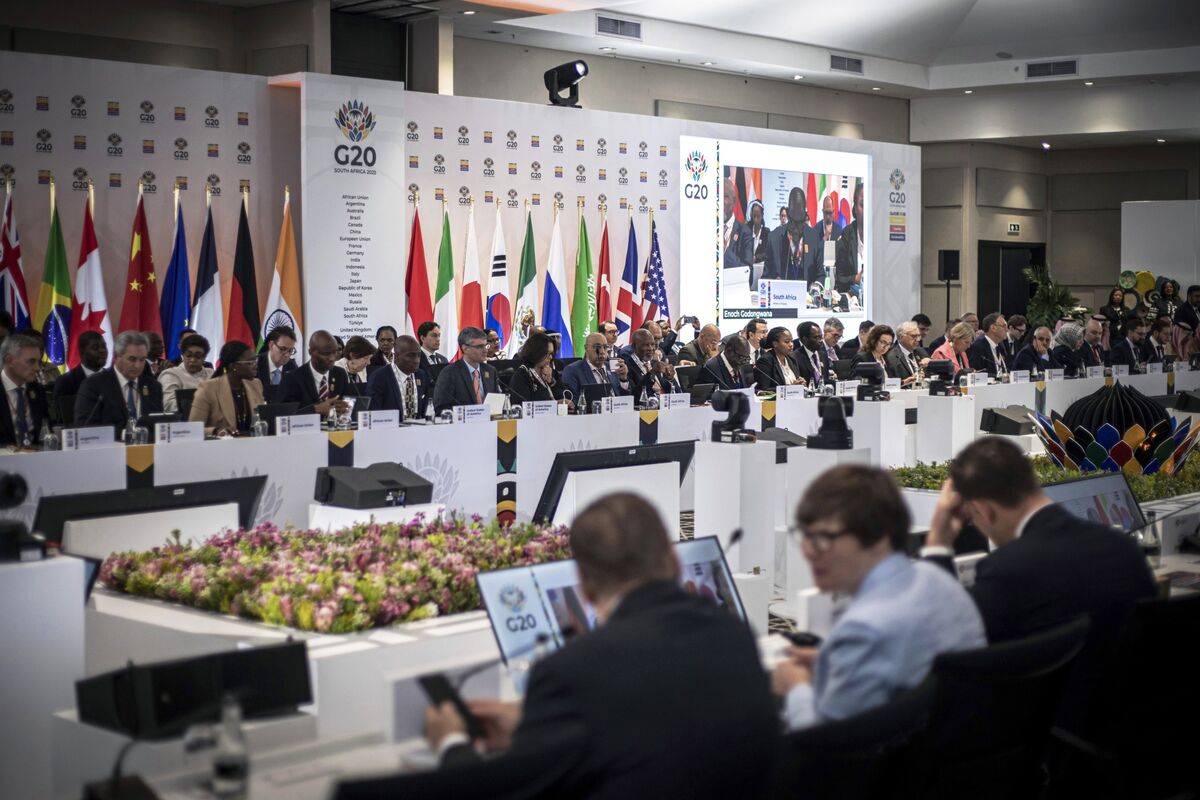
G-20 finance ministers and central bank chiefs are set to adopt a communique committing to international policy cooperation, acknowledging heightened global economic uncertainty driven by ongoing wars, conflicts, and geopolitical and trade tensions. This signals a unified recognition of systemic risks and a stated intent to coordinate policy responses amidst a challenging global economic backdrop.
The forthcoming G-20 communique signals a unified acknowledgment among the world's largest economies of significant and persistent global headwinds. By explicitly citing "ongoing wars and conflicts, geopolitical and trade tension" as sources of "heightened uncertainty," finance ministers and central bank chiefs are framing these non-economic factors as primary risks to the global economy. The pledge to strengthen international policy cooperation, while a standard feature of such meetings, carries additional weight in this context, suggesting a collective intent to prevent uncoordinated national policies from exacerbating global instability. The cautious tone and moderate market impact score highlight that this is a statement of intent rather than a set of concrete actions; however, it provides a crucial signal to markets that policymakers are aligned in their diagnosis of systemic risks, potentially providing a floor for investor confidence and discouraging destabilizing protectionist measures.
AI-powered research, real-time alerts, and portfolio analytics for institutional investors.
Request DemoOverall Sentiment
mildly positive
Sentiment Score
0.15
