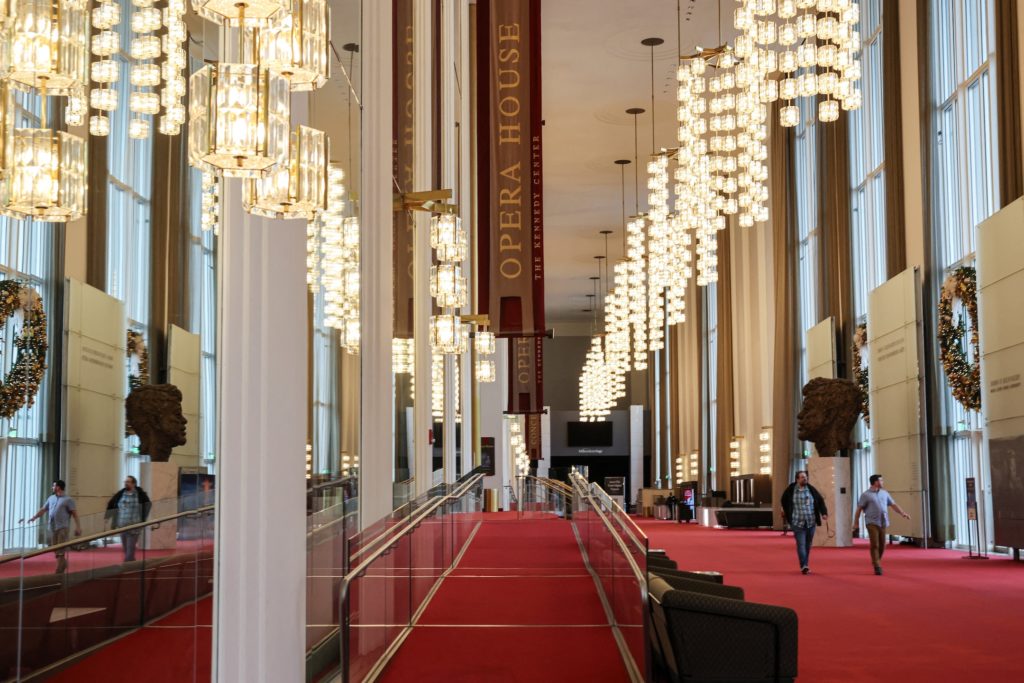
A mid-December decision to rename the Kennedy Center the Donald J. Trump and John F. Kennedy Center following a leadership takeover has triggered multiple artist cancellations (including Chuck Redd, The Cookers, Kristy Lee and Doug Varone and Dancers), a steep drop in overall ticket sales and lower TV ratings for the Kennedy Center Honors. The center’s president has threatened a $1 million lawsuit, and individual companies report direct revenue losses (Doug Varone cited about $40,000), creating near-term reputational and revenue risk that could depress box office receipts, donor support and produce legal exposure—items to monitor for exposure to regional cultural venues, related real estate, or philanthropy-linked investments.
Market structure: This is a localized demand shock for an institutional, high-profile venue—winners are at-home/streaming substitutes (NFLX, AMZN, DIS) and diversified national promoters that can re-route tours; losers are the Kennedy Center and similar government-adjacent cultural institutions and DC-dependent hospitality (HST, MAR) where brand/attendance is politically sensitive. Pricing power at contentious venues falls as artists and audiences withdraw; expect substitution pressure to reduce premium-ticket elasticity and calendar utilization for 3–12 months.
Risk assessment: Tail risks include escalation into coordinated artist boycotts across U.S. venues (low probability, high impact), high-profile lawsuits (Kennedy Center threatened $1M suits), and donor flight that could compress budgets by 10–30% over 4–12 quarters. Immediate effects play out in days–weeks (cancellations, box office refunds), medium-term in upcoming programming cycles (1–6 months), and longer-term governance/donor shifts over multiple funding seasons (6–24 months). Key hidden dependency: federal/state grant flows and major donor behavior can flip outcomes quickly.
Trade implications: Tactical trades favor long streaming/at-home exposure and protective/short positions on venue/hospitality names. Use 1–3 month option call spreads on NFLX/AMZN to capture substitution upside and 1–3 month put spreads on LYV/HST as hedges against contagion; size positions small (1–3% NAV) given low market-impact score. Watch catalysts: publicized ratings, legal filings, and quarterly guidance from Live Nation or hospitality REITs within 30–90 days.
Contrarian angles: Consensus may overstate contagion—historical cultural boycotts (ratings drops then recovery) show limited long-term revenue damage to diversified players. If LYV or HST drop >10% on headlines, consider tactical mean-reversion buys (size 1–2% positions) because corporate diversification and non-government venues can absorb touring demand. Unintended consequence: donor re-allocation to pro-government institutions could materially blunt downside risk within 6–12 months.
AI-powered research, real-time alerts, and portfolio analytics for institutional investors.
Request DemoOverall Sentiment
strongly negative
Sentiment Score
-0.60
Ticker Sentiment
