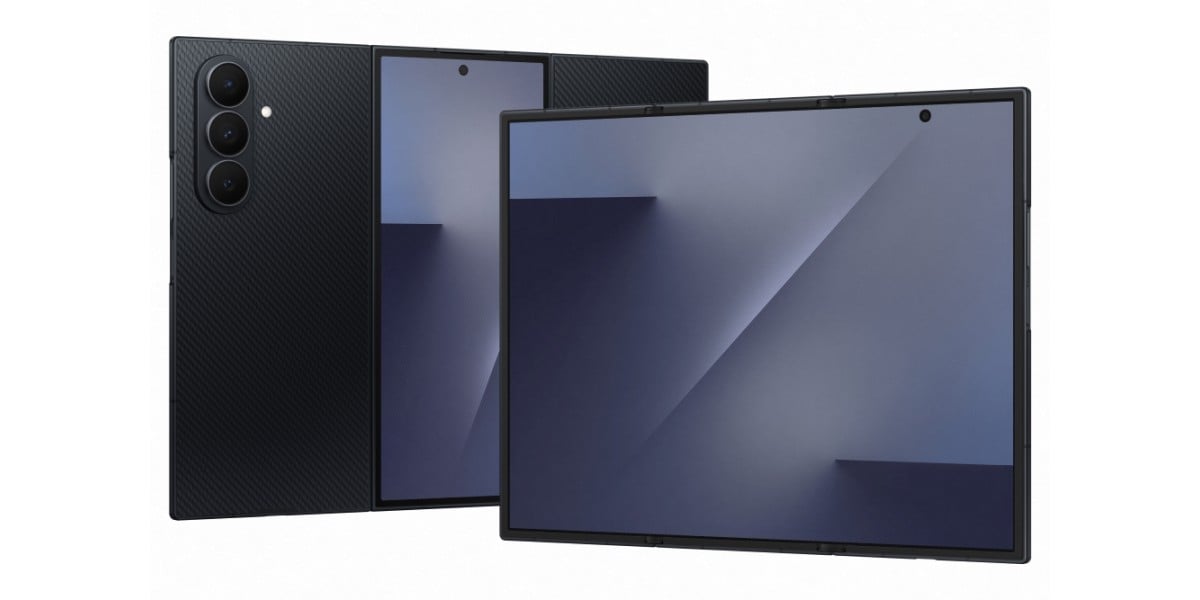
Samsung will discontinue the Galaxy Z TriFold after roughly three months on the market and will stop production once current inventory is exhausted; the US launch price was $2,899. The limited-production tri-fold (Snapdragon 8 Elite, 16 GB RAM, up to 1 TB storage, 10-inch 2160x1584 main display) is being framed as a proof of concept, but high retail price, absence of carrier subsidies and rising memory/storage costs pressured commercial viability and margins.
Samsung’s rapid pullback on an experimental tri‑screen is more an input-cost and scale decision than a pure demand repudiation. Exotic form factors require order-of-magnitude scale to amortize unique R&D, tooling and supply‑chain qualification — realistically several hundred thousand to low‑millions of units — otherwise unit economics swamp any halo marketing benefit over a 12–24 month horizon. Memory and NAND cost dynamics are the dominant margin lever: a sustained elevated memory ASP for even two consecutive quarters materially reduces the addressable margin for premium, large‑screen experiments and compresses the incentive to scale them. Second‑order winners are upstream commodity suppliers whose pricing power has improved; second‑order losers include specialist hinge/flex suppliers and the long tail of app/UI tool vendors that had been counting on multi‑screen app monetization. That fragmentation increases the integration burden on OEMs and raises the bar for carriers to subsidize such devices. Expect supplier order volatility and inventory swings in the next 2–6 quarters as Samsung and tier‑1 OEMs re‑optimize BOMs and push non‑core, low‑volume components back to contract manufacturers. Key catalysts to watch: memory ASP trajectories (weekly contract data) and developer engagement metrics for multi‑window APIs — either can flip the economics within 3–9 months. Tail risks include an unexpected enterprise use‑case (productivity apps, field workflows) which could convert a “halo” into a niche vertical market over 12–36 months. The consensus is underweighting the value of experiential IP and design learning; even a pulled product seeds patents, tooling and supplier contracts that competitors will exploit or license, creating latent long‑term optionality for component and IP owners.
AI-powered research, real-time alerts, and portfolio analytics for institutional investors.
Overall Sentiment
mildly negative
Sentiment Score
-0.15
Ticker Sentiment
