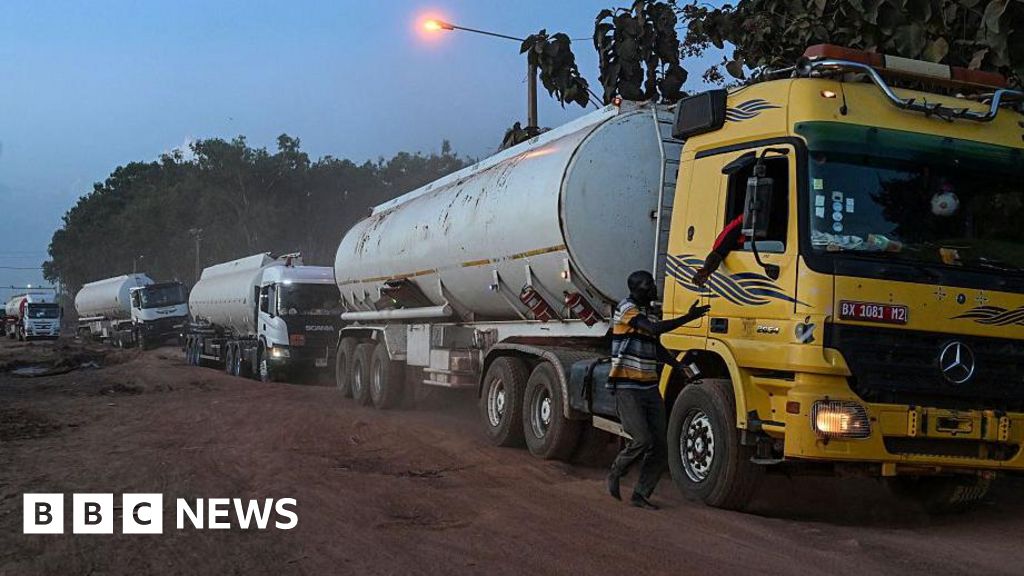
Niger has revoked licences of 14 transport operators and 19 drivers (and suspended one operator for one year) after they refused to deliver fuel to Mali amid an al-Qaeda affiliate (JNIM) blockade and repeated attacks on tankers. Mali had agreed in July to receive 85 million litres of fuel from Niger over six months, and Niger delivered 82 tankers in November, but subsequent convoy attacks and driver refusals have disrupted planned shipments along the 1,400 km route, exacerbating fuel scarcity that prompted school closures and travel advisories. The measures underscore heightened geopolitical risk and supply-chain disruption in the region, with implications for regional fuel availability, transport insurance and logistics costs, and broader economic stability in Mali and neighbouring markets.
Market structure: The immediate winners are actors that can provide secure logistics and extract scarcity rents (local fuel traders, armed-escort contractors, insurers), while Mali’s economy, truck operators and frontier-market equity holders lose. Expect local pump prices to jump 20–50% in weeks in northern Mali and black‑market premia to exceed 50% until convoys resume; this shifts short‑term pricing power to suppliers able to run escorted convoys. Cross‑asset: Mali sovereign spreads and frontier EM risk premia should widen (order of +300–600bps vs. pre‑blockade), pushing EMB/EM sovereign ETFs lower and raising EM FX volatility; global crude prices are unlikely to move materially, but refined product margins in West Africa will widen.
Risk assessment: Tail risks include blockade expansion to coastal corridors (low prob, high impact) that would force shipping rerouting and create humanitarian/currency crises; regulatory tail is Niger escalating sanctions vs. transporters creating supply paralysis. Time horizons: immediate days — license actions and convoy halts; 1–3 months — acute shortages, higher inflation and sovereign stress; 3–12 months — contract realignments or new security providers. Hidden dependencies: Niger’s production can’t substitute for distribution if drivers refuse; insurance market repricing can rapidly change economics for convoys.
Trade implications: Reduce concentrated frontier Africa equity exposure (AFK, iShares MSCI Frontier ETF FM) by 30–60% immediately; buy short‑dated protection on EM sovereign bonds (EMB 1–3 month put or raise hedge via CDX/EM if available). Tactical longs: 1–2% position in logistics/security-exposed names (BOL.PA) or TotalEnergies (TTE) to capture elevated downstream margins over 1–3 months, use 8% stop‑loss and target +12–20%. Options: buy 3‑month 5% OTM calls on TTE or 3‑month puts on AFK to express asymmetric risk/reward.
Contrarian angles: Consensus will likely over‑penalize all Africa exposure; selective logistics and insurer/reinsurer names (BOL.PA, RNR) can price in higher near‑term revenue as premiums and freight rates rise. Historical parallels (local blockades in Sahel 2012–2015) show supply disruptions create durable local price dislocations but limited global oil impact — so don’t overhedge global energy. Unintended consequence: heavy sanctions on drivers could push markets to informal/armed delivery, lengthening disruption beyond market expectations — size positions small and use defined downside limits.
AI-powered research, real-time alerts, and portfolio analytics for institutional investors.
Request DemoOverall Sentiment
moderately negative
Sentiment Score
-0.50
