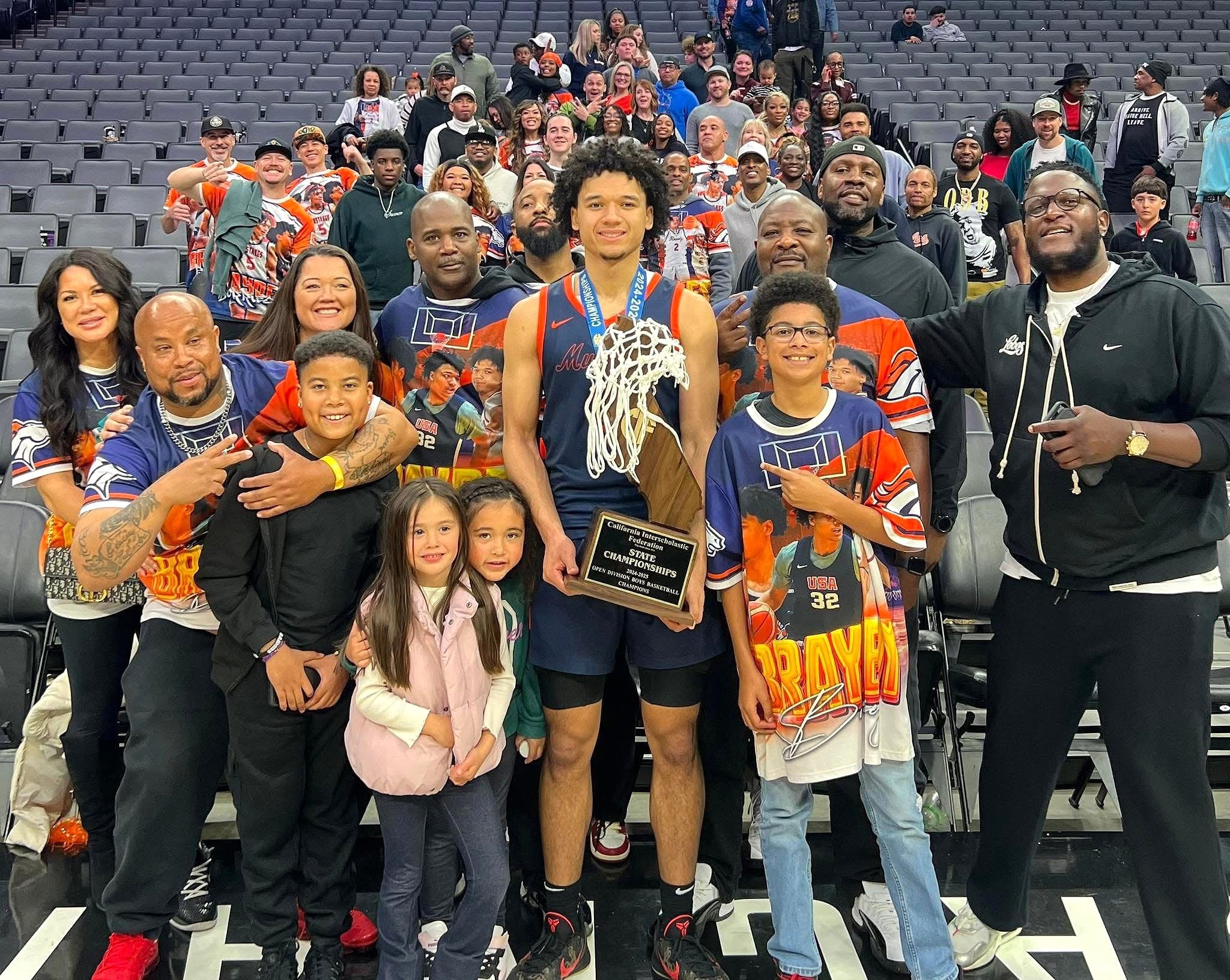
The article is a profile-style feature on NBA Draft Combine prospects, focusing on personal backgrounds and how other sports, family influence, and early experiences shaped their basketball paths. It contains no financial results, guidance, or market-moving company-specific developments. Overall impact on markets is minimal.
The near-term market impact here is not fundamental to Amazon’s current earnings, but to attention allocation: a tightly packaged draft-combine content stream is one more proof point that live sports-adjacent media remains the highest-retention format in consumer video. That matters because the next bidding cycle for sports rights is increasingly a scale-and-frequency contest, and platforms that can turn “event moments” into recurring engagement have better ad monetization and lower churn than pure library streamers. The second-order read is that the value of lower-stakes, personality-driven programming is rising as a complement to marquee games, which supports a broader monetization mix around sports ecosystems rather than just rights fees. For AMZN, the asymmetry is subtle but real: even small increases in sports-adjacent watch time can improve Prime engagement, which lowers effective churn and boosts shopping frequency, especially among younger cohorts that are increasingly “sports-native” through clips, social, and creator ecosystems rather than traditional broadcast. The competitive risk is that if Amazon cannot convert these moments into habit formation, it remains a costly rights buyer with limited differentiation versus other streaming platforms. The key time horizon is months, not days; the catalyst is not this article itself but how aggressively platforms use draft-related content to monetize the NBA pipeline over the next 12 months. The contrarian view is that investors may overrate the immediate P&L contribution of sports content while underrating its strategic utility as a customer-acquisition engine. The more important variable is not viewership of one article or one segment, but whether Amazon can bundle live moments, e-commerce, and membership economics into a defensible flywheel. If sports content becomes a retention tool rather than a standalone profit center, Amazon’s willingness to pay for adjacent inventory increases, which is bullish for engagement but bearish for near-term margin purity. Tail risk on the downside is a weaker-than-expected consumer environment that reduces discretionary media engagement and makes premium rights more expensive relative to monetization. On the upside, if Amazon shows even modest ad-load or engagement lift from sports-adjacent programming, the market may re-rate the optionality of its media arm faster than the underlying revenue contribution justifies.
AI-powered research, real-time alerts, and portfolio analytics for institutional investors.
Request DemoOverall Sentiment
neutral
Sentiment Score
0.10
Ticker Sentiment
