
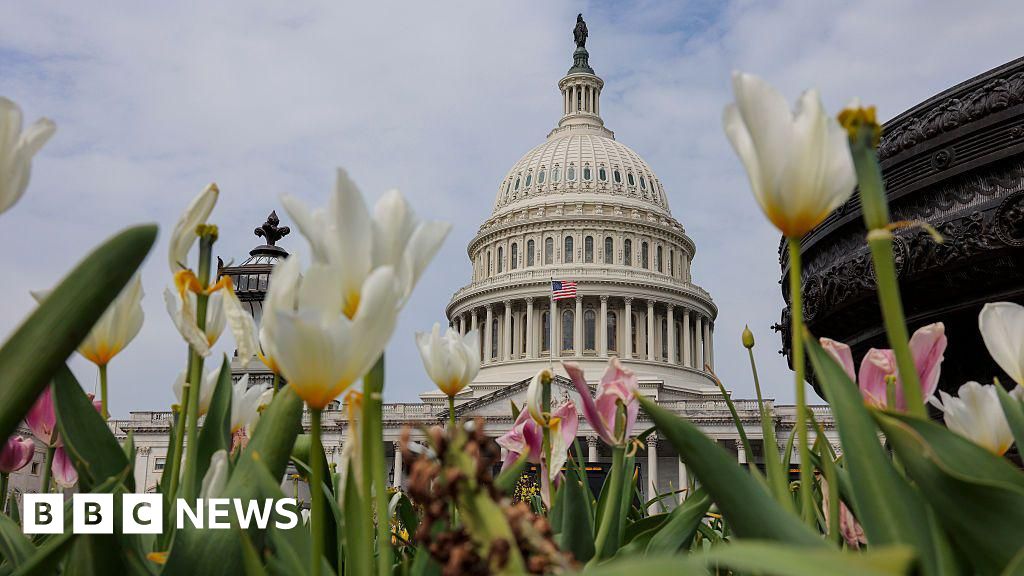
The US Senate rejected a war-powers resolution on Iran by 52-47 for the fourth time, keeping President Trump’s military campaign in place without congressional approval. The article highlights growing political friction, with Democrats planning weekly votes and a few Republicans signaling they could shift if hostilities extend beyond April. The situation remains fluid after failed negotiations led by Vice President JD Vance and ongoing US military blockade activity.
The market implication is less about the vote count itself and more about the extension of policy uncertainty. A prolonged, unresolved war keeps defense readiness, energy security, and shipping-risk premia elevated, while also increasing the probability of incremental U.S. involvement through a “mission creep” dynamic that tends to be priced in only after headlines turn to personnel losses or allied retaliation. In the near term, that favors assets tied to sustained elevated threat levels rather than a one-off headline spike.
The bigger second-order effect is legislative: repeated failed votes create a public ledger that can pressure a handful of swing Republicans if the conflict stretches past the 60-day war-powers window. That means the relevant catalyst is not another vote failure, but whether the conflict is still active when legal deadlines and media scrutiny converge. If that happens, the probability of a sharper split inside the GOP rises, which could force the administration toward either a diplomatic off-ramp or a more explicit authorization path.
For equities, the read-through is asymmetric. Defense contractors with exposure to missile defense, munitions, ISR, and naval sustainment should continue to benefit from longer replenishment cycles, but the cleaner trade is on logistics and maritime insurance dislocation rather than pure primes. Conversely, airlines, chemical inputs, and industrials with Middle East routing exposure remain vulnerable to a gradual rise in realized costs even if crude itself is only range-bound, because rerouting and security premiums often hit before the commodity tape fully reprices.
The contrarian view is that the market may be overpricing a broad escalation premium and underpricing a rapid diplomatic de-escalation if weekend talks produce even a partial ceasefire. In that case, the unwind would likely be fastest in defense beta and energy volatility, not in the underlying commodity complex. The best risk/reward is therefore in structures that benefit from elevated tail risk over the next 2-6 weeks, while avoiding outright directional bets on a major kinetic escalation.
AI-powered research, real-time alerts, and portfolio analytics for institutional investors.
Request TrialOverall Sentiment
mildly negative
Sentiment Score
-0.15
Ticker Sentiment
