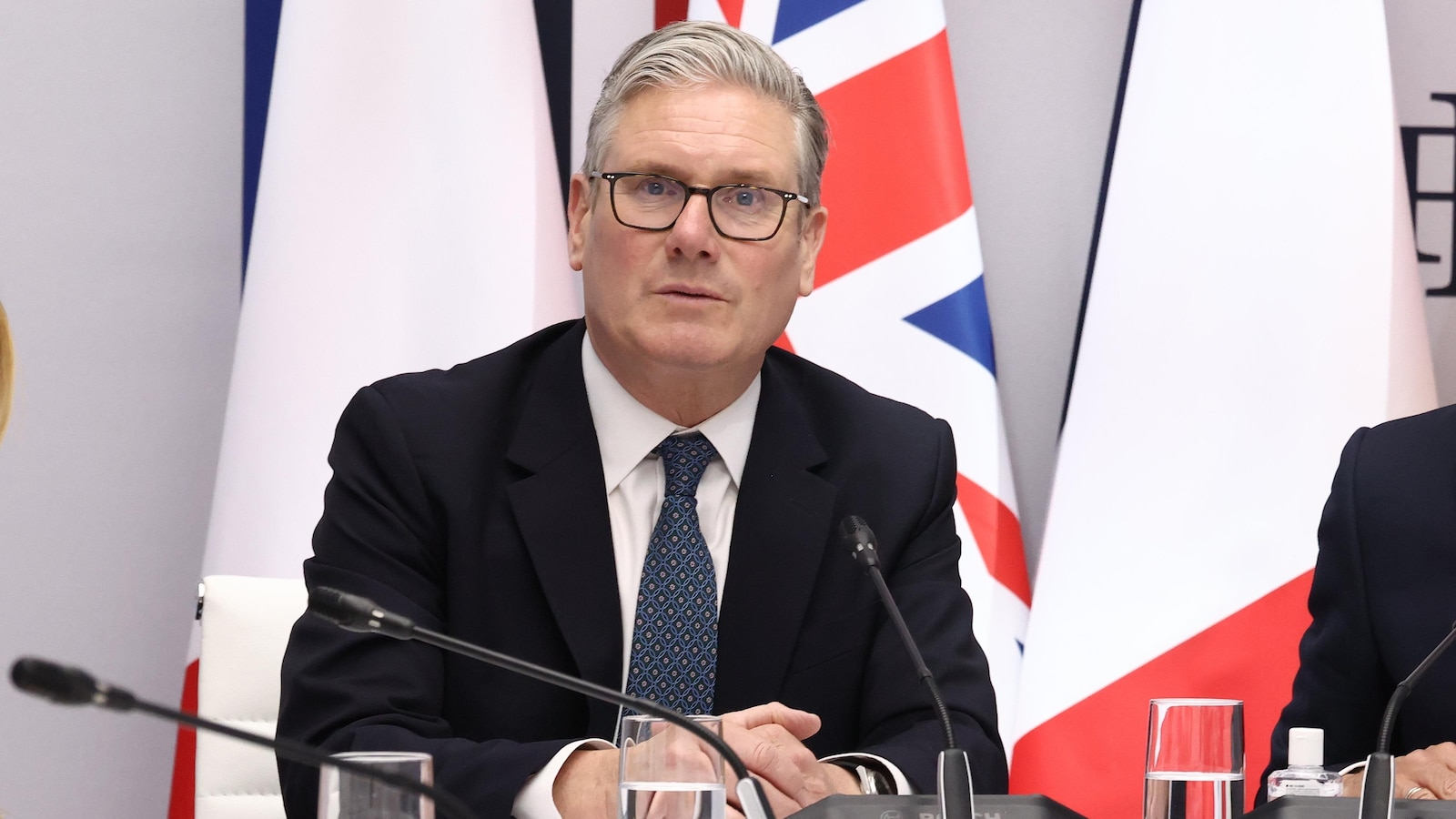
UK Prime Minister Keir Starmer is under pressure after revelations that Peter Mandelson was appointed ambassador to Washington despite failing security vetting, and that Starmer was not informed. The fallout includes calls for Starmer to resign, the firing of top Foreign Office civil servant Olly Robbins, and a criminal probe and arrest of Mandelson in February over suspected misconduct in public office. The story is primarily a political and governance crisis, with limited direct market impact but meaningful implications for UK political stability.
This is less about one ambassador than about institutional credibility risk becoming a tradable macro factor for the UK. When leadership appears unable to control appointments or communicate across the machine, the second-order effect is a higher policy discount on any domestically sensitive asset: sterling, UK midcaps, and banks with heavy UK retail exposure can all trade as if political execution risk just widened. The market usually prices this kind of governance erosion first through a weaker currency and then through a steeper domestic risk premium, especially if it spills into election rhetoric and cabinet discipline. The near-term catalyst is not the headline itself but the next two parliamentary and electoral checkpoints. If lawmakers turn this into a broader competence narrative and local election losses reinforce it, the government may be forced into defensive fiscal or regulatory signaling to regain control, which tends to be negative for UK cyclicals and positive for duration-sensitive defensives. The more important risk is that this becomes a pattern: repeated “who knew what and when” episodes typically compress policy optionality, making markets less willing to pay for a UK reflation story. The contrarian view is that the market may overestimate the persistence of the damage if the episode is contained quickly. Governments often survive governance scandals when there is no direct fiscal or legal transmission into corporate earnings; in that case, the trade becomes a short-lived sentiment shock rather than a regime change. But with local elections as a timely feedback loop, the burden of proof is now on the government to show competence, not on investors to assume it. The cleanest trade is to position for a modest UK-specific risk premium expansion rather than a broad global selloff. The asymmetric setup is in FX and domestic equities, where political headlines can move faster than fundamentals and where any stabilizing response could reverse the move within weeks. Until there is evidence the controversy is contained, the path of least resistance is underperformance of UK domestically exposed assets versus global peers.
AI-powered research, real-time alerts, and portfolio analytics for institutional investors.
Request DemoOverall Sentiment
strongly negative
Sentiment Score
-0.55
