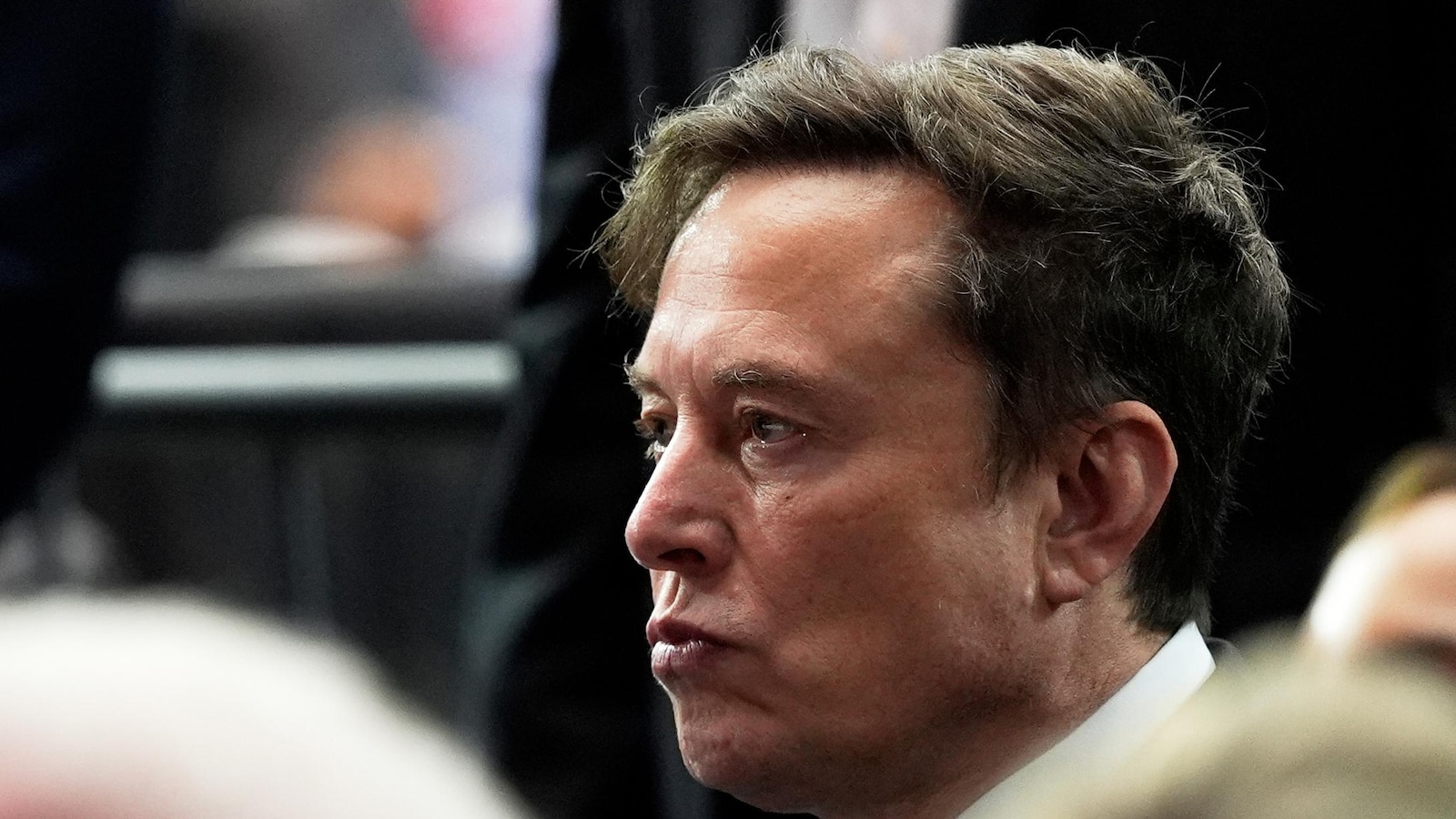
SpaceX has acquired Elon Musk’s xAI, folding together Grok, Starlink and X as Musk positions the combined business for a planned large IPO later this year; terms of the purchase were not disclosed. Musk projects that space-based AI compute will be the lowest-cost option within 2–3 years, while Tesla has already invested $2 billion in xAI and xAI plans a $20 billion Mississippi data center; outside investor 1789 Capital has deployed over $1 billion across Musk companies. The consolidation concentrates Musk’s AI, satellite and social-media assets and could alter competitive dynamics with cloud and AI providers, though timing, economics and technical feasibility of space-based data centers remain uncertain.
Market Structure: The combination of SpaceX, xAI, Starlink and X consolidates Musk's vertically integrated bid to capture both AI stack and LEO connectivity; winners are SpaceX/xAI/Starlink (private) and upstream aerospace/satellite suppliers, while incumbent terrestrial cloud providers face potential long-term margin pressure if Musk's 2–3 year timeline for “cheapest AI compute in space” proves even partially feasible. Alphabet (GOOGL) and Google’s Project Suncatcher are immediate strategic competitors—expect intensified capex race and earliest prototype signals by 2025–2026 to reprice relative positioning.
Risk Assessment: Tail risks include regulatory/national-security intervention (FCC/DOD restrictions), catastrophic launch failure or satellite deorbit losses, and capital dilution from aggressive pre-IPO financing; these could materialize within 6–18 months and cause 20–40% private/public valuation impairment. Short-term (days–months) risk is sentiment-driven volatility around IPO and Mississippi $20bn data-center headlines; long-term (years) risk is technology/operational feasibility (thermal management, latency, spectrum) that could keep compute on Earth.
Trade Implications: Tactical: establish a 1.5–2.0% overweight in GOOGL via Jan 2027 LEAPS to capture AI/cloud optionality and Project Suncatcher upside; size a 0.5–1.0% hedge by buying MSFT 3‑month 2.5–5% OTM put spreads to protect against secular cloud-share shifts. Add a 0.75% thematic allocation to listed space/aerospace suppliers or an ARKX-like ETF for supply-chain exposure; allocate 0.8–1.0% notional to a 9–12 month TSLA call spread to capture robot/AI upside but cap size because of governance contagion risk.
Contrarian Angles: Consensus underestimates operational and regulatory friction—space compute economics require order-of-magnitude reductions in launch and cooling costs; if those don’t materialize in 24–36 months, market will re-rate Musk-linked assets. Also watch governance contagion: Musk combining entities raises a cross-asset governance premium—apply a 200–400bps overweight reduction to public Musk exposures upon any S-1 that signals large primary raises or asset pledging.
AI-powered research, real-time alerts, and portfolio analytics for institutional investors.
Request DemoOverall Sentiment
mildly positive
Sentiment Score
0.25
Ticker Sentiment
