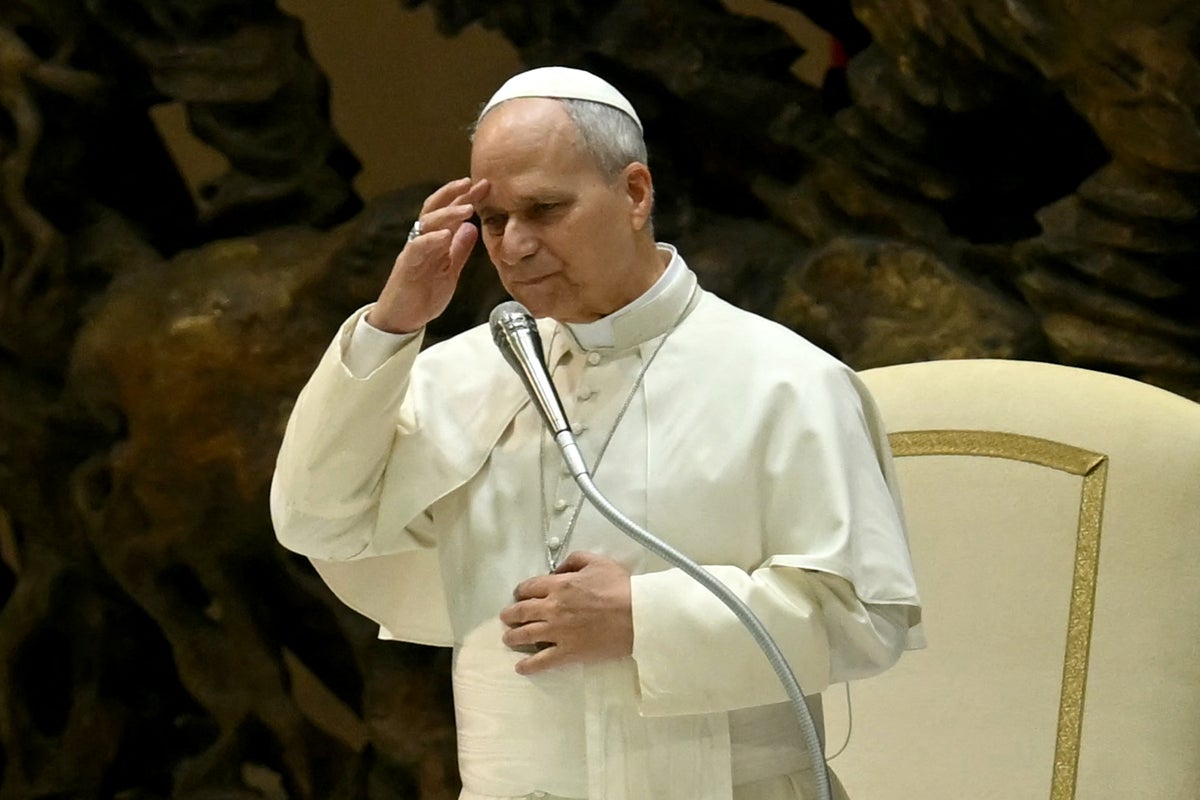
Pope Leo condemned aerial bombardments and called for an outright ban as the U.S.-Israeli conflict with Iran entered its fourth week, reiterated calls for a ceasefire, and urged universal healthcare as a “moral imperative.” His statements are moral and diplomatic pressure rather than new operational developments and carry minimal direct market implications. Monitor for any escalation in military activity or policy responses, which would be the primary drivers of market moves.
Moral authority statements from global religious leaders rarely move markets directly, but they shift the political cost curve for particular weapons and the export approvals that underpin supplier revenue. Expect civil-society pressure and legislative scrutiny in Catholic-majority jurisdictions to increase friction on offensive air-weapons sales; historically similar reputational shocks have redirected 5–15% of planned procurement dollars toward defensive or non-kinetic categories within 6–24 months via delayed approvals and conditioned funding.
That reallocation benefits firms whose product mix tilts to air/missile defense, ISR, and hardened command-and-control rather than air-to-ground strike munitions; procurement committees under new political pressure favor systems that can be framed as “protective” not “offensive.” At the same time, headline moral framing for universal healthcare raises the odds of incremental public health capex and procurement cycles in Europe and Latin America — a tailwind for hospital-facing medtech and healthcare IT over a 1–3 year horizon, not a disruptive near-term revenue surge.
Short-term market moves will be headline-driven (days–weeks), but the real trade window is policy implementation (6–24 months). Reversals come from strategic security shocks that re-prioritize offensive capabilities (big escalations) or from fiscal constraints that choke promised health spending; watch national budget votes, EU export-license calendars, and Vatican diplomatic outreach as high-importance catalysts.
AI-powered research, real-time alerts, and portfolio analytics for institutional investors.
Request DemoOverall Sentiment
neutral
Sentiment Score
0.00
