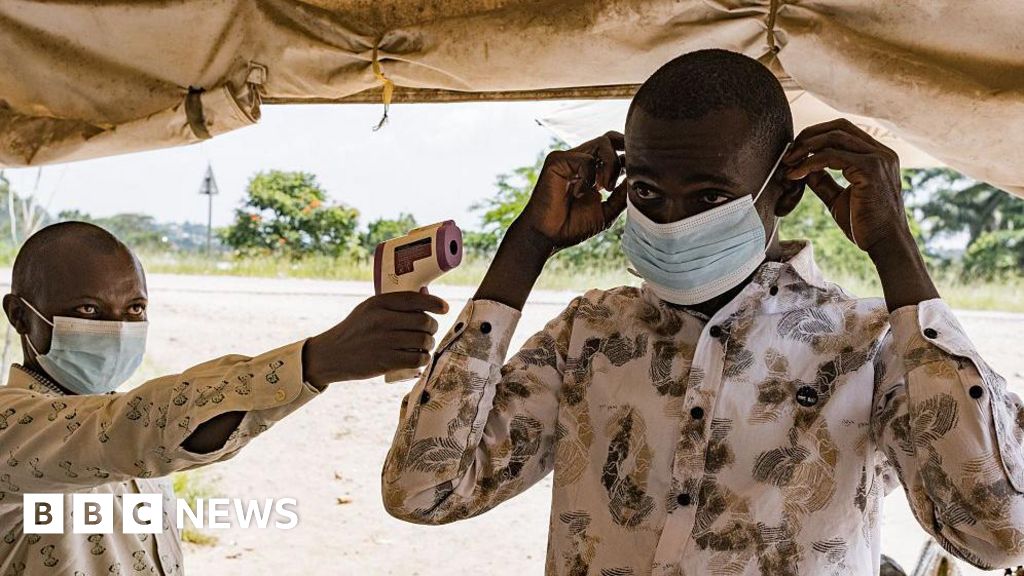
The WHO says there are now 600 suspected Ebola cases and 139 suspected deaths, with 51 confirmed cases in the Democratic Republic of Congo and two in Uganda, and it expects numbers to rise further as detection lags. The outbreak is in eastern DRC's Ituri and North Kivu provinces, with healthcare workers among the dead and no approved vaccine or targeted drug for the Bundibugyo strain. The situation has been declared a public health emergency of international concern, though WHO says the risk remains low globally.
The first-order equity read is not about global demand destruction; it is about localized operational friction that can bleed into broader East Africa risk premia. The bigger second-order effect is on mining logistics, border throughput, and labor availability in northeastern DRC and western Uganda, which can temporarily impair exports of gold, copper inputs, and fuel distribution even if global commodity prices do not move much. That creates a near-term asymmetry: local producers and transport names face idiosyncratic disruption while diversified multinationals with remote operations are largely insulated. Healthcare and diagnostics suppliers should see the cleanest beneficiary profile because outbreak expansion increases testing intensity, isolation spend, and vaccination/containment procurement even in the absence of a fully matching vaccine. The market often over-discounts this because the headline is framed as an EM health crisis, but the actual revenue impulse accrues to firms with deployable cold-chain, field diagnostics, and outbreak response capability rather than large-cap pharma broadly. The second-order winner is public-health logistics: air freight, portable medical infrastructure, and border-screening vendors can see budget acceleration within weeks, not quarters. The key risk is not a global pandemic repricing; it is a prolonged, undercontained regional outbreak that repeatedly interrupts movement in conflict zones. If case detection lags by several weeks, the tail risk is sustained travel restrictions and mining labor absenteeism through the next 1-3 months, which would hit local FX, fiscal receipts, and any commodity-linked sovereign sentiment. A quick reversal is possible if ring vaccination and contact tracing scale faster than expected, but the absence of a purpose-built approved vaccine for this strain makes containment execution the main variable, not scientific optimism.
AI-powered research, real-time alerts, and portfolio analytics for institutional investors.
Request DemoOverall Sentiment
strongly negative
Sentiment Score
-0.78
