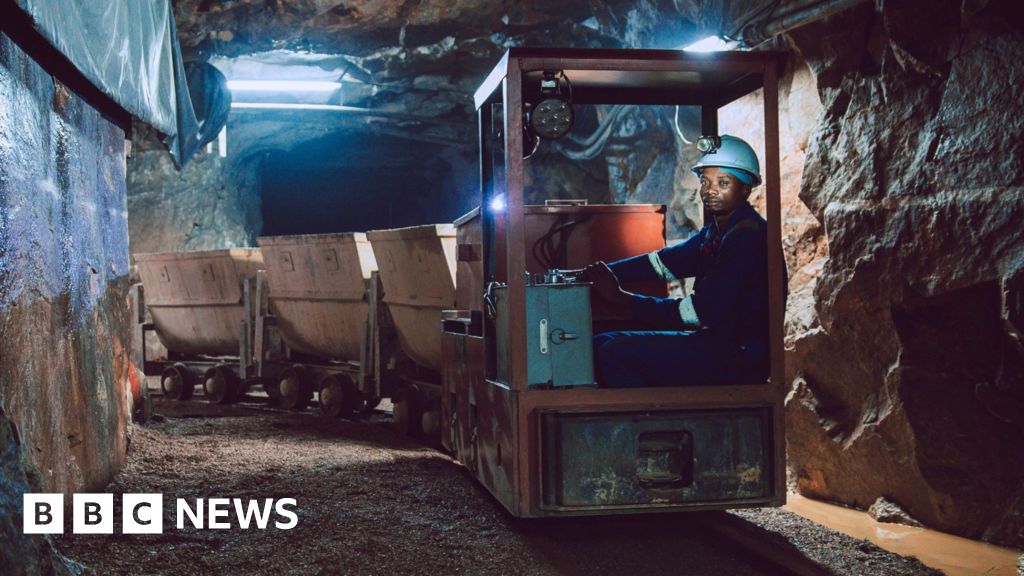
The United States has surpassed China as Africa's largest foreign direct investor, deploying $7.8 billion in 2023 compared to China's $4 billion, marking the first US lead since 2012. This strategic shift is primarily driven by the US International Development Finance Corporation (DFC) to secure critical minerals like lithium, cobalt, and rare earths, vital for technology, electric vehicles, and defense, while explicitly aiming to counter China's established dominance in the sector. While US investment seeks to bolster its supply chains and promote local value addition in Africa, experts advise African nations to proactively assert their national interests and pursue frameworks beyond simple mineral extraction deals amid increasing global competition.
The United States has significantly increased its foreign direct investment (FDI) in Africa, reaching $7.8 billion in 2023, surpassing China's $4 billion and marking the first US lead since 2012. This strategic shift is primarily driven by the US International Development Finance Corporation (DFC), established in 2019 with an explicit mission to counter China's influence in strategic regions. The DFC's involvement underscores a geopolitical imperative behind this capital deployment.
This surge in US investment is largely focused on securing access to Africa's critical minerals, such as lithium, cobalt, and tungsten, which are essential for advanced technologies, electric vehicles, and defense systems. China's long-standing dominance in critical mineral processing and supply has prompted the US to diversify its supply chains, as evidenced by DFC-backed projects like Trinity Metals, which now ships Rwandan tungsten and tin to US processing plants. This aims to reduce reliance on existing supply channels and bolster domestic industrial capabilities.
While US investment seeks to foster local value addition, exemplified by ReElement Africa's (AREC) planned refinery in South Africa, African nations are advised to assert their interests by pursuing frameworks beyond simple cash-for-minerals deals, such as production sharing and local equity participation. However, US efforts face challenges, including reduced enthusiasm due to past trade tariffs on African countries, and increasing competition from other global players like Brazil, India, and Japan, complicating the long-term investment landscape.
AI-powered research, real-time alerts, and portfolio analytics for institutional investors.
Request DemoOverall Sentiment
mildly positive
Sentiment Score
0.30
Ticker Sentiment
