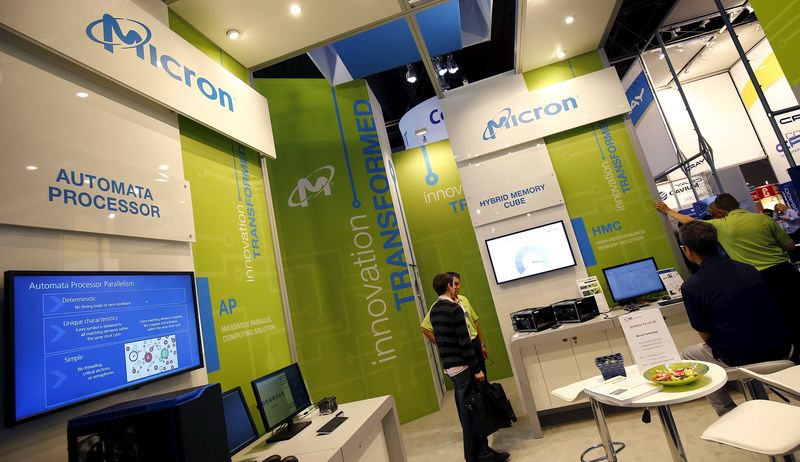
Memory and chip stocks sold off after a $300B sector wipeout narrative, despite recent gains of 90% for Micron, 82% for Sandisk, and 78% for SK hynix over 30 days. Investors are weighing labor unrest at Samsung, uncertainty around Trump delegation-related China policy, and lower odds of import waivers for YMTC and CXMT, which could support Micron by limiting competition. Over two trading days, Sandisk rose 15%, Intel 18%, AMD 12%, and the SOX index 8%, highlighting still-volatile positioning in semis.
The market is repricing the memory cycle as a policy-driven squeeze, not just a cyclical recovery. The key second-order effect is that if Chinese waiver risk fades, the global supply stack tightens at the margin exactly when sentiment and positioning are already stretched, which can keep pricing power elevated even if end-demand does not accelerate further. That favors the pure-play memory names most levered to spot pricing, while ecosystem beneficiaries with less direct pricing exposure may lag once the immediate squeeze trade fades.
The clearest loser is Nvidia on relative sentiment, not fundamentals. Its omission from the delegation is a signal that Washington’s near-term China agenda is more about non-tech concessions than easing semiconductor export friction, which reduces the probability of a broad policy thaw for advanced chips. That matters because any relief rally in AI semis depends on lower headline risk; without it, multiple expansion in NVDA likely stalls even if data center demand remains intact.
The labor-risk overhang at Samsung is a near-term catalyst window measured in days to weeks, while export-control headlines are a months-long driver. If labor disruption is avoided, the more important bullish variable is that buyers are likely to extrapolate constrained supply into Q2 and Q3 contract negotiations, extending the move beyond the initial scare. The contrarian view is that the market may be overestimating how much of this is durable: if Chinese waiver outcomes or policy optics improve, a crowded momentum trade in memory can unwind quickly because the earnings revisions have already partially priced in scarcity.
For Intel and AMD, the move looks more like sympathy beta than a clean fundamental repricing, which creates a potential fade if memory names cool. The better structural implication is for equipment and infrastructure suppliers to remain under-owned if the market becomes convinced that capex restraint persists; that would compress future supply growth and reinforce pricing in the memory chain.
AI-powered research, real-time alerts, and portfolio analytics for institutional investors.
Request DemoOverall Sentiment
mildly negative
Sentiment Score
-0.15
Ticker Sentiment
