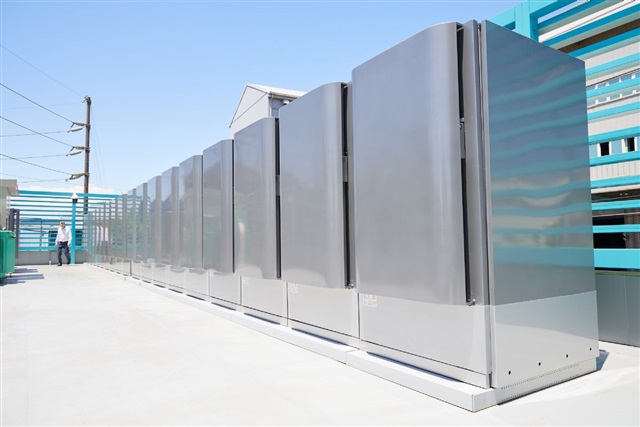
Solid oxide fuel cells (SOFCs) are gaining attention due to their rapid, flexible deployment as electricity demand from AI workloads rises sharply. Kaori Thermal Technology, identified as a key supplier to SOFC leader Bloom Energy, is highlighted, underscoring potential supply-chain and revenue implications for Bloom and its component vendors as demand for on-site, low-emission power grows. While the piece signals a constructive outlook for SOFC adoption tied to AI-driven power needs, it provides no financial metrics or timelines, limiting immediate actionable insight.
Market structure: AI-driven incremental electricity demand creates a two-tier market: modular on-site generation (SOFCs, Bloom Energy - BE) and centralized utilities. Winners are BE and upstream suppliers (Kaori); losers are legacy peaker/genset suppliers and parts of the utility margin stack. Expect modular deployments to lift BE revenue visibility over 6–24 months and give modest pricing power — think 10–25% ASP premium vs commodity gensets while scale is limited.
Risk assessment: Key tail risks include a major supply-chain shock or China trade action (10–20% probability materially delaying deliveries), fuel-policy reversals favoring green hydrogen over on-site natural-gas reformers (15% probability over 2–3 years), and single-customer order concentration (10%). Immediate risks (days–weeks) are headline-driven vol; short-term (months) are part shortages; long-term (years) are technology substitution (PEM/hydrogen) and regulatory shifts.
Trade implications: Direct tactical trade is long BE exposure with options to cap downside/financing: buy 9–18 month call LEAPs ~30–50% OTM sized 0.5–2% portfolio, or 6–9 month call spreads ahead of earnings/AI-capex updates. Pair trade: long BE vs short XLU (utilities ETF) to capture on-site vs centralized rotation. Cross-asset: incremental gas demand could lift nat-gas forward strips (2–6% conditional), pressuring utility credit spreads modestly if adoption accelerates.
Contrarian angles: Consensus underprices concentration and logistics risk — a single large hyperscaler reorder or a supplier delay can flip earnings. The market may over-extrapolate AI-led demand; if deployments concentrate, BE upside is binary (large contract wins) rather than linear. Historical fuel-cell cycles show boom-bust; hedge for 20–40% drawdowns and avoid all-in convictions.
AI-powered research, real-time alerts, and portfolio analytics for institutional investors.
Request DemoOverall Sentiment
mildly positive
Sentiment Score
0.25
Ticker Sentiment
