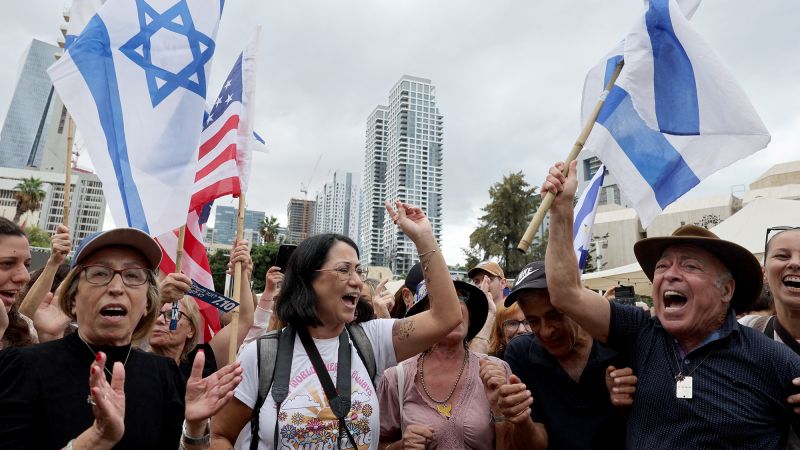
The first phase of a US-brokered Gaza ceasefire deal between Israel and Hamas has been approved, outlining the release of all hostages, a partial Israeli military withdrawal, and the release of some Palestinian prisoners. While globally welcomed as a significant de-escalation, the agreement faces considerable fragility due to unresolved issues such as Hamas disarmament and Gaza's future governance, alongside domestic political challenges for Israeli Prime Minister Netanyahu. This development signals potential for substantial humanitarian aid and future reconstruction efforts in Gaza, but the long-term stability and full implementation of the broader peace plan remain uncertain, posing ongoing geopolitical risk.
The first phase of a US-brokered Gaza ceasefire deal has been approved, outlining the release of all hostages, a partial Israeli military withdrawal, and the release of some Palestinian prisoners. This development has been met with global relief and cautious optimism, with UNRWA confirming humanitarian aid supplies for Gaza's entire population are "ready to go" for three months. World leaders, including those from Turkey, Britain, and the EU, have welcomed the agreement as a significant step towards de-escalation. This signals a moderately positive shift in the geopolitical landscape, albeit with a cautious tone.
Despite the initial breakthrough, the agreement faces substantial fragilities and unresolved critical details. Key sticking points, such as Hamas disarmament, the future governance of Gaza, and the precise timeline for Israeli withdrawal, remain unaddressed. Former Israeli consul general Alon Pinkas characterized the situation as a "significant but fragile moment," anticipating a "lengthy, tedious and fragile process of negotiations."
Israeli Prime Minister Netanyahu confronts significant domestic political headwinds, with hardline coalition partners threatening government stability over the ceasefire terms, potentially leading to early elections. Furthermore, military actions persist, with Israeli tanks reportedly firing in Gaza hours before the cabinet approval, and Hamas demanding a "formal declaration" ending the war prior to hostage releases. This underscores the precariousness of the current situation and the potential for rapid shifts.
AI-powered research, real-time alerts, and portfolio analytics for institutional investors.
Request DemoOverall Sentiment
moderately positive
Sentiment Score
0.45
Ticker Sentiment
