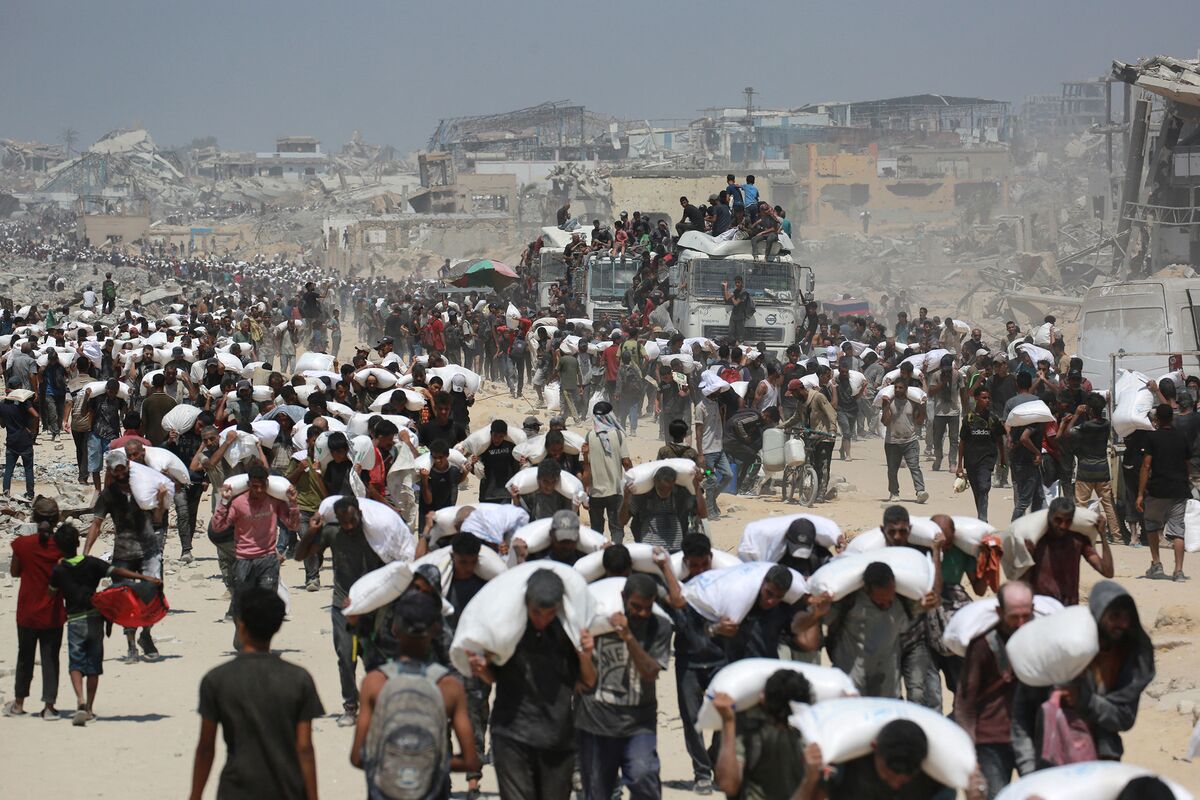
French Foreign Minister Jean-Noël Barrot announced that France and the EU are maintaining a firm stance on Israel, engaging in "tough discussions" to expedite humanitarian and financial aid to Gaza. Barrot stated that Israel's initial commitments regarding aid have not been fulfilled and criticized current aid distribution operations for allegedly causing a "bloodbath." This signals continued diplomatic pressure on Israel from European nations, highlighting ongoing geopolitical tensions and humanitarian challenges in the region despite a recent pause in conflict.
France is publicly signaling sustained diplomatic pressure on Israel regarding the humanitarian crisis in Gaza, indicating that geopolitical tensions remain elevated despite any recent pause in military conflict. French Foreign Minister Jean-Noël Barrot's statement highlights that the European Union is engaged in "tough discussions" with Israel and alleges that initial Israeli commitments on aid have "not been fulfilled yet." The minister's stark language, specifically the call for Israel to alter aid distribution operations described as causing a "bloodbath," underscores the severity of the diplomatic friction. While this event carries a mildly negative sentiment, its low market impact score of 0.1 suggests that financial markets do not currently perceive these diplomatic statements as a precursor to immediate, economically significant actions like sanctions. The primary implication is the persistence of geopolitical risk in the region, which continues to be a critical factor for macro-level analysis.
AI-powered research, real-time alerts, and portfolio analytics for institutional investors.
Request DemoOverall Sentiment
mildly negative
Sentiment Score
-0.30
