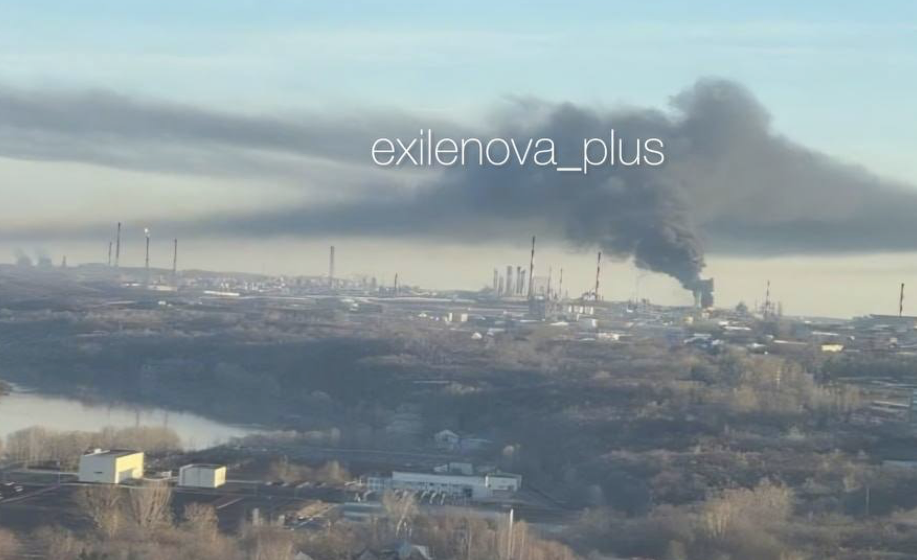
Ukrainian long-range drones reportedly struck the Bashneft-Novoil refinery in Ufa (Rosneft-owned), which processes ~7.3 million tonnes of oil per year; Ufa is ~1,300 km from the Ukrainian border. Local authorities say drones were shot down and damage limited to debris with no injuries, while independent outlets reported a fire at the refinery and a residential building. The strike is part of a pattern of deep Ukrainian strikes on Russian energy and industrial targets and raises near-term geopolitical risk and oil-market volatility. Market impact is likely limited unless Rosneft confirms production outages or broader escalation occurs.
This strike increases tail risk that Russian inland refining and terminal capacity will face recurring asymmetric drone attacks, which can produce episodic outages of 100k–200k bpd-equivalent refining throughput if multiple facilities are contested simultaneously. Expect a widening and re-pricing of heavy/sour differentials (Urals vs Brent) as buyers discount cargo reliability and seek alternative sour barrels with different logistics footprints; that favors refiners with flexible crude slates and access to alternative feedstock for months, not just days.
A second-order fiscal effect is acceleration of Russian defensive capex and insurance costs for energy logistics — port/terminal hardening, convoying, and domestic air defenses — which raise unit costs of export and could reduce netbacks to producers, supporting price floors for seaborne crude if outages persist through summer. Conversely, the pattern of long-range strikes makes rapid escalation to strategic supply cuts less likely in the near term because Moscow can respond with export routing and sales discipline rather than immediate production shutdowns, making sustained multi-quarter price spikes lower-probability without broader international escalation.
For markets, the highest-conviction beneficiaries are short-cycle players and technology-enabled defense suppliers (sensors, C2, AD) with multi-year procurement pipelines; vulnerable names are airlines and refiners dependent on Russian heavy crude flows or single-route logistics. Watch two catalysts on the calendar: (1) confirmation of multi-week outage at any Russian refinery or terminal (days–weeks window) and (2) Russian policy changes on export routing or insurance subsidies (weeks–months) — either will re-rate energy spreads and defense capex expectations materially.
AI-powered research, real-time alerts, and portfolio analytics for institutional investors.
Request DemoOverall Sentiment
mildly negative
Sentiment Score
-0.25
