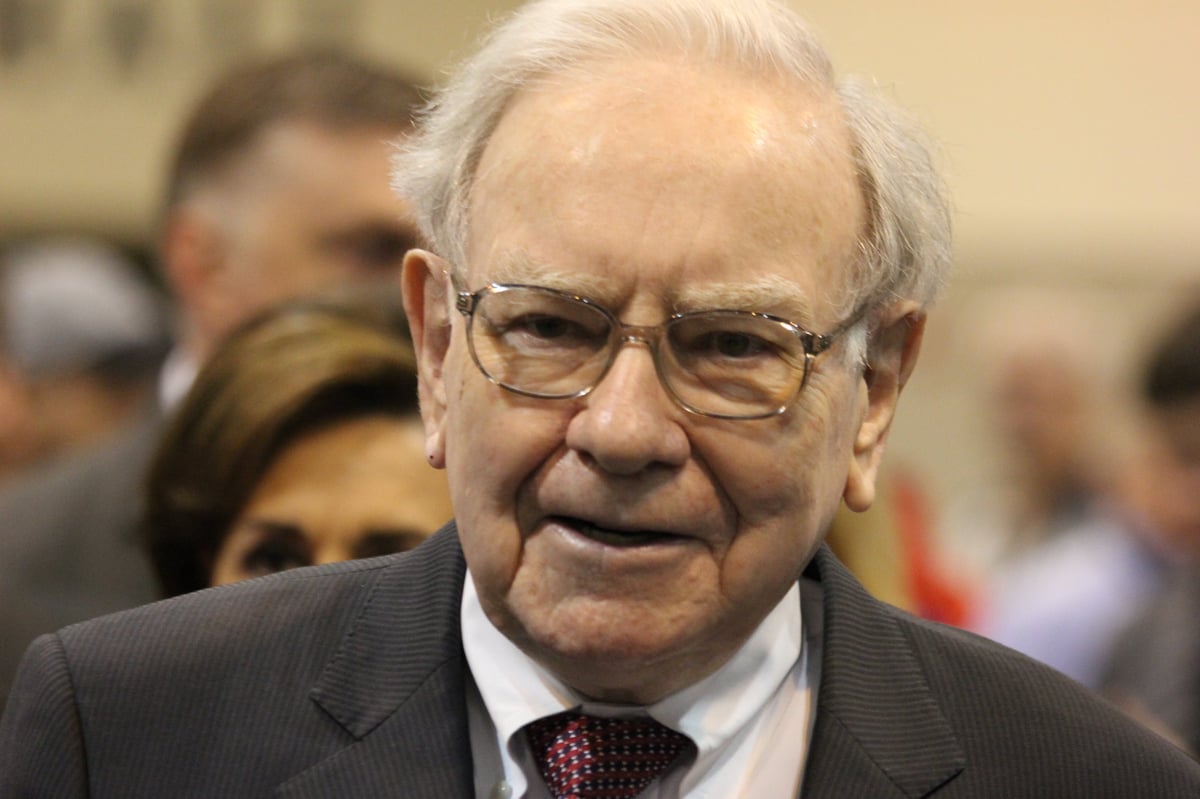
Warren Buffett, 95, will step down and retire at the end of the year, and long‑planned successor Greg Abel—named in 2021—has been slated to assume the CEO role at the start of 2026, leaving investors to weigh succession risk for Berkshire Hathaway, a non‑tech conglomerate valued at more than $1 trillion. While concerns about post‑Buffett performance are natural, the article argues Berkshire’s steady, decentralized model, established management culture and multi‑year succession planning should limit disruption—analogous to Apple after Steve Jobs—so the business is not CEO‑dependent. With large, slower‑growing holdings such as Kraft and Coca‑Cola, the company could see improved returns under new leadership, and at roughly 16x trailing earnings versus the S&P 500’s ~26x the stock is presented as an attractive, potentially underrated long‑term buy.
Warren Buffett, age 95, will retire at the end of the year and long‑planned successor Greg Abel—announced in 2021—is set to become CEO at the start of 2026, creating a definitive timeline for transition at a conglomerate valued at over $1 trillion. The article emphasizes that Berkshire's decentralized, capital‑allocation model and multi‑year succession planning reduce dependence on a single charismatic CEO, citing Charlie Munger's confidence that Abel can "keep the culture."
The piece draws an explicit industry comparison to Apple after Steve Jobs to illustrate that leadership changes need not destroy long‑term value, noting Apple’s ~$4 trillion market cap and Nvidia’s ~$4.6 trillion as context for CEO‑driven market narratives. It highlights Berkshire's portfolio concentration in slower‑growing positions such as Kraft and Coca‑Cola, and argues a potential management refresh could modestly improve returns without threatening the firm's stability.
Valuation appears supportive for buyers: Berkshire trades at about 16x trailing earnings versus an S&P 500 average near 26x, and the provided sentiment and market‑impact signals are moderately positive (sentiment score 0.4, market impact 0.4), suggesting the market is not pricing in severe succession risk ahead of the planned handover.
AI-powered research, real-time alerts, and portfolio analytics for institutional investors.
Overall Sentiment
moderately positive
Sentiment Score
0.40
Ticker Sentiment
