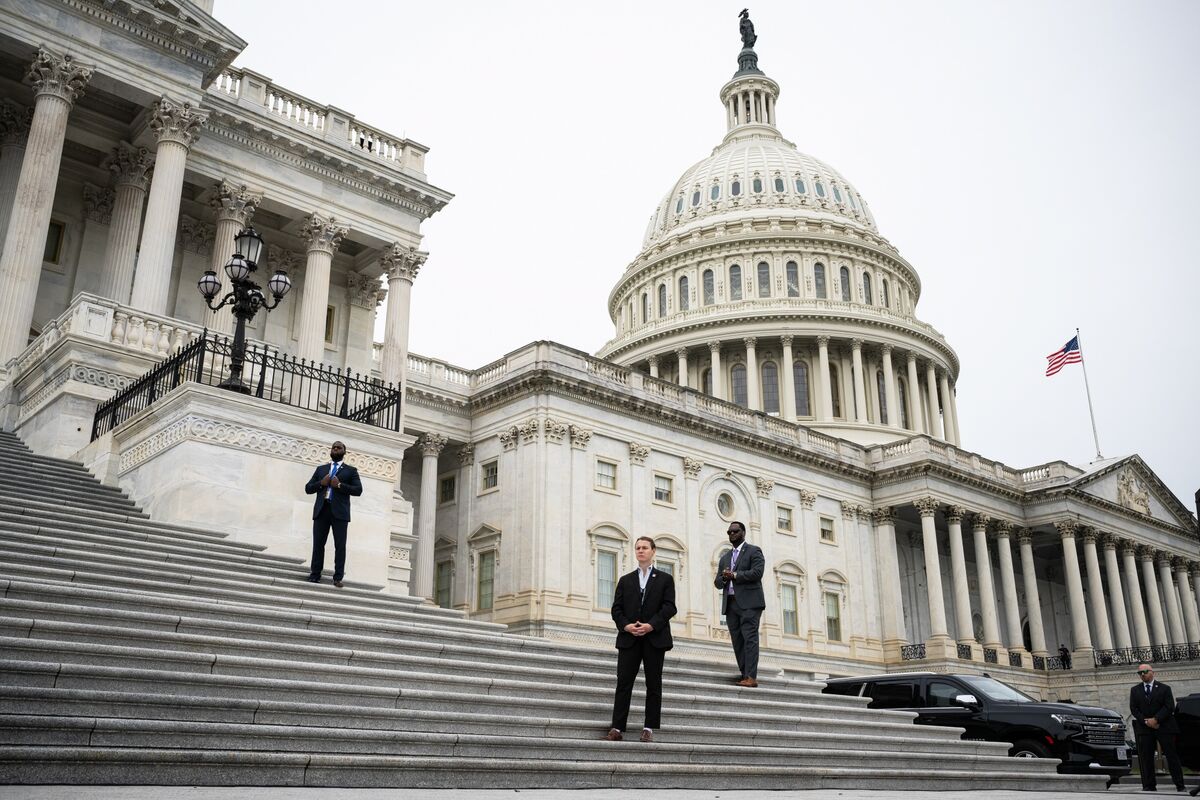
US equity futures are declining in early Asia trading, with S&P 500 contracts dipping, as Washington approaches a potential government shutdown. This market reaction stems from President Trump's threats to cut programs and federal workers if a midnight funding deadline is not met, signaling increased political uncertainty.
US equity futures are exhibiting weakness in early Asian trading, a direct market response to escalating political risk in Washington D.C. as a potential government shutdown looms. S&P 500 contracts have dipped, pricing in the uncertainty stemming from the approaching midnight funding deadline and President Trump's threats to furlough federal workers and cut specific programs. This negative sentiment in the futures market contrasts with the previous day's cash session, where the S&P 500 index closed 0.4% higher after a volatile day, suggesting that investor conviction was already fragile. The current price action indicates that the political brinkmanship is creating a tangible headwind for markets, elevating near-term uncertainty and amplifying the risk premium for US assets.
AI-powered research, real-time alerts, and portfolio analytics for institutional investors.
Request DemoOverall Sentiment
moderately negative
Sentiment Score
-0.55
