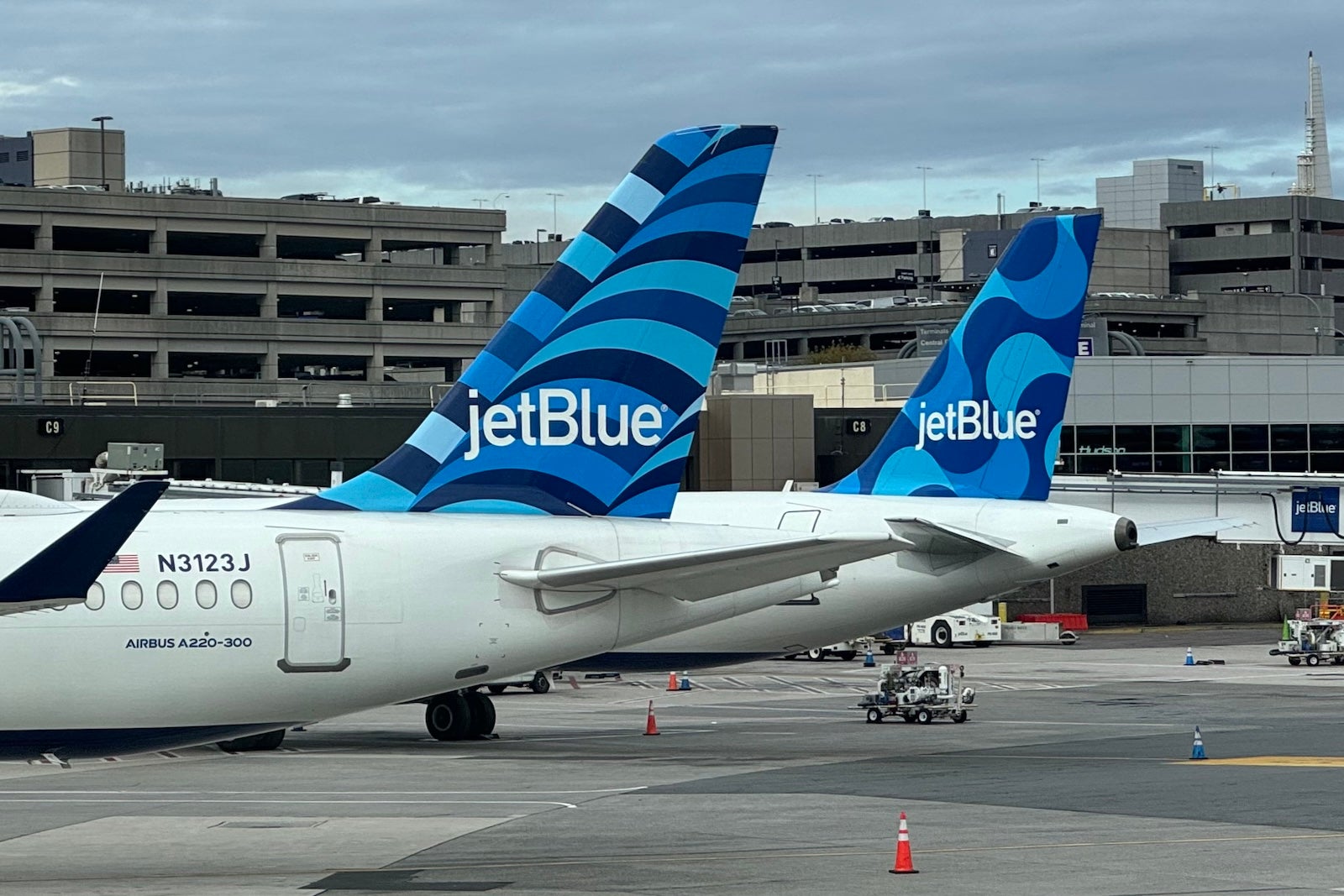
JetBlue will raise first checked-bag fees to $39 on off-peak days (up $4, ~11%) and $49 on peak days (up $9, >20%), with second-bag fees rising to $59/$69 and a $10 surcharge remaining for paying at check-in. The airline attributes the change to higher jet fuel costs and says the move is intended to keep base fares competitive, implying modest ancillary revenue upside. The hike could put JetBlue at the high end of full-service U.S. carriers on bag fees and may modestly depress demand or prompt competitors to respond, creating modest near-term stock sensitivity.
This move is less about immediate ticketing economics and more about expanding structural ancillary revenue per passenger while leveraging dynamic pricing to convert discretionary buyers into prepaid commitments. Prepaying shifts cash flow earlier, reduces day‑of operational frictions (fewer curbside/check‑in surprises) and increases revenue certainty — a margin lever that scales with unit volumes and is stickier than one‑off fare increases. Expect a low single‑digit percentage uplift to unit revenue for carriers able to implement similar models quickly; that’s meaningful given airline margins are measured in mid‑single digits.
Second‑order winners are airlines and card issuers that can monetize loyalty and embed baggage in co‑branded products; these players capture both loyalty retention and incremental interchange economics. Conversely, pure free‑bag incumbents face a choice: maintain a competitive product at the expense of margin or introduce new revenue channels and risk brand dilution. Retail and ground‑transport partners will see a subtle demand shift — marginal longer‑haul bookings may become slightly less frequent, and short intermodal options (rail, bus) gain share on price‑sensitive short hops within 3–12 months.
Key risks: fuel price reversals or a rapid demand softening could make these fee hikes net-negative if load factors drop, and regulatory scrutiny on ancillary practices could crystallize within 6–18 months. Competitor mimicry is the likely next step — expect a follow‑on wave of ancillary repricing in the next 1–3 quarters, which would normalize the benefit for any single carrier but raise industry revenue per passenger overall.
AI-powered research, real-time alerts, and portfolio analytics for institutional investors.
Request DemoOverall Sentiment
neutral
Sentiment Score
0.00
Ticker Sentiment
