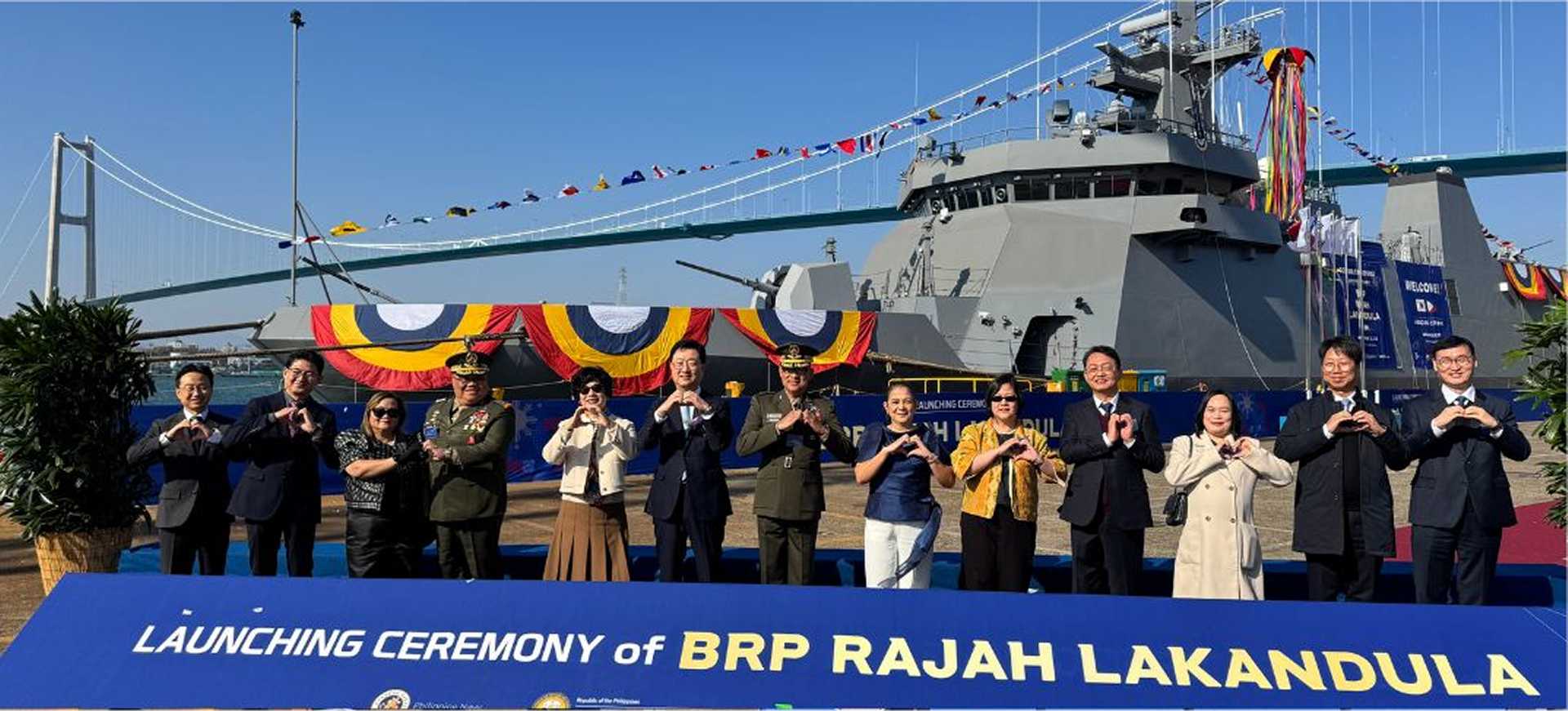
South Korea’s HD Hyundai Heavy Industries launched the Philippine Navy’s second Rajah Sulayman-class offshore patrol vessel, BRP Rajah Lakandula (PS-21), on Nov. 20, 2025 as part of a six-ship program valued at roughly $573 million (delivery 2025–2028) that will expand the Offshore Patrol Force from 11 to 17 ships and replace older vessels. The 2,400-ton, 94m HDP-2200+ design is configured for 30-day endurance, a ~5,500 nm patrol range, a 76mm naval gun plus remote 30mm systems, flight deck/hangar capacity and modular mission bays; three ships will receive GeoSpectrum/Elbit TRAPS towed-array sonars under a separate ~2.4 billion peso (~$41m) acquisition to provide initial ASW capability. The program deepens Philippines–South Korea defense-industrial ties (Hyundai already operates in Subic Bay), enhances Manila’s maritime reach in contested areas such as the South China Sea and Luzon Strait, and dovetails with a broader Philippine plan to invest about 2 trillion pesos (~$35 billion) in military and industrial modernization over the next decade.
South Korea’s HD Hyundai Heavy Industries launched the Philippine Navy’s second Rajah Sulayman-class offshore patrol vessel, BRP Rajah Lakandula (PS-21), at its Ulsan yard on November 20, 2025; the ship is the second of a six-vessel program contracted for roughly $573 million on June 27, 2022 with deliveries scheduled through 2028 and will expand the Offshore Patrol Force from 11 to 17 ships. The class is based on the HDP-2200+ design (about 2,400–2,450 tonnes, 94.4m length), offers ~5,500 nm range and up to 30 days endurance, and is armed with a Leonardo OTO Melara 76 mm gun, two Aselsan SMASH 30 mm systems and a Hanwha combat management system integrated with SPS-732 and Sharpeye Mk.11 sensors. Three of the six vessels will receive GeoSpectrum/Elbit TRAPS towed-array sonars under a separate 2.40 billion peso (~$41m) procurement on top of the ~30 billion peso construction element, providing an initial anti-submarine capability and modular upgrade path. The program deepens Philippines–South Korea defense-industrial ties (Hyundai’s Subic Bay hub), aligns with Manila’s ~2 trillion peso (~$35bn) planned defense-industrial investment over the next decade, and creates multi-year sustainment, sensor and systems-integration opportunities; sentiment is moderately positive with modest market impact (score 0.28) and per-ticker signal showing ESLT positive (0.35) while DRS is neutral (0.0).
AI-powered research, real-time alerts, and portfolio analytics for institutional investors.
Request DemoOverall Sentiment
moderately positive
Sentiment Score
0.40
Ticker Sentiment
