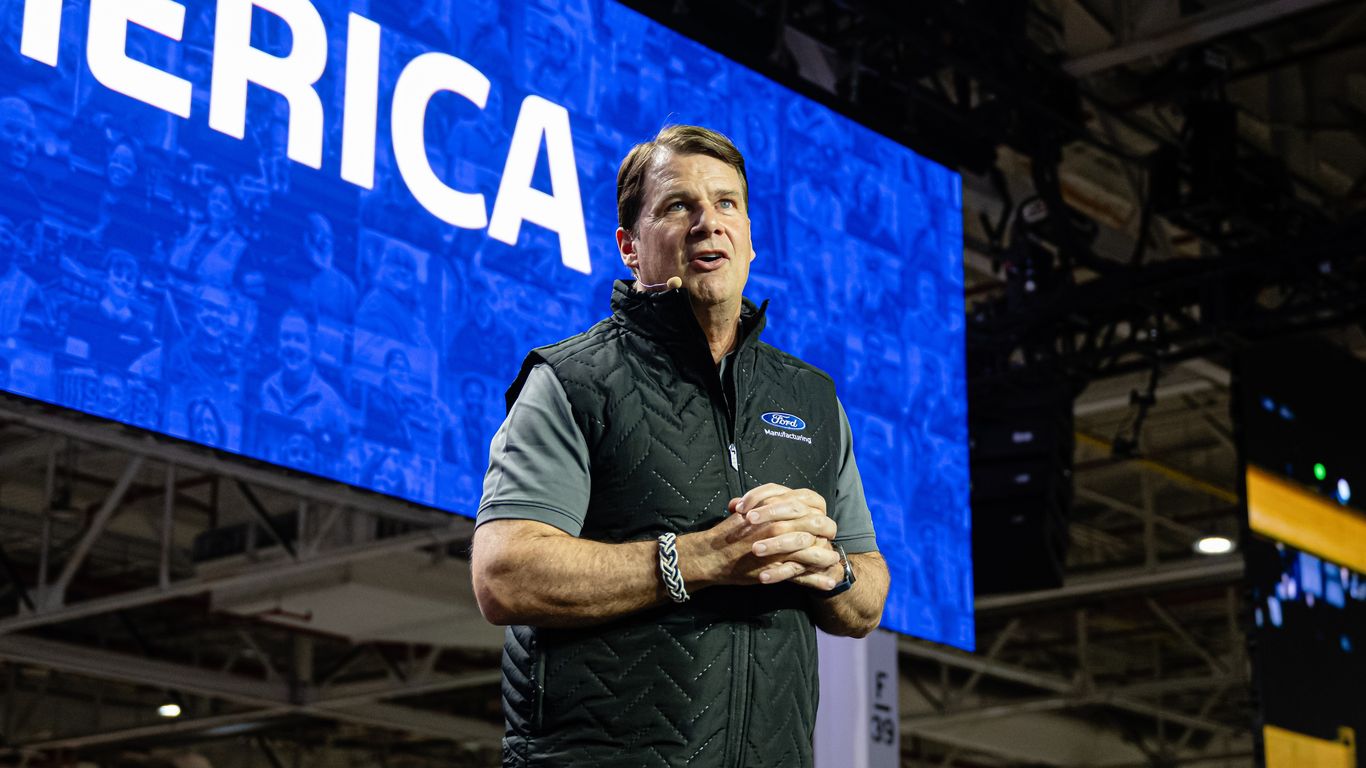
Ford CEO Jim Farley warns that the U.S.'s high-tech and AI leadership aspirations are jeopardized by a critical shortage of skilled blue-collar workers in foundational industries like construction and manufacturing, essential for new infrastructure and supply chains. He notes a significant productivity gap between white-collar and blue-collar sectors, which is driving up costs and impeding re-shoring initiatives. To tackle this, Farley is hosting a summit with prominent industry leaders and government officials to advocate for policy changes, enhanced vocational training, and regulatory reform to bolster these vital economic sectors.
Ford's CEO, Jim Farley, has articulated a significant structural risk to the U.S. economy, positing that ambitions in high-tech manufacturing and AI are unachievable without addressing a critical deficit in the blue-collar workforce. This warning is substantiated by specific labor shortfalls, including a stated need for 600,000 manufacturing workers, 500,000 construction workers, and an immediate 6,000 technicians for Ford's own dealerships. A key data point from an Aspen Institute study underscores this challenge, revealing a 28% productivity surge in digital industries that contrasts sharply with a productivity decline in the 'essential economy' of physical industries. This divergence is identified as a direct driver of inflation, margin compression for businesses, and delays in critical infrastructure, housing, and consumer services. Farley attributes the crisis to a combination of restrictive policies on tariffs and immigration, regulatory hurdles, and a societal de-prioritization of vocational training. The issue's systemic nature is underscored by the high-profile summit Farley is convening, which includes CEOs from diverse sectors such as U.S. Steel (X), AT&T (T), and FedEx (FDX), indicating broad-based concern over labor constraints impacting supply chains and national economic expansion.
AI-powered research, real-time alerts, and portfolio analytics for institutional investors.
Overall Sentiment
moderately negative
Sentiment Score
-0.50
Ticker Sentiment
